Flexible shaft guide: Engineering compact drive solutions
1 April 2026Many engineers default to rigid shaft systems when designing compact drives, assuming they offer superior precision and reliability. That assumption overlooks a critical engineering reality: rigid shafts demand near-perfect alignment, and in tight or geometrically complex assemblies, achieving that alignment adds cost, complexity, and failure risk. Flexible shafts solve this problem directly. They transmit rotary motion through bends, offsets, and misalignments without requiring geared joints or complex coupling arrangements. This guide covers flexible shaft construction, mechanical trade-offs, real-world applications, design criteria, and maintenance best practices, giving design engineers and R&D teams the technical foundation to evaluate flexible shafts for compact drive integration.
Table of Contents
- Defining flexible shafts: Structure and core mechanics
- Flexible vs rigid shafts: Strengths and trade-offs
- Flexible shaft applications in industrial manufacturing
- Key design considerations for optimal performance
- Maintenance and troubleshooting for flexible shafts
- What most engineers miss about flexible shaft integration
- Turn engineered knowledge into compact drive success
- Frequently asked questions
Key Takeaways
| Point | Details |
|---|---|
| Flexible shaft defined | A flexible shaft transmits rotary motion in compact or misaligned assemblies using a spiraled wire core. |
| Comparative advantages | Flexible shafts outperform rigid shafts in space-limited and dynamic drive applications, streamlining designs. |
| Industrial applications | Manufacturing, robotics, and precision finishing all benefit from flexible shafts for improved access and efficiency. |
| Critical design factors | Selecting the right flexible shaft requires attention to material, bend radius, torque, and assembly methods. |
| Maintenance best practices | Routine maintenance and troubleshooting extend shaft life and safeguard transmission reliability. |
Defining flexible shafts: Structure and core mechanics
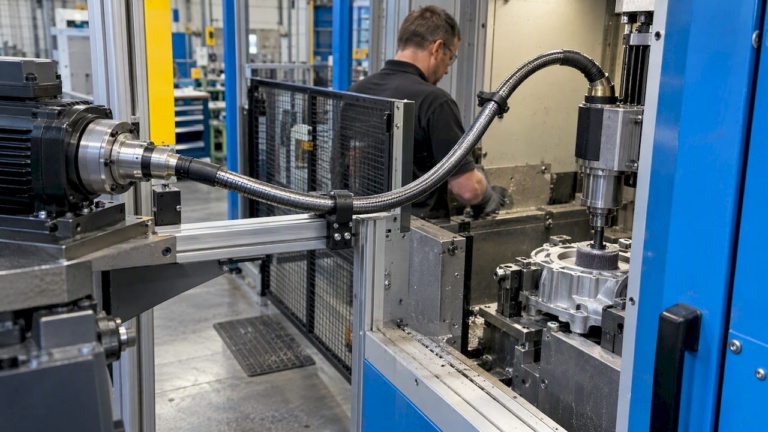
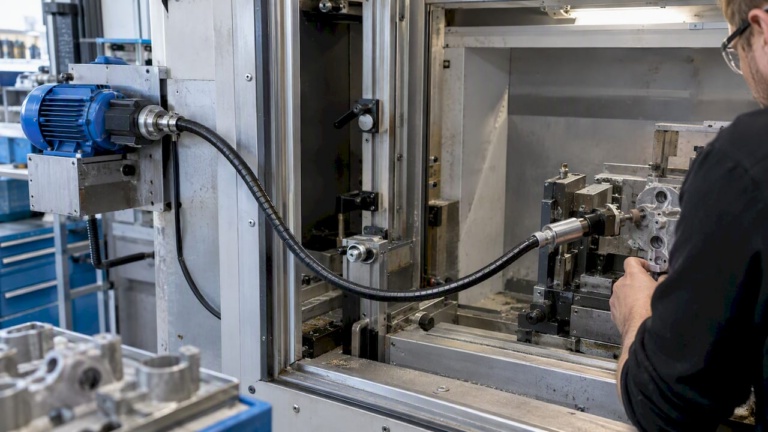
A flexible shaft is a mechanical drive component that transmits rotary motion along a non-linear path. Unlike rigid shafts, which require straight-line alignment between driver and driven components, a flexible shaft routes torque through bends and curves using a spiraled wire core. This core is the functional heart of the assembly.
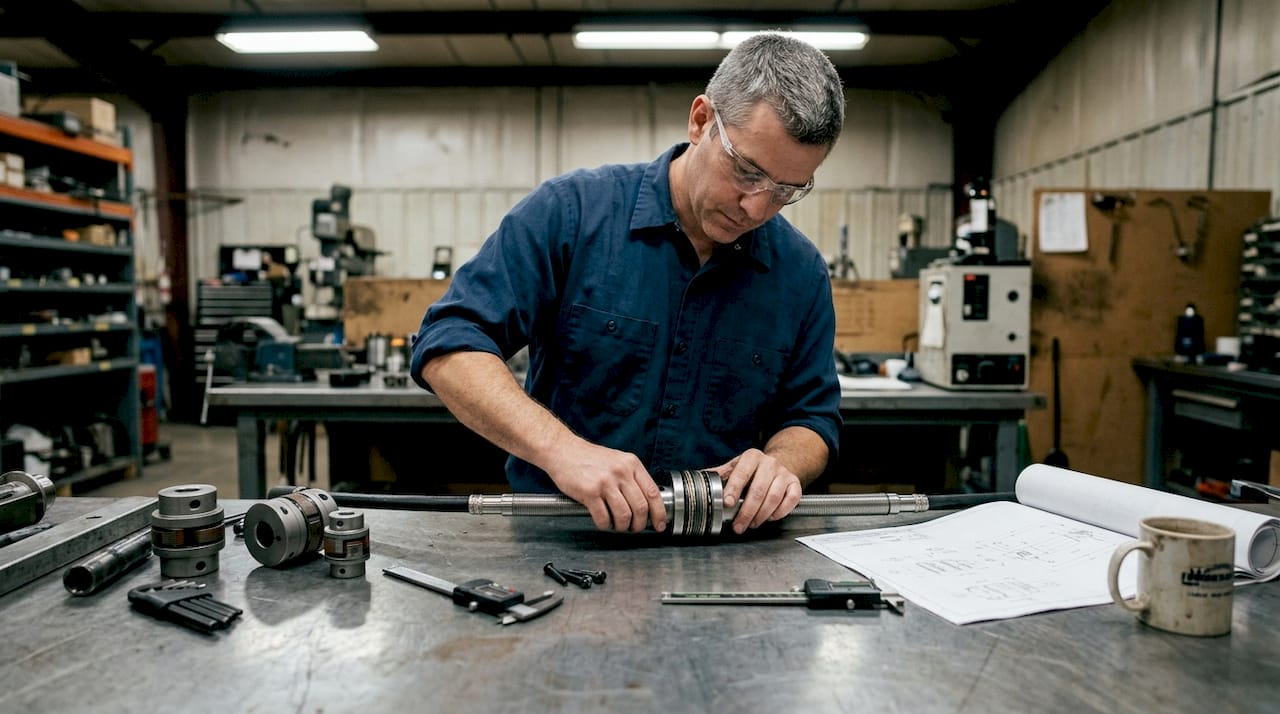
The construction consists of three primary elements:
- Spiraled wire core: Multiple layers of high-tensile wire wound in alternating helical directions. This configuration provides torsional stiffness while allowing lateral flexibility.
- Protective sheath: An outer casing, typically made from steel or polymer, that guides the core and protects it from contamination and mechanical damage.
- End fittings and bearings: Precision-machined couplings at each end connect the shaft to the drive source and the tool or actuator.
The shaft transmits torque by twisting the wire core along its length. As the core rotates, it maintains consistent rotational speed even through bends, provided the bend radius stays within specified limits. Industrial shaft applications show up to 40% longer shaft life when operating parameters are correctly matched to shaft specifications.
| Parameter | Typical range |
|---|---|
| Torque capacity | 0.1 Nm to over 200 Nm |
| Operating speed | Up to 20,000 RPM |
| Minimum bend radius | 50 mm to 500 mm (varies by size) |
| Core diameter | 3 mm to 50 mm |
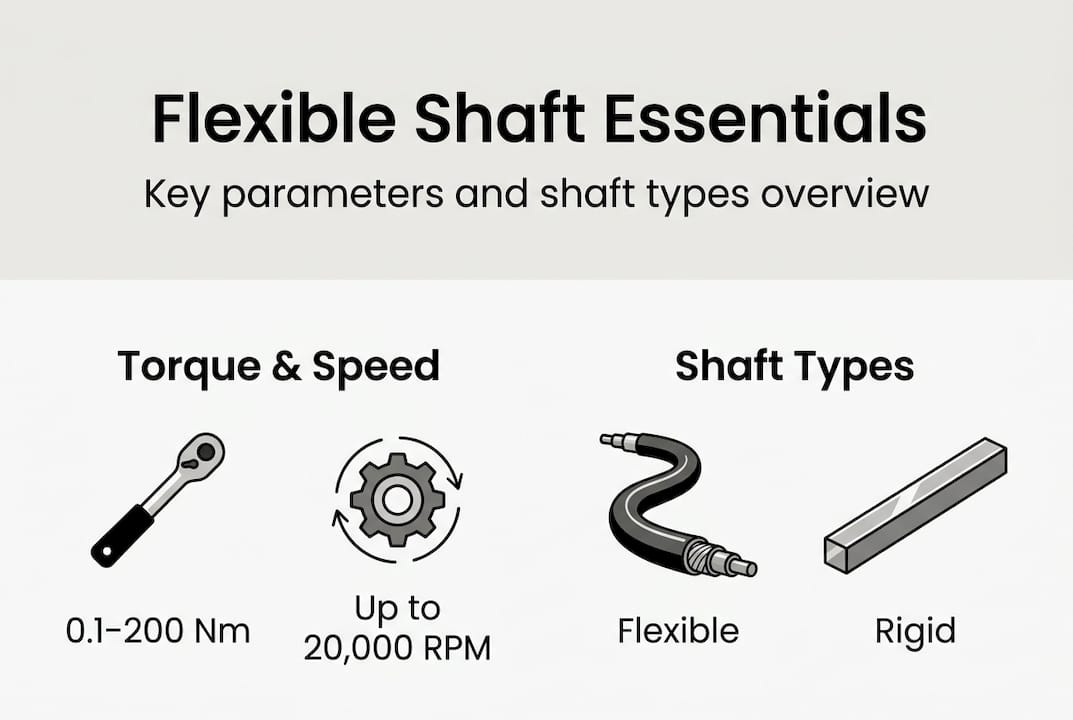
Selecting the right flexible shaft drive solutions requires matching these parameters to the specific load, speed, and geometry of the application.
Pro Tip: Always specify the minimum bend radius under dynamic load conditions, not just static geometry. Shaft fatigue accelerates significantly when the core operates near its minimum bend radius under full torque.
Flexible vs rigid shafts: Strengths and trade-offs
Rigid shafts remain the standard choice for high-torque, high-speed applications where geometry is fixed and alignment is controlled. They offer excellent torsional stiffness and predictable fatigue behavior. However, they require precise shaft alignment, often within fractions of a millimeter, and any misalignment introduces bearing loads and vibration that reduce service life.
Flexible shafts operate differently. They tolerate angular misalignment, parallel offset, and axial displacement without transmitting those errors as bearing loads. This makes them well-suited for assemblies where the drive path changes during operation or where installation geometry varies between units.
A direct comparison of flexible vs rigid shafts reveals clear performance boundaries for each design:
| Characteristic | Rigid shaft | Flexible shaft |
|---|---|---|
| Alignment tolerance | Very low | High |
| Torque capacity | Very high | Moderate |
| Vibration damping | Low | Moderate |
| Assembly complexity | High (fixed geometry) | Low (routable) |
| Repositioning capability | None | High |
| Maintenance access | Difficult in tight spaces | Easier |
Key trade-offs engineers must evaluate:
- Torque density: Rigid shafts transmit higher torque per unit diameter. If peak torque is the primary constraint, rigid designs may be necessary.
- Fatigue resistance: Flexible shaft cores experience cyclic bending stress. Proper bend radius management is essential for long service life.
- Vibration behavior: Flexible shafts absorb minor vibration from the drive source, which can protect sensitive tooling in finishing applications.
- Design flexibility: Where machine design efficiency is a priority, flexible shafts reduce the need for intermediate bearings, universal joints, and alignment fixtures.
The decision depends on load profile, operating geometry, repositioning frequency, and maintenance accessibility. Neither design is universally superior.
Flexible shaft applications in industrial manufacturing
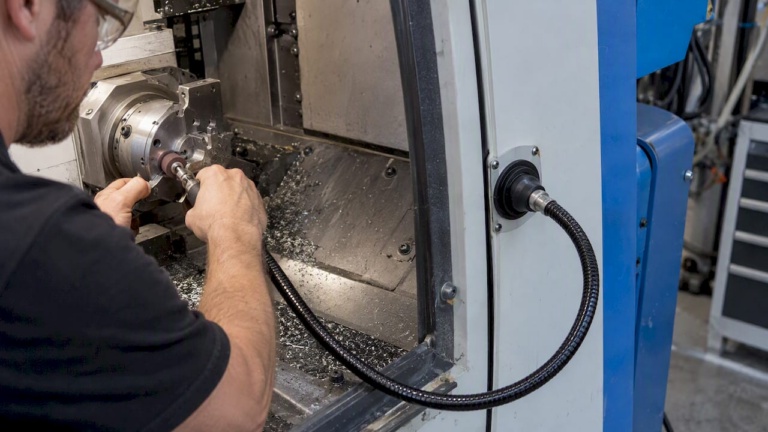
Flexible shafts appear across a wide range of manufacturing processes, particularly where drive geometry is constrained or variable. Their ability to route torque around obstacles makes them practical in applications where rigid shafts would require complex mechanical workarounds.
The most common manufacturing use cases include:
- Deburring and grinding: Flexible shafts drive rotary tools in recessed bores, internal cavities, and complex castings where direct motor access is not possible.
- Surface finishing and polishing: Consistent torque delivery through a flexible path enables uniform surface treatment on contoured components.
- Assembly and fastening: Flexible shafts power screwdrivers and nut runners in confined assembly cells where rigid extensions cannot reach.
- Robotic end-of-arm tooling: In robotics applications, flexible shafts decouple the motor mass from the tool, reducing arm inertia and improving dynamic response.
- Medical device manufacturing: Precision flexible shafts drive cutting and finishing tools in miniaturized assemblies requiring high positional accuracy.
For applications requiring tight space precision, flexible shafts eliminate the need to position the motor directly at the work point.
“Integrating flexible shafts into our automated finishing cells reduced tooling changeover time by 30% and eliminated three intermediate bearing supports per station. The geometry freedom changed how we approach compact drive design entirely.”
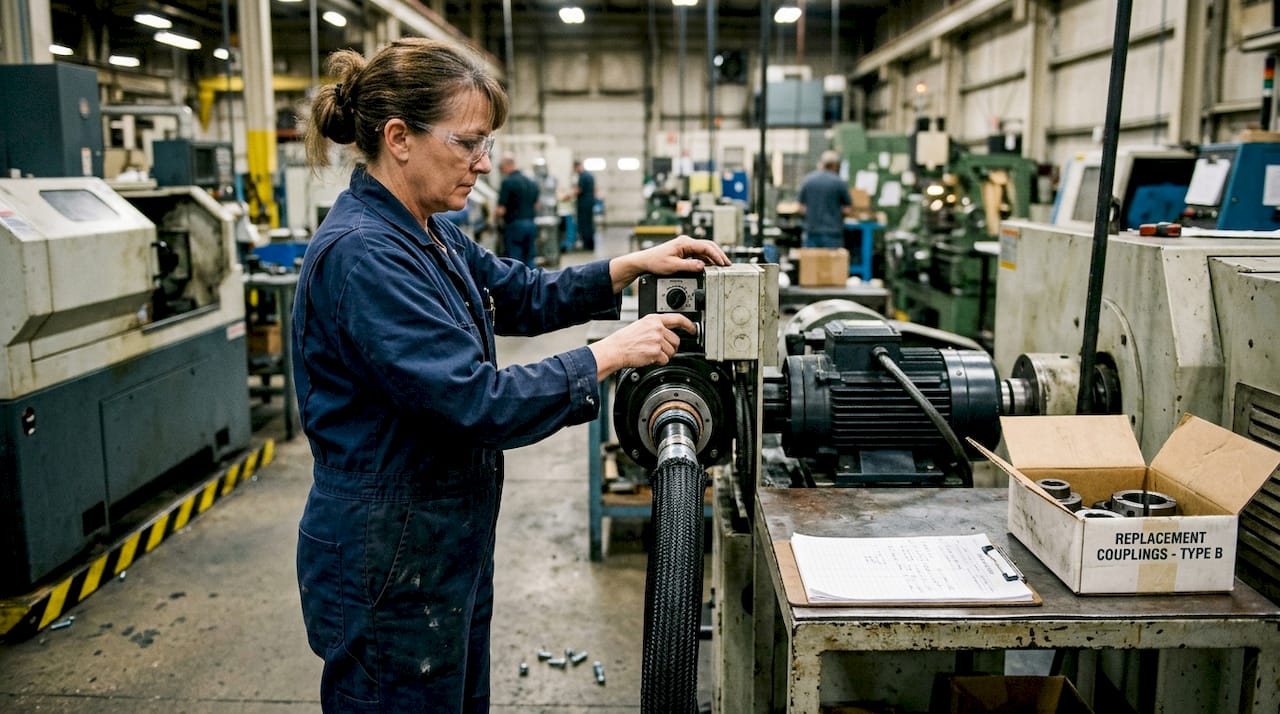
This kind of productivity gain reflects a broader trend in flexible shaft applications for industrial manufacturing: engineers are using flexible shafts not just as a workaround, but as a deliberate design choice that simplifies the overall drive architecture.
Key design considerations for optimal performance
Selecting and integrating a flexible shaft correctly requires attention to several interdependent design parameters. Getting these right at the specification stage prevents premature failure and reduces maintenance burden.
Critical factors include:
- Material selection: Core wire material determines fatigue resistance and operating temperature range. High-carbon steel cores suit most industrial applications. Stainless steel cores are specified for corrosive environments or food-grade processes.
- Minimum bend radius: This is the single most important geometric constraint. Operating below the minimum bend radius increases bending stress in the wire layers and accelerates fatigue. The flexible shaft design for tight-space finishing process requires mapping the full range of motion before finalizing shaft length and routing.
- Sheath quality: The protective sheath must resist the operating environment. Contamination ingress through a damaged sheath causes rapid core wear. Sheath stiffness also affects the shaft’s ability to push torque through tight bends.
- Dynamic loading: Static torque ratings do not account for shock loads or reversal cycles. Engineers should apply a service factor of 1.5 to 2.5 for applications with frequent load reversals or intermittent high-torque demands.
- Bearing placement: End bearing design affects both radial load capacity and axial positioning. Incorrect bearing preload is a common source of premature failure.
For applications requiring precision finishing access, sheath routing geometry and support interval spacing are as critical as the shaft specification itself. A detailed precision shaft design process ensures all these parameters are validated before production.
Pro Tip: When routing a flexible shaft through a machine frame, fix the sheath at regular intervals to prevent whipping under torque. Unsupported sheath lengths amplify vibration and reduce core life.
Maintenance and troubleshooting for flexible shafts
Flexible shafts are durable components, but they require structured maintenance to achieve full service life. Neglecting routine inspection is the most common cause of unexpected failure in production environments.
A reliable maintenance routine follows these steps:
- Inspect sheath integrity: Check for cuts, abrasion, kinking, or crushing at each scheduled interval. A compromised sheath allows contamination and accelerates core wear.
- Lubricate the core: Most flexible shafts require periodic relubrication of the wire core. Use the lubricant grade specified by the manufacturer. Under-lubrication generates heat and accelerates wire fatigue.
- Check end fittings: Inspect coupling interfaces for fretting wear, looseness, or corrosion. Loose fittings introduce backlash and reduce torque transmission accuracy.
- Monitor bearing condition: Bearing wear manifests as increased radial play or noise. Replace bearings before they reach the point of failure to avoid secondary damage to the core.
- Verify operating parameters: Confirm that load and speed remain within specification. Process changes that increase torque demand or reduce bend radius are a frequent cause of shortened shaft life.
Early warning signs of shaft fatigue include increased vibration, reduced rotational accuracy, and audible noise during operation. The 7 expert flexible shaft maintenance tips provide a structured diagnostic framework for identifying these issues before they cause downtime.
For teams managing multiple flexible shaft installations, maintenance tools and a documented peak maintenance process reduce variability and support consistent service intervals.
Pro Tip: Schedule preventative maintenance based on operating hours, not calendar time. A shaft running two shifts per day degrades faster than one running four hours per week, regardless of age.
What most engineers miss about flexible shaft integration
The conventional view treats flexible shafts as a compromise: acceptable when rigid shafts are impractical, but inferior in precision applications. That view is outdated and costs engineering teams real money.
In practice, flexible shafts perform reliably in high-precision finishing tasks when the design is correctly specified. The precision limitation is not inherent to the flexible shaft itself. It comes from poor bend radius management, incorrect sheath support, or undersized cores operating near their torque limit. Solve those design problems and the precision argument disappears.
The more significant missed opportunity is in compact drive architecture. Many teams spend engineering budget on custom gear sets, universal joints, and alignment fixtures to make rigid shafts work in constrained geometries. A properly specified flexible shaft eliminates most of that hardware. The result is a simpler assembly, fewer failure points, and lower total cost.
Multi-axis and dynamic setups benefit most. Flexible shafts naturally accommodate the geometry changes that occur when a robot arm moves or a fixture repositions. Rigid drive trains fight those changes. Design efficiency insights consistently show that teams integrating flexible shafts early in the design process achieve more compact, maintainable machines than those retrofitting them later.
The strategic lesson: evaluate flexible shafts at the concept stage, not as a last resort.
Turn engineered knowledge into compact drive success
BIAX Flexwellen supports design engineers and R&D teams through every stage of flexible shaft integration, from initial specification to custom configuration. Whether you need standard components for a proven application or a custom shaft designed around specific torque, RPM, and coupling requirements, the product range covers the full spectrum of industrial flexible shaft applications.
Explore the complete range of shaft drive solutions to identify the right configuration for your drive geometry. Use the shaft selection guide to compare options based on torque, speed, and bend radius requirements. For complex drive challenges, the BIAX Flexwellen engineering team provides direct technical consultation. Contact us through the website to discuss your application.
Frequently asked questions
How do flexible shafts transmit rotary motion through bends?
A flexible shaft transmits rotary motion by deforming its spiraled wire core, allowing twists and bends while maintaining consistent rotational speed and torque. Correct bend radius management ensures 40% longer shaft life compared to improperly routed installations.
What are the main failure modes in flexible shafts?
Common failure modes include sheath abrasion, wire fatigue, bearing wear, and improper lubrication, all of which reduce transmission accuracy and shaft life. Structured inspection routines based on expert maintenance tips catch these issues before they cause production downtime.
Which industries rely most on flexible shafts?
Flexible shafts are widely used in manufacturing, robotics, medical devices, automotive assembly, and surface finishing tools. The range of industrial manufacturing applications continues to expand as machine designs become more compact and geometrically complex.
How should engineers select a flexible shaft for compact machinery?
Engineers should evaluate torque requirements, minimum bend radius, shaft material, and assembly integration to ensure optimal performance and reliability. The tight-space finishing design guide provides a structured framework for this selection process.
What ongoing maintenance is required for flexible shafts?
Routine maintenance includes checking for wear, lubricating components, inspecting sheath integrity, and monitoring bearing alignment. Following a documented maintenance process for peak performance ensures consistent service life across all installed shafts.
Recommended
- Flexible Shaft Drive Solutions: Unlocking Compact Efficiency
- 7 Practical Examples of Shaft Drive Solutions for Engineers
- Flexible Shafts for Tight Spaces: Boosting Precision
- Custom Flexible Shaft Configuration Guide for Engineers
Related Topics
Send your spec inquiry
Custom flexible shafts for your application — we quote within 1 working day.