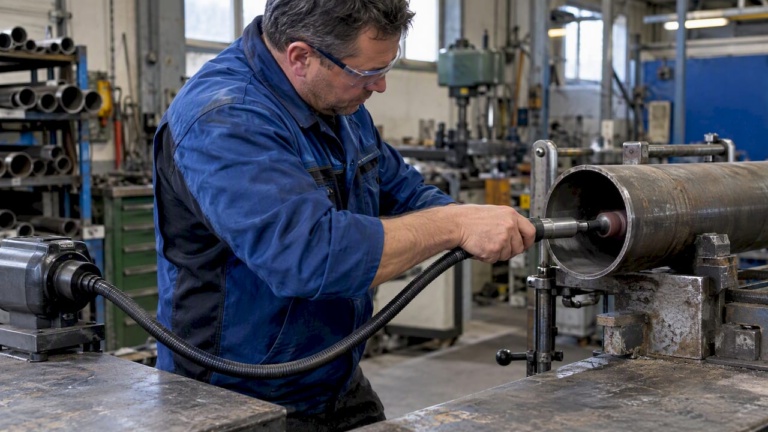
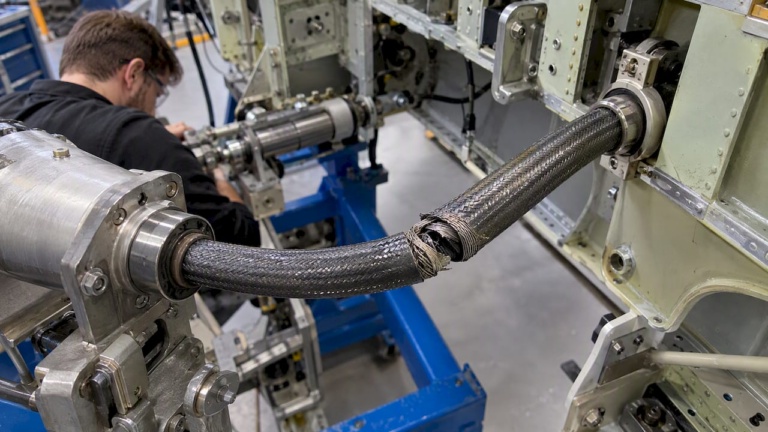
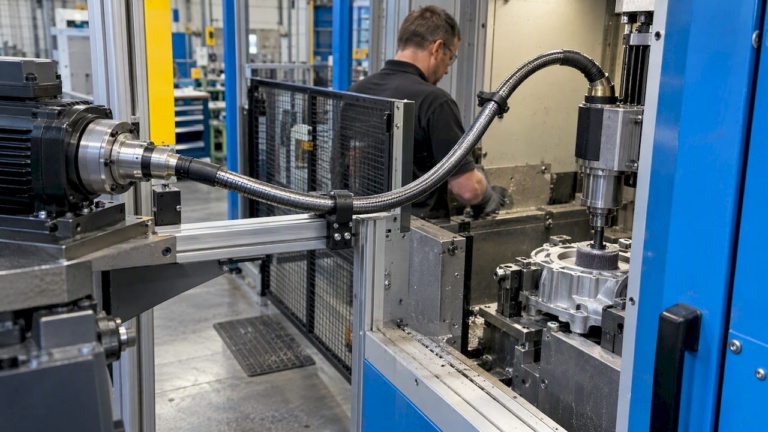
Custom Flexible Shaft Configuration Guide for Engineers
18 February 2026Tight installation spaces are a constant challenge for design engineers configuring power transmission systems in industrial machinery. The right choice and configuration of a flexible shaft can make all the difference when navigating complex layouts or accommodating misaligned components. By focusing on torque capacity along with parameters like shaft diameter and minimum bend radius, you can achieve reliable and long-lasting performance even in demanding environments. This practical guide breaks down each critical step to help you match shaft configurations precisely to your application’s requirements.
Table of Contents
- Step 1: Assess Application Requirements For Flexible Shafts
- Step 2: Select Ideal Materials And Shaft Design Options
- Step 3: Configure Torque And RPM Specifications
- Step 4: Integrate Coupling Interfaces For Seamless Fitting
- Step 5: Validate Performance Through Testing Procedures
Quick Summary
| Key Point | Explanation |
|---|---|
| 1. Assess Key Parameters for Selection | Evaluate torque capacity, rotational speed, and environmental factors to ensure suitability and reliability of flexible shafts. |
| 2. Choose Appropriate Materials Wisely | Select materials based on application needs; corrosion resistance and strength are essential for durability and functionality. |
| 3. Configure Torque and RPM Specifications | Accurate configuration of torque and RPM is crucial for effective power transmission and prevents mechanical failures. |
| 4. Ensure Accurate Coupling Integration | Proper alignment and fitment of coupling interfaces are necessary for seamless mechanical connections and optimal performance. |
| 5. Validate Performance Through Rigorous Testing | Conduct thorough testing to verify performance parameters, ensuring the flexibility and reliability of the shafts in operation. |
Step 1: Assess application requirements for flexible shafts
Engineers must systematically evaluate multiple critical parameters when selecting flexible shafts for industrial or mechanical applications. This process requires understanding the specific performance characteristics and operational constraints that will determine shaft suitability and reliability.
The assessment begins with analyzing key transmission parameters, including torque capacity, maximum rotational speed, and environmental conditions. Flexible shaft power transmission demands precise evaluation across several critical dimensions:
-
Mechanical Load Requirements
- Maximum torque transmission capacity
- Operational speed range (up to 50,000 rpm)
- Required rotational precision
-
Physical Configuration Parameters
- Shaft diameter specifications
- Minimum acceptable bend radius
- Total transmission length
- Torsional deflection tolerance
-
Environmental Considerations
- Temperature range
- Potential contaminant exposure
- Vibration and shock absorption requirements
Careful evaluation of these parameters ensures that the selected flexible shaft will perform reliably under specific operational demands. Complex mechanical movement needs require engineers to match shaft characteristics precisely with application specifications.
Accurate parameter assessment prevents premature shaft failure and ensures optimal power transmission performance.
Pro tip: Always request manufacturer specifications and conduct prototype testing to validate flexible shaft performance under actual operating conditions.
Step 2: Select ideal materials and shaft design options
Selecting the right materials and design for flexible shafts is a critical engineering decision that directly impacts performance, durability, and reliability. Your material choice will determine how effectively the shaft can transmit power under specific operational conditions.
Flexible shaft material selection involves evaluating multiple technical parameters across different material categories:
-
Material Composition Options
- Carbon steel for standard industrial applications
- Stainless steel for corrosion resistance
- Tempered steel for enhanced strength
- Music wire for precision mechanical systems
- Bronze and copper alloys for specialized environments
-
Design Configuration Considerations
- Unidirectional vs. bidirectional shaft movement
- Protective casing requirements
- Wire construction patterns
- Flexible core material
- Sheath composition and thickness
Engineers must meticulously match material properties with application demands, considering factors like temperature range, mechanical stress, and potential environmental contamination. The selected material and design must provide optimal power transmission efficiency while maintaining structural integrity under challenging conditions.

Here’s a quick reference guide to material options for flexible shafts and their best-use scenarios:
| Material Type | Ideal Use Case | Key Benefit |
|---|---|---|
| Carbon Steel | General industrial machinery | Durable and cost-effective |
| Stainless Steel | Chemical or outdoor environments | Corrosion resistance |
| Tempered Steel | Heavy-duty mechanical systems | Enhanced strength |
| Music Wire | Precision instruments | High flexibility and accuracy |
| Bronze/Copper | Specialized environments | Electrical conductivity |
Material selection is not just about strength – it’s about creating a precision instrument that performs consistently across complex operational scenarios.
Pro tip: Always conduct comprehensive material compatibility testing and simulate extreme operational conditions before final shaft selection.
Step 3: Configure torque and RPM specifications
Configuring precise torque and RPM specifications is a critical engineering task that determines the flexible shaft’s performance and longevity. Understanding how these parameters interact will help you design a transmission system that meets your specific mechanical requirements.
Flexible shaft performance specifications require careful consideration of multiple technical factors:
-
Torque Configuration Parameters
- Continuous torque load capacity
- Peak torque transmission limits
- Torsional deflection tolerance
- Load distribution characteristics
-
Rotational Speed Specifications
- Maximum operational RPM range
- Speed stability requirements
- Vibration dampening capabilities
- Minimum and maximum speed thresholds
Engineers must meticulously analyze the relationship between shaft diameter, length, and material properties to ensure reliable power transmission. Flexible shaft design considerations demand precise calculations that account for potential mechanical variations and operational stress.
Accurate torque and RPM configuration is not just a technical requirement – it’s the foundation of reliable mechanical power transmission.
Pro tip: Always include a 20% safety margin in your torque and RPM calculations to account for unexpected operational variations and potential performance fluctuations.
Step 4: Integrate coupling interfaces for seamless fitting
Successfully integrating coupling interfaces requires precision engineering and a deep understanding of mechanical connectivity principles. Your goal is to create a robust connection that ensures optimal power transmission while accommodating potential misalignments and mechanical variations.
Flexible shaft coupling methods encompass several critical interface configurations:
-
Coupling Interface Types
- Keyed shaft connections
- Splined mechanical interfaces
- Threaded end attachments
- Proprietary specialized connectors
-
Integration Considerations
- Alignment precision
- Torque transmission efficiency
- Misalignment accommodation
- Mechanical load distribution
- Assembly complexity
Engineers must carefully evaluate mechanical interface tolerances to ensure seamless power transmission. Each coupling method presents unique advantages depending on the specific application requirements, mechanical load characteristics, and system design constraints.
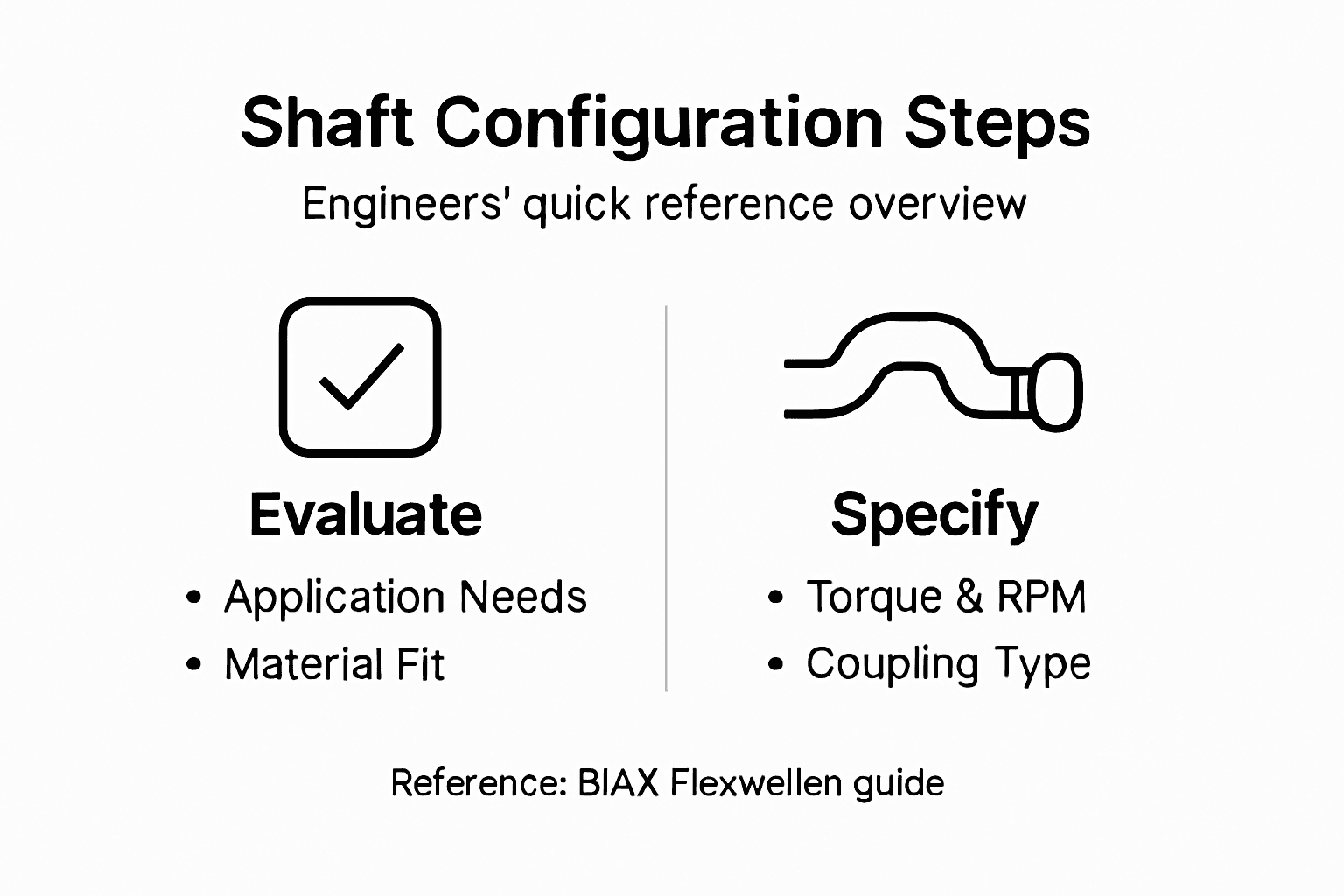
This table summarizes common coupling interface types and their practical advantages:
| Coupling Type | Typical Application | Major Advantage |
|---|---|---|
| Keyed Shaft | Industrial machinery | High alignment precision |
| Splined Interface | Heavy-duty systems | Superior torque transfer |
| Threaded Attachment | Portable tools | Quick assembly/disassembly |
| Specialized Connector | Custom machinery | Adaptable to unique designs |
Successful coupling integration is about creating a harmonious mechanical connection that transforms individual components into a unified power transmission system.
Pro tip: Always perform comprehensive alignment and fitment testing before final assembly to validate the coupling interface’s mechanical compatibility and performance characteristics.
Step 5: Validate performance through testing procedures
Validating flexible shaft performance requires systematic testing protocols that comprehensively assess mechanical characteristics under simulated operational conditions. Engineers must develop rigorous experimental approaches to confirm reliability and predict long-term performance capabilities.
Flexible shaft performance validation encompasses multiple critical testing dimensions:
-
Performance Verification Parameters
- Torsional stiffness measurement
- Torque transmission capacity
- Angular deflection analysis
- Cyclic loading endurance
- Fatigue resistance evaluation
-
Testing Methodology Considerations
- Dynamic load simulation
- Frequency response analysis
- Vibration tolerance assessment
- Deformation limit determination
- Operational range validation
Engineers must meticulously develop experimental verification protocols that expose flexible shafts to comprehensive mechanical stress scenarios. Mechanical performance testing strategies help predict potential failure modes and ensure system reliability across diverse operational environments.
Performance validation is not merely a technical requirement – it is the critical bridge between design theory and real-world mechanical reliability.
Pro tip: Document every test parameter and result meticulously, creating a comprehensive performance baseline that can inform future design iterations and system improvements.
Enhance Your Projects with Custom Flexible Shaft Solutions from BIAX Flexwellen
Navigating the complexities of flexible shaft configuration can feel overwhelming. Whether you are evaluating torque capacity, material selection, or coupling interfaces, every detail matters when designing for precision and durability. The challenge of ensuring accurate torque transmission and RPM specifications while managing environmental factors requires expert guidance and tailored solutions. BIAX Flexwellen understands these critical engineering demands and partners with machine builders and industrial manufacturers to deliver flexible shafts built for reliability in even the most demanding applications.
Unlock the full potential of your machinery with BIAX Flexwellen’s custom configurations and engineering support. From optimizing shaft design to integrating precise coupling interfaces, our products are engineered to meet your exact torque and operational needs for processes like deburring, polishing, and grinding. Ready to elevate your project’s performance and avoid costly downtime? Connect with our experts today via the contact page and start your journey toward the perfect flexible shaft solution. Don’t wait to make confident design decisions that ensure long-term reliability and efficiency.
Frequently Asked Questions
What parameters should I assess when configuring a flexible shaft for my application?
To configure a flexible shaft effectively, assess parameters such as maximum torque capacity, maximum rotational speed, required bend radius, and environmental conditions. Collect and analyze this data to ensure the shaft meets your operational requirements and avoids premature failures.
How do I select the right materials for my flexible shaft design?
Choose materials based on the specific demands of your application. Consider factors like corrosion resistance, mechanical stress, and temperature range to ensure optimal performance and durability. Conduct compatibility tests to validate your material choice before finalizing your design.
What are the best practices for integrating coupling interfaces with flexible shafts?
Integrating coupling interfaces requires attention to alignment precision and torque transmission efficiency. Select the appropriate coupling type and ensure it can accommodate misalignments while maintaining mechanical load distribution. Test alignment and fitment rigorously to confirm compatibility.
How can I validate the performance of my flexible shaft configuration?
Validate your flexible shaft’s performance by conducting systematic testing, including torsional stiffness measurement and cyclic loading endurance. Develop rigorous protocols to assess the shaft under simulated operating conditions, documenting all results to establish a performance baseline for future reference.
What do I need to know about configuring torque and RPM specifications for flexible shafts?
Understanding torque and RPM specifications is vital for reliable performance. Analyze the relationship between shaft diameter, length, and material properties while incorporating a safety margin of at least 20% to accommodate unexpected operational variations.
How do environmental factors impact flexible shaft selection?
Environmental factors such as temperature range, exposure to contaminants, and vibration tolerance directly affect flexible shaft selection. Assess these conditions before finalizing your shaft configuration to ensure it can withstand specific operational challenges.
Recommended
- 7 Vorteile flexibler Antriebswellen für beengte Räume – BIAX Flexwellen
- Flexible Shaft Maintenance Process for Peak Performance
- 7 Expert Flexible Shaft Maintenance Tips for Engineers
- Flexible Wellen in der Fertigung – Präzision in engen Räumen
- ASIS – Azubivideo Industriemechaniker – M-four
Related Topics
Send your spec inquiry
Custom flexible shafts for your application — we quote within 1 working day.