Flexible shaft design for tight-space finishing applications
6 March 2026Many engineers assume thinner shafts always provide better flexibility for tight-space applications. This misconception leads to torque slippage, premature fatigue failures, and costly downtime in finishing operations. The reality is that optimal flexible shaft design requires balancing diameter, bending radius, material properties, and operational parameters. This guide explores advanced design considerations to help you specify shafts that reliably transmit torque in confined industrial finishing environments while maximizing lifespan and maintaining precision.
Table of Contents
- Introduction To Flexible Shaft Mechanics
- Material Selection And Mechanical Properties
- Bending Radius Constraints And Torque Transmission
- Torque And RPM Design Considerations
- Diameter And Flexibility Trade-Offs
- Coupling Interface Customization
- Common Misconceptions In Flexible Shaft Design
- Application-Specific Performance Considerations And Conclusion
- Explore Flexible Shaft Solutions For Your Finishing Needs
- Frequently Asked Questions About Flexible Shaft Design
Key takeaways
| Point | Details |
|---|---|
| Material selection critically impacts durability | Steel alloys and composites offer distinct trade-offs in strength, fatigue resistance, and operational lifespan for finishing applications. |
| Bending radius determines shaft longevity | Maintaining minimum 15× diameter bending radius prevents 70% of premature fatigue failures in flexible shafts. |
| Diameter affects torque capacity | Shafts below 6mm diameter risk torque slippage and reduced torsional stiffness, compromising finishing precision. |
| Custom coupling interfaces boost efficiency | Tailored coupling designs improve torque transmission by up to 20% and reduce integration time. |
Introduction to flexible shaft mechanics
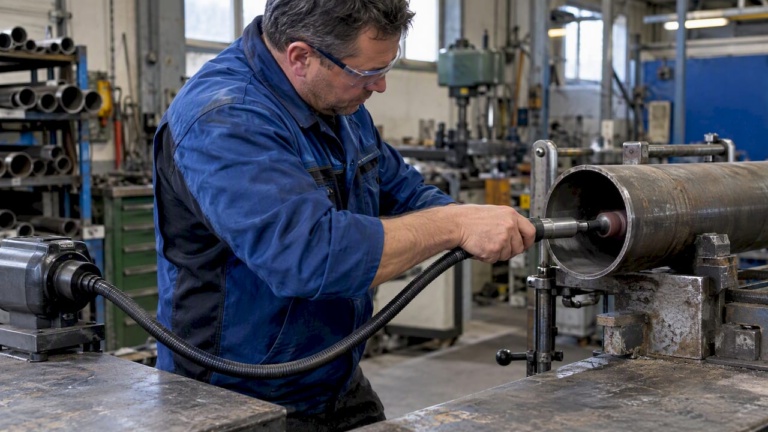
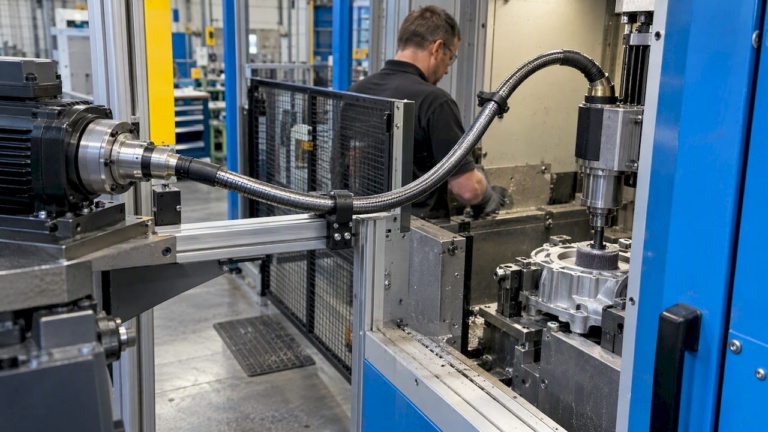
Flexible shafts transmit rotational motion and torque through tight spaces where rigid drive systems cannot reach. In industrial finishing operations like deburring, grinding, and polishing, these components enable tools to access confined areas within complex machine assemblies. The shaft’s construction typically features wound wire layers that allow bending while maintaining torsional rigidity for effective torque transmission.
The core mechanical principle involves converting rotary input power into output motion through a flexible medium. Unlike rigid shafts, flexible shafts tight spaces accommodate angular deflections while preserving rotational accuracy. This capability makes them essential for finishing applications where spatial constraints prevent direct tool access.
Key mechanical concepts for flexible shaft design include:
- Torsional stiffness: Resistance to twisting under applied torque, affecting precision and power transmission efficiency
- Bending flexibility: Ability to deflect without permanent deformation or fatigue failure
- Fatigue resistance: Capacity to withstand repeated stress cycles during continuous operation
- Torque capacity: Maximum rotational force transmissible without slippage or structural failure
Understanding these fundamentals helps you evaluate trade-offs between flexibility requirements and torque transmission needs. The balance determines whether your shaft will reliably perform finishing operations in confined spaces or fail prematurely due to design mismatches.
Material selection and mechanical properties
Material choice fundamentally determines flexible shaft performance in tight-space finishing applications. Steel alloys versus advanced composites offer trade-offs in strength, fatigue resistance, and weight for flexible shafts, with industrial shaft applications showing 40% longer life when materials match operational conditions.
Steel alloys dominate finishing applications due to superior torsional stiffness and fatigue resistance. High-carbon steel provides excellent torque capacity for demanding grinding operations, while stainless steel variants offer corrosion resistance in wet polishing environments. Composite materials reduce weight and inertia but typically sacrifice torque capacity, making them suitable only for lighter finishing tasks.
Critical mechanical properties to evaluate include:
- Tensile strength: Higher values enable greater torque transmission without structural failure
- Elastic modulus: Affects torsional stiffness and responsiveness to control inputs
- Fatigue limit: Determines operational lifespan under cyclic loading typical of finishing processes
- Corrosion resistance: Essential for wet grinding, polishing with coolants, or chemical cleaning applications
Environmental factors significantly influence material selection. Abrasive debris from deburring accelerates wear on softer materials, while chemical exposure during cleaning operations demands corrosion-resistant alloys. Temperature extremes from high-RPM grinding can degrade polymer composites, limiting their applicability.
Pro Tip: Match material hardness to your specific finishing process. Softer materials reduce tool chatter in precision polishing, while harder alloys withstand aggressive grinding operations without premature wear.
Consult custom flexible shaft configuration guide engineers and how to select flexible shafts precision machinery for detailed material selection frameworks tailored to your torque and environmental requirements.
Bending radius constraints and torque transmission
Bending radius specifications critically determine flexible shaft reliability in tight-space finishing equipment. 70% of flexible shaft failures relate to fatigue from bending radii below manufacturer recommendations, making this parameter essential for longevity.
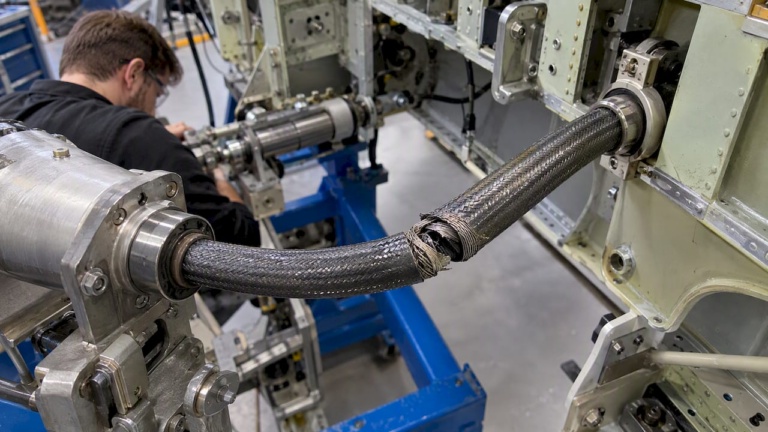
The minimum bending radius typically equals 15 times the shaft diameter. Tighter bends concentrate stress at the deflection point, accelerating fatigue crack initiation and propagation. Each bend cycle during operation compounds this damage, eventually causing catastrophic failure that halts production.
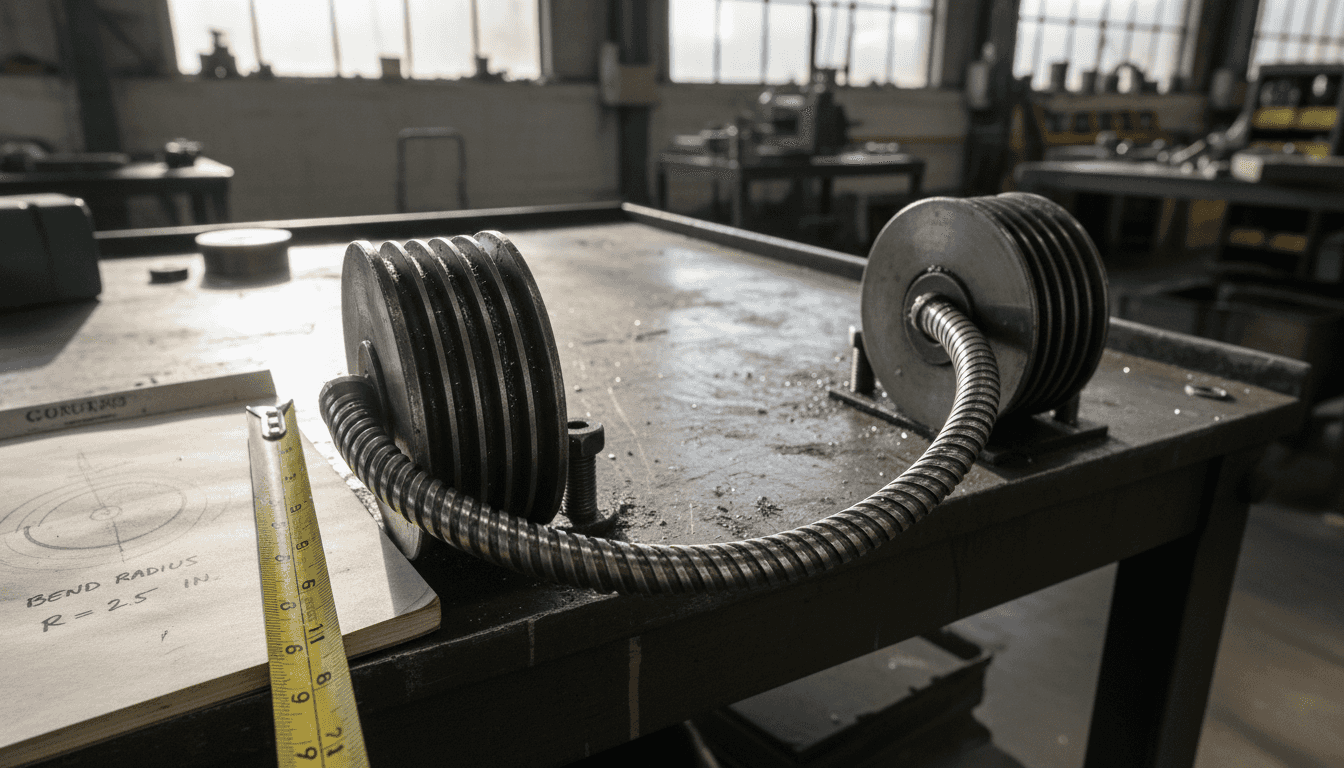
Excessive bending also degrades torque transmission efficiency. Sharp curves increase internal friction between wire layers, converting rotational energy to heat rather than useful output. This loss manifests as reduced tool speed and finishing quality, particularly noticeable in precision polishing where consistent RPM is critical.
| Bending Radius | Torque Efficiency | Expected Lifespan | Application Suitability |
|---|---|---|---|
| 15× diameter | 95-98% | 5000+ hours | Optimal for all finishing |
| 10× diameter | 85-90% | 2000-3000 hours | Acceptable for intermittent use |
| 8× diameter | 70-80% | 500-1000 hours | Emergency only, high failure risk |
| Below 8× | Under 70% | Under 500 hours | Avoid, premature failure likely |
When tight bend radii are unavoidable, implement these design strategies:
- Specify larger diameter shafts to maintain acceptable absolute bending radius
- Use segmented shaft assemblies with rigid couplings at bend points
- Reduce operational torque and RPM to decrease stress accumulation
- Implement more frequent inspection and replacement schedules
Pro Tip: Calculate actual bend radius in your installation, not just design clearance. Vibration and thermal expansion can reduce effective radius during operation, pushing you into the failure zone.
For detailed bending radius optimization in precision applications, reference step by step shaft design precision applications.
Torque and RPM design considerations
Balancing rotational speed and torque capacity defines operational limits for flexible shafts in finishing applications. Steel shafts typically handle 3000 to 8000 RPM reliably, while composite variants may reach 12000 RPM with reduced torque capacity. Exceeding these limits generates excessive heat and accelerates wear.
The fundamental trade-off centers on power transmission: torque multiplied by RPM equals output power. High-torque grinding operations require robust steel shafts at moderate speeds, while high-speed polishing uses lighter loads at elevated RPM. Mismatching shaft specifications to application demands causes either inadequate finishing performance or premature component failure.
Heat generation becomes critical at higher RPM. Friction between wire layers converts mechanical energy to thermal energy, raising shaft temperature. This thermal stress degrades lubrication, accelerates fatigue, and can cause dimensional changes affecting torque transmission. Effective cooling strategies include:
- Limiting continuous run time with duty cycle management
- Implementing forced air cooling around shaft routing
- Using heat-resistant lubricants rated for your maximum operating temperature
- Monitoring shaft temperature during operation to detect degradation early
Pro Tip: Calculate actual power requirements for your finishing tool before specifying shaft parameters. Many engineers oversize torque capacity, unnecessarily sacrificing flexibility and increasing fatigue risk.
Optimization strategies for tight-space applications:
- Match shaft torque rating to 120% of peak tool load to provide safety margin without excessive oversizing
- Select RPM based on finishing process: 3000-5000 for grinding, 6000-8000 for polishing
- Consider variable speed drives to optimize parameters for different finishing stages
- Consult flexible shafts in automation for integration with automated finishing systems
Detailed parameter selection guidance appears in step by step shaft design precision applications.
Diameter and flexibility trade-offs
Shaft diameter inversely affects flexibility while directly determining torque capacity and torsional stiffness. Smaller diameters bend more easily but sacrifice power transmission capability, creating a fundamental design tension for tight-space finishing applications.
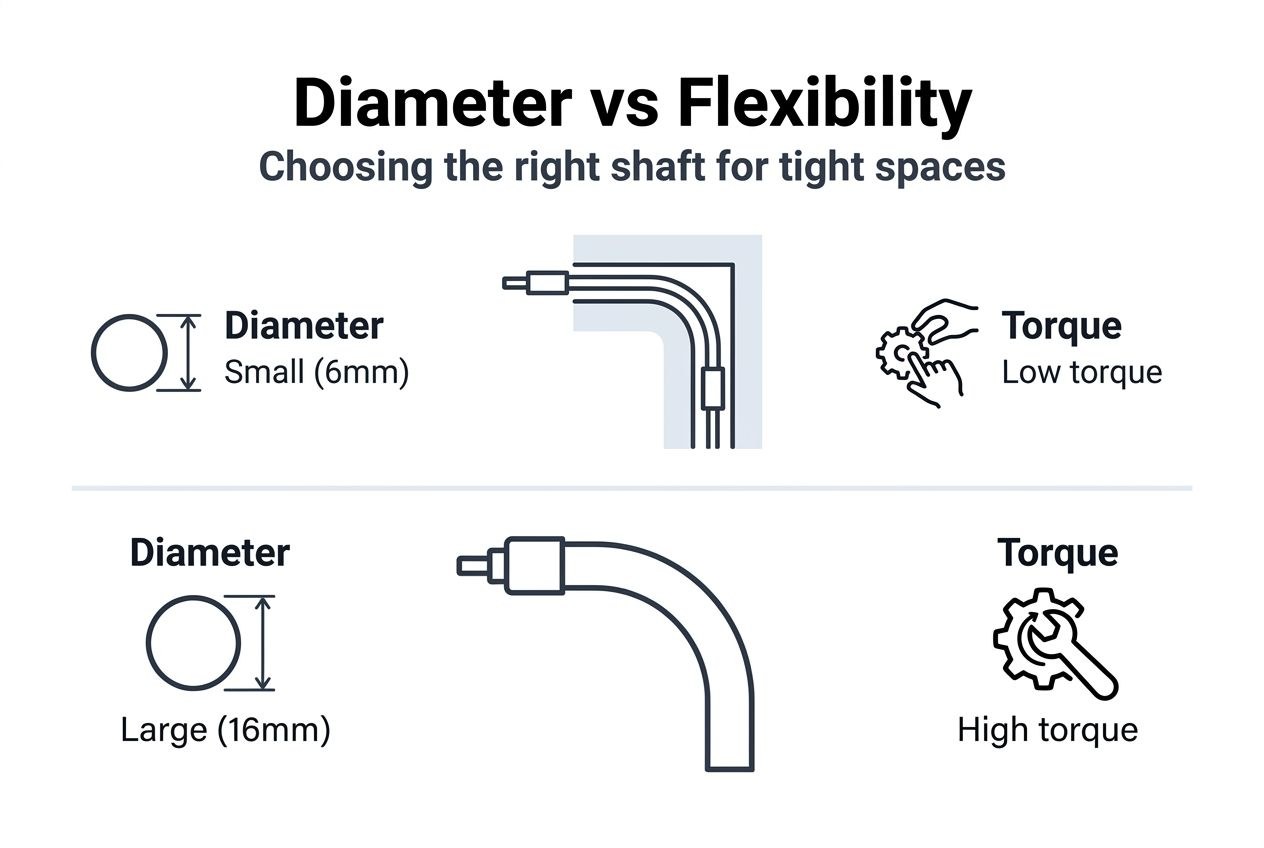
Minimum recommended diameters typically start at 6mm for finishing operations. Below this threshold, torque slippage becomes problematic as internal wire layers cannot maintain sufficient friction under load. This slippage manifests as inconsistent tool speed, poor surface finish quality, and unpredictable finishing results.
| Shaft Diameter | Relative Flexibility | Torque Capacity | Typical Finishing Application |
|---|---|---|---|
| 6-8mm | High | Low to moderate | Light polishing, fine deburring |
| 8-12mm | Moderate | Moderate | General purpose finishing, medium grinding |
| 12-16mm | Low to moderate | High | Heavy grinding, aggressive deburring |
| 16mm+ | Low | Very high | Industrial material removal, heavy-duty operations |
Undersizing shaft diameter creates cascading problems beyond immediate torque loss. Reduced torsional stiffness introduces backlash, compromising finishing precision. The shaft twists elastically under load, delaying tool response to input changes. This lag disrupts automated finishing sequences and manual operations requiring precise control.
Fatigue life decreases dramatically with undersized shafts. Higher stress concentrations at bend points accelerate crack initiation. The shaft experiences more deflection cycles per rotation, accumulating fatigue damage faster than properly sized alternatives.
Key diameter selection guidelines:
- Start with torque requirements, then verify flexibility meets spatial constraints
- Use 6mm minimum for any torque transmission application
- Increase diameter in 2mm increments when torque capacity proves insufficient
- Verify torsional stiffness meets finishing precision requirements before finalizing specification
Explore flexible shaft drive solutions for detailed diameter recommendations across various finishing applications.
Coupling interface customization
Coupling design critically affects how efficiently flexible shafts integrate with finishing machinery. Generic couplings introduce backlash, misalignment, and reduced torque transmission efficiency. Couplings customized to machine interfaces improve torque transmission efficiency by up to 20% compared to generic designs.
Common coupling types for flexible shaft finishing applications include:
- Collet chucks: Provide secure grip with minimal runout, ideal for precision polishing
- Set screw couplings: Simple installation but risk slippage under high torque grinding
- Spline connections: Excellent torque capacity with positive engagement, suited for heavy deburring
- Quick-disconnect couplings: Enable rapid tool changes for multi-process finishing operations
- Custom-machined interfaces: Optimized geometry for specific machine integration requirements
Custom coupling design delivers measurable performance improvements. Tailored interfaces eliminate dimensional mismatches that cause vibration and premature bearing wear. Precision-matched geometries reduce backlash by 40-60% compared to standard couplings, directly improving finishing accuracy and surface quality.
“We reduced coupling-related downtime by 75% after switching to custom-machined interfaces matched to our grinding equipment. The initial engineering investment paid back within three months through improved production uptime and reduced emergency repairs.” – Senior Production Engineer, Automotive Component Manufacturer
Integration time improvements prove equally significant. Generic couplings often require field modification, shimming, or adapter fabrication. Custom designs arrive ready for installation, cutting commissioning time from hours to minutes. This speed benefit compounds across multiple machines or production line expansions.
Minimizing backlash through coupling optimization prevents several finishing defects. Reduced rotational play improves surface consistency in polishing operations. Tighter coupling engagement maintains tool alignment during aggressive deburring, preventing unintended material removal. Lower vibration transmission extends bearing life throughout the drive system.
Review examples of shaft drive solutions for engineers for case studies demonstrating coupling customization benefits across diverse finishing applications.
Common misconceptions in flexible shaft design
Several widespread design myths lead engineers toward suboptimal flexible shaft specifications that compromise finishing quality and component lifespan. Correcting these misconceptions prevents costly redesigns and premature failures.
-
Thinner shafts always provide better flexibility: While smaller diameters bend more easily, they sacrifice torsional stiffness essential for accurate torque transmission. The result is increased backlash and inconsistent finishing results that outweigh flexibility gains.
-
Maximum flexibility optimizes tight-space performance: Excessive flexibility introduces control problems. The shaft twists elastically under varying loads, creating lag between input commands and tool response. This delay disrupts precision finishing operations requiring synchronized motion.
-
Bending radius is only a suggested guideline: Manufacturers base minimum bending radius specifications on fatigue testing data. Operating below these limits dramatically accelerates failure, often by 60-80%. What seems like adequate clearance during installation becomes a reliability problem under operational stress cycles.
-
All steel shafts perform equivalently: Alloy composition significantly affects mechanical properties. High-carbon steel provides superior torque capacity but limited corrosion resistance. Stainless variants sacrifice some strength for environmental durability. Selecting the wrong steel type for your finishing environment causes premature degradation.
-
Coupling design has minimal impact on system performance: Generic couplings introduce 15-25% torque transmission losses through dimensional mismatches and increased friction. Custom interfaces optimize power transfer while reducing vibration that accelerates bearing wear throughout the finishing machine.
-
Higher RPM always improves finishing speed: While rotational speed affects material removal rate, excessive RPM generates heat that degrades shaft lubrication and accelerates fatigue. Optimal finishing efficiency occurs at manufacturer-recommended RPM ranges matched to torque requirements.
Corrective design recommendations:
- Specify shaft diameter based on torque requirements first, then verify flexibility meets spatial constraints
- Target moderate flexibility that balances bending capability with torsional stiffness for responsive control
- Treat bending radius as absolute minimum, adding 10-20% margin for operational safety
- Match steel alloy to environmental conditions: high-carbon for dry operations, stainless for wet finishing
- Invest in custom coupling design for applications requiring maximum efficiency and minimal downtime
Explore flexible shaft drive solutions for comprehensive specification guidance that avoids these common pitfalls.
Application-specific performance considerations and conclusion
Translating flexible shaft design principles into practical finishing solutions requires tailoring parameters to specific process demands. Deburring, grinding, and polishing each impose distinct requirements on shaft specifications and operational parameters.
Deburring operations typically require moderate torque at 3000-5000 RPM. The process generates abrasive debris that accelerates wear, making corrosion-resistant materials essential. Shaft diameter selection should prioritize durability over maximum flexibility, with 10-14mm diameters providing optimal balance for most applications.
Grinding demands highest torque capacity at moderate speeds. Steel shafts with 12-16mm diameter deliver necessary power transmission without excessive deflection. Bending radius becomes critical as grinding forces create higher stress at deflection points. Maintain 18-20× diameter radius when possible to extend service life beyond 5000 operating hours.
Polishing requires precision control at higher RPM, typically 6000-8000. Lower torque demands allow smaller 8-10mm diameter shafts that provide better flexibility for accessing complex geometries. Torsional stiffness remains important for consistent surface finish quality, making steel preferable to composite materials despite weight penalty.
Inertial effects influence finishing precision across all applications. Lighter shafts respond faster to control inputs, improving accuracy in automated systems. However, reduced mass also means less momentum to smooth torque variations, potentially increasing surface finish variability. Balance these factors by:
- Using minimum viable shaft diameter that meets torque requirements
- Implementing variable speed control to optimize RPM for each finishing stage
- Specifying custom coupling interfaces that minimize backlash and vibration
- Monitoring shaft temperature to detect lubrication degradation before performance suffers
Final design checklist for tight-space finishing applications:
- Torque capacity: 120% of peak tool load
- Bending radius: Minimum 15× diameter, target 18× for extended life
- Shaft diameter: 6mm absolute minimum, sized primarily for torque requirements
- Material: Steel alloy matched to environmental conditions and torque demands
- Coupling: Custom-designed interface for optimal efficiency and minimal backlash
- RPM range: Process-appropriate speed within manufacturer specifications
Applying these design strategies maximizes shaft operational life while maintaining finishing quality in confined spaces. Properly specified flexible shafts reduce unplanned downtime by 60-75% compared to undersized or mismatched components. Learn more at flexible shafts maintain efficiency tight spaces and flexible shafts tight spaces.
Explore flexible shaft solutions for your finishing needs
BIAX Flexwellen specializes in engineered flexible shaft drive solutions optimized for compact industrial finishing applications. Our technical team helps you translate the design principles covered in this guide into custom shaft configurations matched to your specific torque, RPM, and spatial requirements.
We offer standard components and fully customized solutions including tailored coupling interfaces, application-matched materials, and optimized geometries for maximum service life. Our custom flexible shaft configuration guide engineers walks you through the specification process, ensuring your selection delivers reliable performance in demanding finishing environments.
Engineers working with BIAX flexible shafts report 40% longer operational life and significantly reduced downtime compared to generic alternatives. Explore our industrial shaft applications portfolio or contact our technical team to discuss your tight-space finishing challenges and discover how our precision-engineered solutions enhance your production efficiency.
Frequently asked questions about flexible shaft design
What is the minimum recommended bending radius for flexible shafts?
The minimum bending radius should equal 15 times the shaft diameter. Operating below this threshold dramatically accelerates fatigue failures, with 70% of premature shaft breakages resulting from inadequate bend radius. For extended service life, target 18-20× diameter when spatial constraints allow.
How do I choose between steel and composite materials?
Steel alloys provide superior torque capacity and fatigue resistance, making them ideal for grinding and heavy deburring. Composite materials reduce weight and inertia but sacrifice power transmission capability. Choose steel for demanding finishing operations and composites only for light polishing where torque requirements stay consistently low.
Can coupling design affect shaft longevity?
Custom coupling interfaces significantly extend shaft life by reducing vibration and minimizing backlash that accelerates fatigue. Properly designed couplings improve torque transmission efficiency by up to 20% while eliminating misalignment that causes premature bearing wear. The coupling often determines whether your shaft reaches its design lifespan or fails early.
What shaft diameter ensures reliable torque without excessive stiffness?
Start with 6mm as absolute minimum for any torque transmission application. Most finishing operations require 8-12mm diameter to balance flexibility with torsional stiffness. Specify diameter based primarily on torque requirements, then verify the resulting shaft provides adequate flexibility for your spatial constraints rather than prioritizing bending capability.
How to balance torque and RPM for polishing versus grinding?
Grinding typically requires higher torque at moderate RPM (3000-5000), demanding larger diameter steel shafts. Polishing operates at lower torque but higher RPM (6000-8000), allowing smaller diameter specifications. Calculate actual power requirements for your specific finishing tool, then select shaft parameters that provide 120% of peak demand to ensure reliable performance without unnecessary oversizing.
Recommended
- Flexible Shafts for Tight Spaces: Boosting Precision
- Flexible Shafts Maintain 85-95% Efficiency in Tight Spaces
- Flexible Shaft Drive Solutions: Unlocking Compact Efficiency
- Industrial shaft applications: 40% longer shaft life
Related Topics
Send your spec inquiry
Custom flexible shafts for your application — we quote within 1 working day.