Industrial shaft applications: 40% longer shaft life
4 March 2026Proper industrial shaft selection dramatically impacts finishing process efficiency and machine uptime. Optimized surface finishes can extend shaft lifespan by up to 40% by reducing friction and wear in demanding deburring, grinding, and polishing applications. This guide clarifies selection criteria, real world examples, design processes, shaft type comparisons, and situational recommendations to help you specify the ideal industrial shaft for precision finishing machinery.
Table of Contents
- Selection Criteria For Industrial Shafts In Precision Finishing
- Examples Of Industrial Shaft Applications In Precision Finishing
- Key Design And Machining Processes For Industrial Shafts
- Comparison Of Shaft Types For Precision Finishing Applications
- Situational Recommendations For Shaft Selection
- Discover BIAX Flexwellen’s Flexible Shaft Solutions
- Frequently Asked Questions About Industrial Shaft Applications
Key takeaways
| Point | Details |
|---|---|
| Selection factors | Material, dimensional accuracy, surface finish, and torque ratings determine shaft suitability for finishing tasks. |
| Flexible shaft advantages | Flexible shafts transmit torque through tight spaces and complex geometries essential for portable deburring and polishing. |
| Precision manufacturing | CNC turning and grinding achieve tolerances within ±0.005 mm and surface finishes Ra <0.2 µm for optimal performance. |
| Shaft type trade-offs | Stepped, hollow, solid, and flexible shafts each balance strength, weight, flexibility, and cost differently. |
| Situational matching | Matching shaft design to specific finishing environments optimizes durability, precision, and total cost of ownership. |
Selection criteria for industrial shafts in precision finishing
Choosing the right industrial shaft starts with understanding how material properties, dimensional precision, and operational parameters align with your finishing application demands. Each criterion directly affects machine performance, component longevity, and maintenance costs.
Material strength and corrosion resistance are essential for shaft durability in finishing environments. Deburring and polishing operations expose shafts to abrasive particles, coolants, and thermal cycling. Stainless steel alloys resist corrosion while hardened tool steels offer superior wear resistance for high stress grinding applications.
Dimensional accuracy matters significantly in finishing machinery. Tolerances between ±0.002 mm and ±0.01 mm ensure proper bearing fit, minimize vibration, and maintain concentricity during high speed rotation. Loose tolerances introduce runout that degrades surface finish quality and accelerates bearing wear.
Surface finish quality between Ra 0.2 µm and Ra 0.8 µm reduces friction at bearing interfaces and coupling points. Smoother surfaces decrease heat generation, extend lubrication intervals, and improve torque transmission efficiency. Rough surfaces create stress concentrations that initiate fatigue cracks under cyclic loading.
Torque and load ratings must match your operational demands. Deburring tools typically require 10 to 50 Nm, while heavy grinding machines demand 50 to 100 Nm or higher. Undersized shafts fail prematurely through torsional fatigue or excessive deflection.
Shaft design compatibility with machine interfaces and spatial constraints drives practical selection. Mounting features like keyways, splines, or threaded ends must match your tooling. Flexible shafts handle tight installation spaces and curved paths that rigid shafts cannot accommodate.
Pro Tip: Prioritize shafts with documented torque-speed curves matching your operating range. This ensures you avoid resonance zones and maintain stable performance across the full RPM spectrum.
Key selection factors include:
- Material composition optimized for corrosion and abrasion resistance
- Dimensional tolerances ensuring precise bearing fit and low runout
- Surface finish specifications reducing friction and wear
- Torque capacity aligned with tool requirements and safety margins
- Interface compatibility with existing couplings and mountings
Consult our flexible shaft selection guide for detailed specifications matching your finishing application requirements.
Examples of industrial shaft applications in precision finishing
Industrial shafts power diverse finishing operations from portable deburring to automated polishing cells. Understanding typical applications helps you recognize which shaft types suit your manufacturing processes.
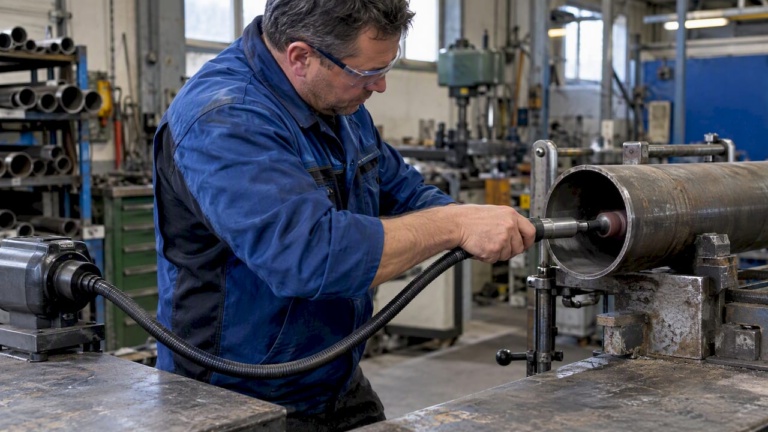
Flexible shafts transmit torque through curved spaces in portable deburring tools up to 50 Nm torque and 10,000 RPM. Operators maneuver these tools around complex castings and weldments where rigid shafts cannot reach. The flexible core maintains torque transmission while bending through radii as tight as 100 mm.
Solid shafts drive heavy duty grinding machines requiring high torsional stiffness and torque capacity up to 100 Nm. Large diameter solid shafts minimize deflection under side loads from grinding wheels. Their robust construction handles shock loads in rough grinding operations without failure.
Stepped shafts integrate precision polishing heads with diameter transitions accommodating bearings and mounting hardware. The stepped geometry positions components axially and provides shoulders for thrust load management. Splined sections enable quick tooling changes in automated finishing cells.
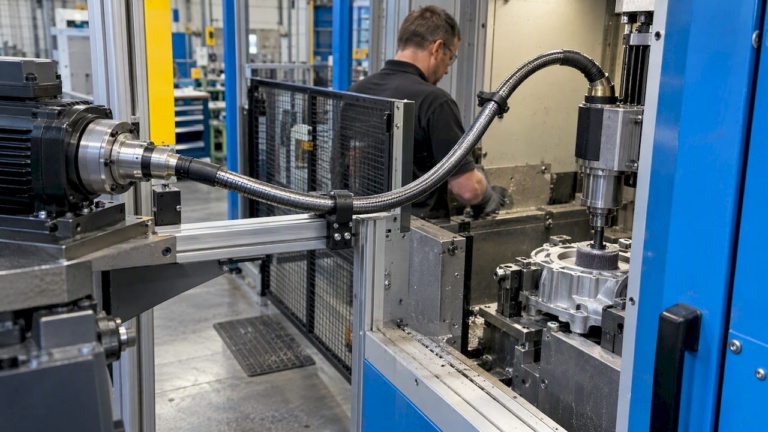
Automated finishing systems rely on precision shafts maintaining consistent speed and position control. CNC polishing machines use hollow shafts reducing rotational inertia for faster acceleration and deceleration cycles. This improves throughput while maintaining surface finish quality.
Common finishing applications by shaft type:
- Portable deburring tools using flexible shafts for maneuverability in confined spaces
- Robotic grinding cells employing hollow shafts for reduced inertia and faster cycle times
- Manual polishing stations with stepped shafts supporting interchangeable tooling
- Heavy grinding machines utilizing solid shafts for maximum torsional rigidity
- Automated buffing systems integrating splined shafts for rapid tool changeover
| Shaft Type | Torque Range | Speed Range | Flexibility | Typical Application |
|---|---|---|---|---|
| Flexible | 10-50 Nm | Up to 10,000 RPM | High | Portable deburring, curved path grinding |
| Solid | 50-100+ Nm | Up to 5,000 RPM | None | Heavy grinding, high stiffness operations |
| Hollow | 30-80 Nm | Up to 8,000 RPM | None | High speed polishing, reduced inertia |
| Stepped | 20-70 Nm | Up to 6,000 RPM | None | Precision polishing, component mounting |
Explore detailed industrial shaft design examples and learn how flexible shafts integrate into automation for consistent finishing quality.
Key design and machining processes for industrial shafts
Manufacturing processes directly determine whether finished shafts meet the demanding tolerances and surface quality specifications required for precision finishing applications. Understanding these processes helps you specify realistic requirements and evaluate supplier capabilities.
CNC turning and grinding achieve tolerances within ±0.005 mm and surface finishes Ra <0.2 µm critical for finishing shafts. Multi-axis CNC lathes machine complex stepped geometries in single setups, maintaining concentricity across diameter changes. Cylindrical grinding removes heat-affected zones from turning operations and achieves the final surface finish.
CNC milling creates keyways, flats, and cross holes with positional accuracy within ±0.01 mm. These features ensure proper coupling alignment and prevent rotational slip under torque. Electrical discharge machining (EDM) produces splines and intricate profiles in hardened materials where conventional cutting tools struggle.
Heat treatment processes like through hardening, case hardening, and nitriding improve material properties after rough machining. Induction hardening selectively hardens bearing journals and spline teeth while leaving shaft bodies tough and ductile. This combination resists surface wear while maintaining fatigue strength.
Polished shafts with surface roughness Ra <0.4 µm extend shaft lifespan up to 40% by reducing friction and wear. Centerless grinding produces uniform diameters across long shaft lengths. Superfinishing and lapping achieve mirror finishes below Ra 0.1 µm for ultra-precision applications like high speed spindles.

Surface treatments including chrome plating, phosphating, and PVD coatings enhance corrosion resistance in wet finishing environments. Hard chrome layers protect against abrasive particle erosion. Ceramic coatings reduce galling in high temperature grinding applications.
Critical manufacturing steps:
- CNC turning for initial diameter sizing and stepped feature creation
- Heat treatment improving hardness and fatigue resistance
- Cylindrical grinding achieving final tolerances and surface finish
- Keyway milling or broaching for torque transmission features
- Superfinishing reducing friction and extending bearing life
Pro Tip: Balance machining complexity with performance benefits by specifying tighter tolerances only where functionally necessary. Grinding an entire shaft to ±0.005 mm costs significantly more than grinding only bearing journals while leaving non-critical sections at ±0.02 mm.
Review custom flexible shaft configurations to understand how design features optimize performance for specific finishing tasks.
Comparison of shaft types for precision finishing applications
Each shaft type presents distinct mechanical advantages and limitations affecting suitability for specific finishing operations. Direct comparison clarifies trade-offs between strength, weight, flexibility, and manufacturing cost.
Solid shafts offer maximum torsional strength and bending stiffness in compact diameters. Their continuous cross section resists deflection under side loads from grinding wheels and cutters. However, solid construction increases rotational inertia and component weight, limiting acceleration performance in high cycle automated systems.
Hollow shafts reduce weight by 20% to 30% compared to solid shafts of equivalent outer diameter while maintaining 70% to 85% of torsional strength. Lower rotational inertia improves dynamic response in start-stop polishing cycles. Hollow bores enable through-shaft coolant delivery and internal cable routing in automated finishing cells.
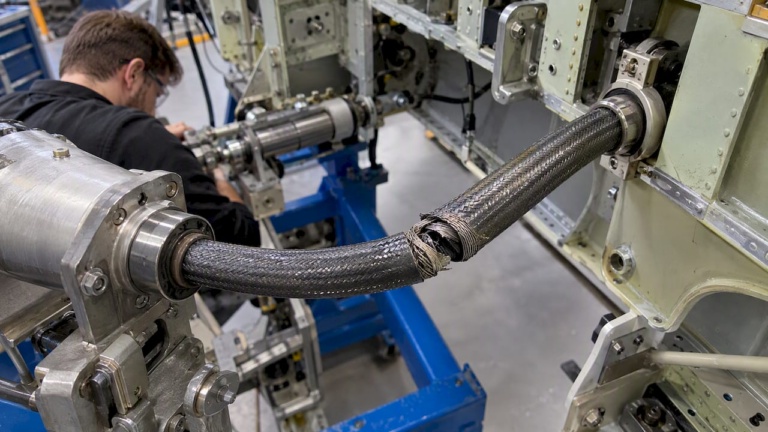
Flexible shafts provide up to 50 Nm torque with excellent torsional flexibility, ideal for complex shapes. Their multi-layer wound construction transmits torque around curves and through confined spaces impossible for rigid shafts. Flexible cores absorb vibration and misalignment while maintaining consistent power transmission.
Stepped shafts integrate multiple diameter sections supporting bearings, seals, and tooling mounts within a single component. Diameter transitions create shoulders for axial positioning and thrust load reaction. Stepped designs minimize part count and assembly complexity in precision polishing heads.
| Shaft Type | Torsional Strength | Weight | Flexibility | Cost | Best Application |
|---|---|---|---|---|---|
| Solid | Highest | Heavy | None | Moderate | Heavy grinding, maximum stiffness |
| Hollow | High | Light | None | Higher | High speed polishing, reduced inertia |
| Flexible | Moderate | Light | Excellent | High | Portable tools, curved paths |
| Stepped | High | Moderate | None | Moderate | Precision polishing, component integration |
Key trade-offs include:
- Solid shafts maximize strength but increase system inertia and weight
- Hollow shafts optimize strength-to-weight ratio at higher manufacturing cost
- Flexible shafts enable unique geometries but limit maximum torque capacity
- Stepped shafts simplify assembly but require more complex machining
Learn to select flexible shafts for precision machinery based on torque requirements and installation constraints.
Situational recommendations for shaft selection
Matching shaft type to specific finishing scenarios optimizes performance, durability, and operating costs. These recommendations address common industrial finishing applications.
-
Portable deburring in confined spaces: Flexible shafts enable maneuverability in restricted spaces with torque up to 50 Nm. Choose flexible drives for hand-held grinders accessing complex castings, weldments, and assembled structures. Specify appropriate bend radius limits matching your workspace geometry.
-
High speed automated polishing: Hollow shafts reduce rotational inertia by 25% to 35%, enabling faster acceleration in robotic polishing cells. Select hollow construction for cycle time sensitive applications where rapid tool positioning improves throughput. Ensure wall thickness provides adequate torsional strength for your tooling loads.
-
Heavy material removal grinding: Solid shafts deliver maximum torsional rigidity for large diameter grinding wheels removing substantial stock. Specify solid construction when deflection control matters more than weight savings. Design for adequate bearing support minimizing shaft span.
-
General purpose finishing with moderate requirements: Standard catalog shafts with conventional tolerances (±0.02 mm) and surface finishes (Ra 0.8 µm) suit many finishing operations cost effectively. Avoid custom specifications unless functional requirements genuinely demand tighter parameters.
-
Precision polishing requiring vibration control: Stepped shafts with integrated bearing journals minimize runout and vibration. Design diameter steps positioning bearings close to polishing heads. Specify fine surface finishes (Ra 0.2 µm to 0.4 µm) on bearing journals only.
-
Custom machinery with unique spatial constraints: Engineered shaft solutions address niche applications where standard components cannot fit or perform adequately. Work with manufacturers offering design support and prototype validation before production commitment.
Pro Tip: Consider your operating environment when selecting shaft materials and coatings. Wet finishing processes with coolants require corrosion resistant alloys or protective coatings, while dry grinding allows more cost effective carbon steel options.
Access our comprehensive flexible shaft selection guide for detailed specifications and application examples.
Discover BIAX Flexwellen’s flexible shaft solutions
BIAX Flexwellen engineers high precision flexible shaft drives optimized for demanding industrial finishing applications. Our flexible shafts reliably transmit torque through tight spaces and curved paths essential for deburring, grinding, and polishing operations.
We offer standard components and custom configurations tailored to your exact torque, speed, and interface requirements. Our engineering team supports machine builders and manufacturers with technical guidance ensuring optimal shaft selection and integration.
Explore our flexible shaft drive solutions for finishing applications. Review custom flexible shaft configurations matching your specifications. Learn how to select flexible shafts for precision machinery. Contact us today to discuss your industrial finishing challenges and discover how BIAX drives increase efficiency, durability, and machining precision.
Frequently asked questions about industrial shaft applications
How does surface finish influence shaft lifespan in finishing applications?
Smooth surface finishes below Ra 0.4 µm reduce friction at bearing interfaces and coupling points, decreasing heat generation and wear rates. Polished shafts can extend operational lifespan by 30% to 40% compared to rougher finishes by minimizing stress concentrations that initiate fatigue cracks.
What factors determine whether to choose flexible or solid shafts?
Choose flexible shafts when your finishing application requires torque transmission through curved paths, tight spaces, or portable tools. Select solid shafts for stationary grinding machines demanding maximum torsional rigidity and torque capacity above 50 Nm where installation space permits straight shaft routing.
Can custom shafts significantly reduce maintenance costs?
Custom shaft designs optimized for specific finishing operations reduce maintenance costs by 20% to 35% through improved durability, better load distribution, and enhanced corrosion resistance. Tailored material selection and surface treatments minimize wear while extended service intervals decrease downtime and labor expenses.
What machining processes achieve the best precision for polishing shafts?
Cylindrical grinding followed by superfinishing achieves tolerances within ±0.005 mm and surface finishes below Ra 0.2 µm optimal for precision polishing shafts. These processes remove micro-irregularities that cause vibration and runout while ensuring consistent bearing fit across temperature variations.
Are hollow shafts suitable for high speed polishing machines?
Hollow shafts excel in high speed polishing applications by reducing rotational inertia 25% to 35% compared to solid shafts, enabling faster acceleration and deceleration. Their lighter weight decreases bearing loads while maintaining adequate torsional strength for typical polishing torque requirements between 30 Nm and 80 Nm.
Recommended
- Flexible Shafts Maintain 85-95% Efficiency in Tight Spaces
- Flexible Shaft Drive Solutions: Unlocking Compact Efficiency
- Flexible Shafts for Tight Spaces: Boosting Precision
- 7 Practical Examples of Shaft Drive Solutions for Engineers
- industrial-female-engineer-using-on-computer-showing-cad-software.jpg – wearebeyondgreatness.co.uk
Related Topics
Send your spec inquiry
Custom flexible shafts for your application — we quote within 1 working day.