Proven tips for optimizing shaft design for industrial efficiency
8 May 2026TL;DR:
- Inefficient shaft design often causes premature failure and unplanned downtime in industrial finishing processes.
- Optimizing geometry and validating through combined modeling and real-world testing significantly improves shaft durability and performance.
Inefficient shaft design is one of the most overlooked causes of premature tool failure and unplanned downtime in industrial finishing operations. Under-designed shafts wear unevenly, transmit torque inconsistently, and often fail at the worst possible moment in a production cycle. Research confirms that optimizing shaft geometry can measurably reduce maximum punching force and improve tool durability. The practical tips in this article give mechanical engineers and design teams a structured path to build shafts that are more robust, more efficient, and far more reliable in service.
Table of Contents
- Understand and apply key design criteria
- Leverage geometry optimization for tool and shaft longevity
- Iterate with both modeling and experiment
- Compare flexible vs. rigid shaft designs for finishing processes
- Situational recommendations and overlooked optimization tips
- Why practical testing outperforms theory in shaft optimization
- Boost your industrial finishing results with optimized flexible shafts
- Frequently asked questions
Key Takeaways
| Point | Details |
|---|---|
| Geometry matters most | Optimizing shaft geometry significantly reduces force peaks and enhances tool life. |
| Check deflection and critical speed | Deflection and resonance checks are as vital as strength for reliable shaft design. |
| Pair theory with testing | The best results come from blending modeling with real-world validation in design iterations. |
| Flexible shafts offer finishing advantages | Flexible shafts can improve precision and tool access in manufacturing, but require careful design for durability. |
Understand and apply key design criteria
With the need established, the first step is to clarify which design criteria actually matter when evaluating and optimizing shafts for finishing processes. Many engineers default to static strength as the primary check, but that single criterion rarely predicts real-world failures accurately.
A rigorous shaft design process must evaluate all of the following:
- Torque capacity: The shaft must transmit the required torque at maximum load without plastic deformation or fatigue initiation.
- Deflection limits: Excessive shaft deflection causes misalignment at the tool interface and accelerates bearing and coupling wear.
- Critical speed: The shaft’s rotational speed must stay well below the first critical speed to avoid resonance-induced vibration amplification.
- Resonance proximity: Even brief operation near a natural frequency can generate destructive vibration amplitudes.
- Fatigue life: Cyclic loading under finishing conditions creates stress reversals that must be evaluated across the entire expected service life.
Relying on static strength alone is insufficient for rotating power shafts. Stiffness, deflection, and critical speed checks are essential complements to static strength calculations, particularly in high-speed or variable-load finishing environments. A shaft that passes a static torque check can still fail catastrophically if its deflection profile is ignored or if its critical speed is not determined.
Following a structured shaft design step-by-step process ensures that all these criteria are addressed in the correct sequence before any geometry is finalized. Engineers selecting drive components should also review guidelines on selecting flexible shafts to match shaft characteristics to specific application demands.
Pro Tip: Before finalizing shaft speed, calculate the first critical speed and verify your operating speed falls below 70% of that value. Even a comfortable static design can fail rapidly if resonance is reached during acceleration or deceleration.
Leverage geometry optimization for tool and shaft longevity
Once you know what to evaluate, focus on how geometric changes deliver real performance improvements. Geometry is one of the most powerful and cost-effective levers available to design engineers.
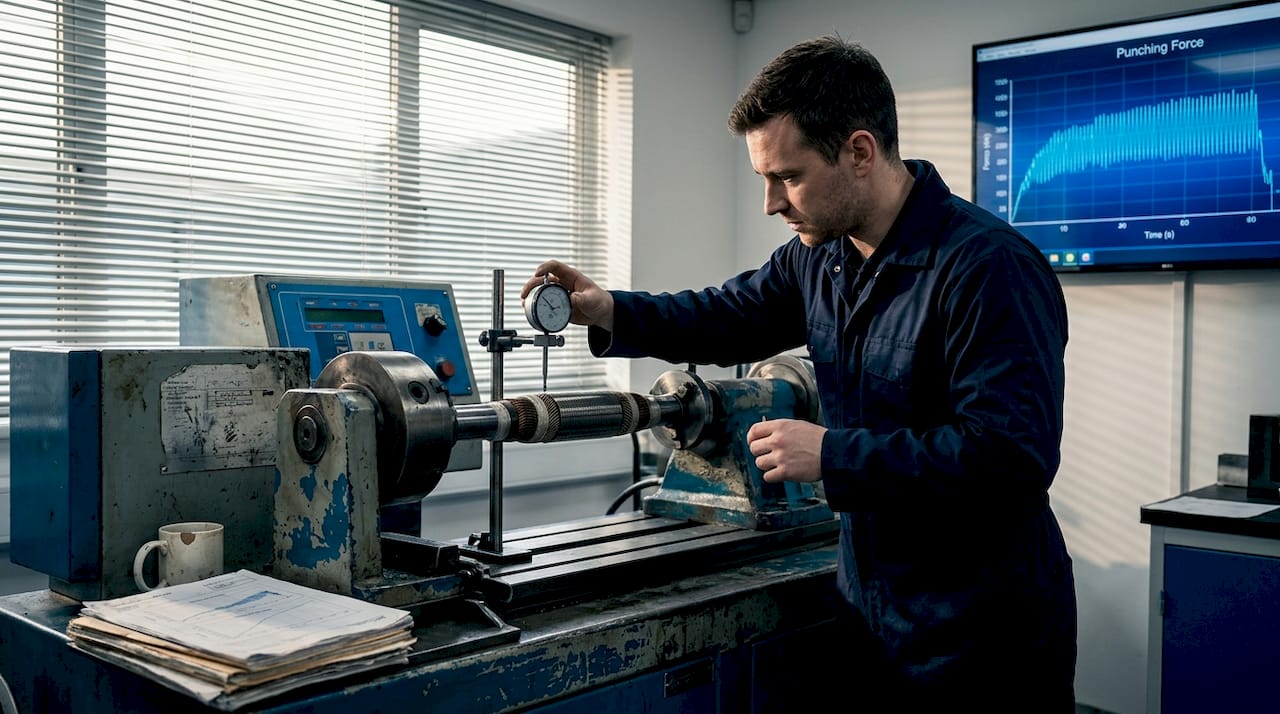
Research shows that optimized geometry reduces maximum punching force and stress concentrations, enhancing tool life, and that larger punch shaft diameters contribute to more uniform stress distribution. These findings are directly applicable to finishing shaft design.
Geometry impact on stress and force: a comparison
| Shaft geometry parameter | Effect on stress distribution | Effect on peak force | Tool life impact |
|---|---|---|---|
| Increased shaft diameter | More uniform stress spread | Reduced peak force | Significant improvement |
| Larger fillet radius at step | Lower stress concentration factor | Moderate reduction | Meaningful improvement |
| Improved surface finish (Ra) | Fewer fatigue initiation sites | Minimal effect on force | Moderate improvement |
| Tapered transition zones | Gradual load transfer | Reduced bending stress | Moderate improvement |
The data is clear: diameter and fillet geometry have the most measurable effect on both peak forces and stress concentrations. Practical geometry changes worth prioritizing include:
- Increasing shaft diameter at high-stress zones, particularly near coupling interfaces and bearing seats
- Enlarging fillet radii at all diameter transitions to reduce stress concentration factors below 1.5 wherever possible
- Specifying surface finish tolerances at fatigue-critical locations, targeting Ra values below 0.8 microns on bearing seats
- Introducing tapered transitions instead of abrupt steps to distribute bending loads more gradually along the shaft length
“Combining mechanics-based calculations with experimental validation is the most reliable way to confirm that geometry modifications produce the expected reductions in both stress concentration and operational force peaks.”
For applications requiring longer component life in demanding environments, the design approach behind longer shaft life applications demonstrates how geometry and material choices work together to extend service intervals significantly.
Iterate with both modeling and experiment
Gaining clear design insights is only the start. You will need to verify and refine geometry changes under authentic operational stresses before committing to production. This is where many engineering teams make their most costly mistake: treating finite element modeling (FEM) results as final confirmation.
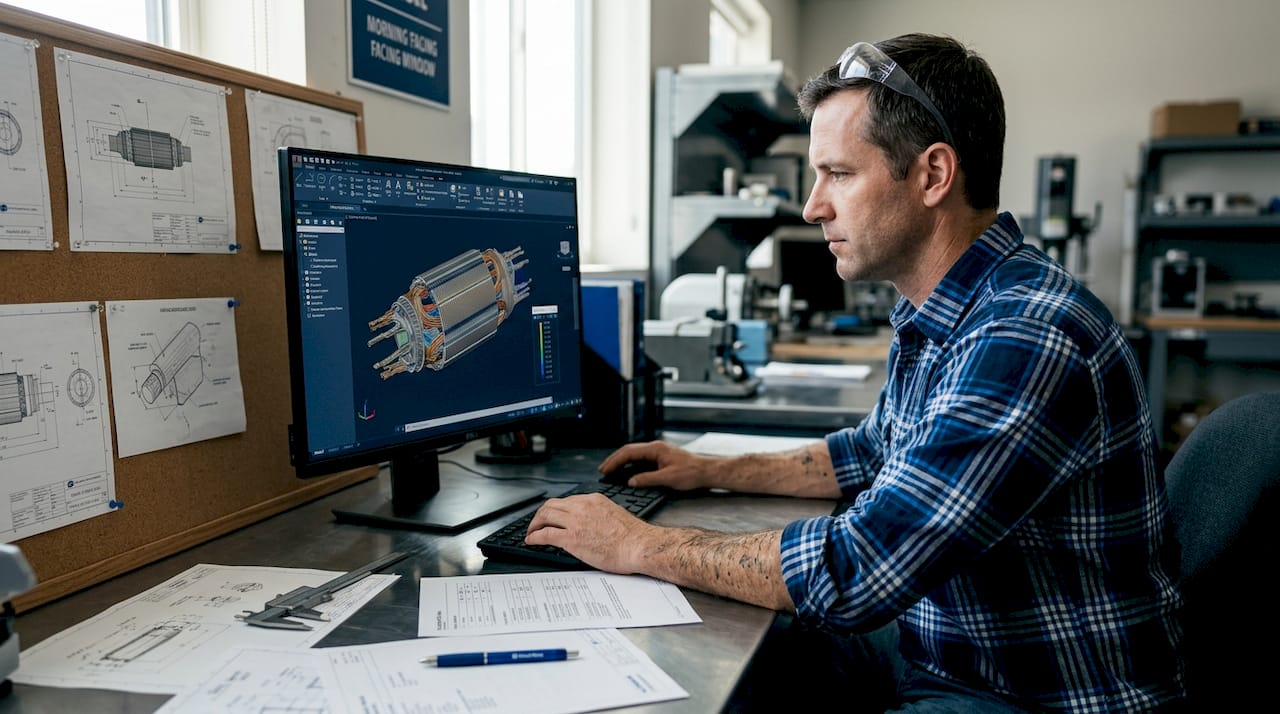
Research is direct on this point: pair mechanics-based modeling with experimental validation at relevant operating profiles rather than relying solely on theoretical sizing. Models are only as accurate as the boundary conditions and material data you input. Real operating environments introduce friction, thermal gradients, misalignment, and surface wear that models often underestimate.
A reliable iterative design process follows these steps:
- Define realistic operating conditions. Document the full torque range, maximum RPM, expected misalignment angles, environmental temperature range, and abrasive exposure level.
- Build the FEM model with accurate inputs. Use verified material properties and apply loads that reflect actual duty cycles, not just peak theoretical values.
- Identify stress concentration locations in the model and compare them against the expected fatigue limit for the selected material.
- Modify geometry based on model output. Increase fillet radii, adjust diameters, or add transitional tapers where stress exceeds acceptable thresholds.
- Fabricate and test physical prototypes under representative operating conditions, including speed ramps, peak torque events, and realistic environmental exposure.
- Analyze failure modes or degradation patterns from testing and compare them directly with model predictions.
- Refine the model and geometry based on test findings, then repeat the test cycle until predicted and actual performance converge.
This iterative approach is especially important for optimizing shaft flexibility in applications where operating angles and deflection are part of the intended design function, not just a tolerance to manage.
Pro Tip: When setting up physical test rigs, replicate the actual speed profile including startup transients and speed changes during tool engagement. Many fatigue failures initiate during these transient events, not at steady-state operation where most engineers focus their attention.
Compare flexible vs. rigid shaft designs for finishing processes
Having established the need for validation, it is useful to compare the two main shaft types available for finishing operations. The choice between flexible and rigid shaft designs significantly affects accessibility, torque transmission efficiency, maintenance intervals, and tool life.
Flexible vs. rigid shafts: key performance factors
| Performance factor | Flexible shaft | Rigid shaft |
|---|---|---|
| Access to confined spaces | Excellent | Limited |
| Vibration absorption | High | Low |
| Torque transmission efficiency | 85 to 95% (angle dependent) | Near 100% |
| Maintenance interval | Moderate (lubrication required) | Long |
| Misalignment tolerance | High | Very low |
| Tool life under vibration | Better in high-vibration setups | Worse |
| Setup time for repositioning | Low | Higher |
| Geometry optimization potential | High | High |
Flexible shafts are the preferred choice in specific situations:
- Confined or angled access where a rigid drive train cannot reach the tool position without complex mechanical linkages
- High-vibration environments where flexible shafts absorb transmitted vibration before it reaches the tool or operator
- Multi-position fixtures where the drive must serve different tool angles across a production run
- Applications where gentle torque ramp-up is needed to protect fragile workpieces or precision tooling
Rigid shafts remain appropriate when:
- Maximum torque efficiency is required and the drive path is straight and fixed
- Very high RPM operation places the flexible shaft’s bending radius limits under pressure
- Tight precision tolerances demand minimal runout at the tool interface
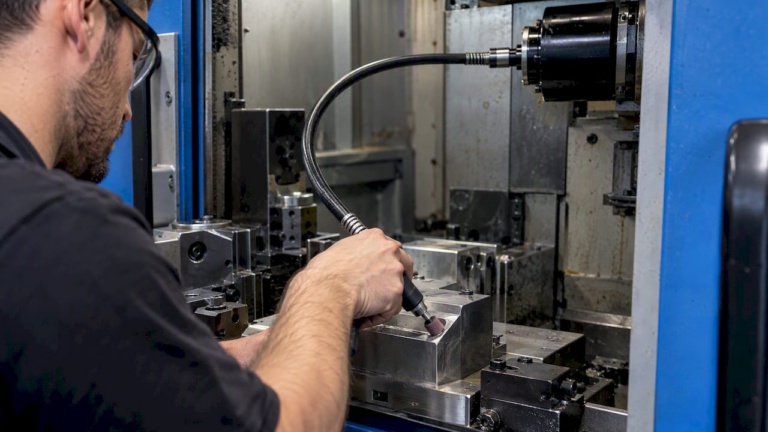
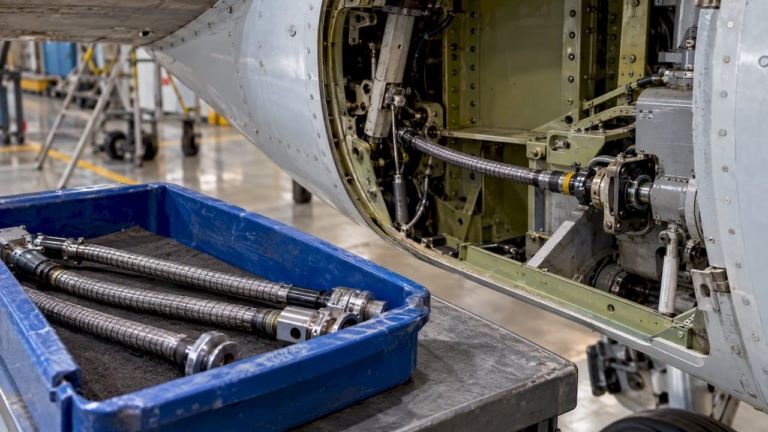
Real finishing and tool life benefits can be achieved from shaft geometry optimization regardless of shaft type, but the specific parameters will differ. For flexible shafts, core wire pitch, protective sheath stiffness, and bending radius all become additional geometry variables to optimize. The application resources on flexible shaft applications provide detailed guidance on matching flexible shaft configurations to specific finishing tasks.
Situational recommendations and overlooked optimization tips
The right comparison helps you choose shaft type, but nuanced, situation-specific tips unlock extra performance and durability in real production environments.
Material and geometry must match the specific duty cycle, not just the peak torque requirement. A shaft running intermittent high-torque bursts requires different fatigue life calculations than a shaft under continuous moderate load. Intermittent duty often allows a smaller cross-section than continuous duty at the same peak torque, but only if fatigue stress accumulation is properly modeled across the full duty cycle.
Larger punch shaft diameters contribute to more uniform stress distribution and decreased premature tool failure risk. This principle applies directly to flexible shaft cores: increasing core diameter within sheath clearance limits improves torque capacity and stress uniformity simultaneously.
Key maintenance and monitoring practices that engineers frequently overlook:
- Lubrication intervals must be calibrated to the actual operating environment, not just the manufacturer’s default schedule. Abrasive finishing operations contaminate lubrication faster than clean operations, requiring shorter intervals.
- Vibration monitoring at regular intervals detects early-stage resonance and imbalance before they reach failure thresholds.
- Coupling interface inspection at each scheduled service checks for fretting wear, which initiates fatigue cracks at contact surfaces.
- Bending radius compliance for flexible shafts must be verified after any fixture or tool position changes, as minimum bend radius violations are a primary cause of accelerated core wire fatigue.
- Temperature monitoring during initial commissioning identifies localized heating caused by excessive friction or misalignment before permanent damage occurs.
The key role of flexibility in drive systems is often underestimated in its contribution to system-level durability. Engineers who treat flexibility as a secondary parameter rather than a primary design variable frequently encounter unexpected failures at coupling interfaces and bearing seats.
Pro Tip: For shafts operating in abrasive or high-temperature environments, specify a surface hardness treatment such as induction hardening or hard chrome plating on wear-critical zones. This adds a protective layer without altering the core material properties, and it significantly extends calibration intervals between dimensional inspections.
Why practical testing outperforms theory in shaft optimization
Beyond situational tactics, there is a larger and often uncomfortable lesson that engineering teams frequently encounter only after their first major shaft failure: well-calculated designs still fail in production at a rate that surprises even experienced engineers.
The reason is straightforward. Theoretical models encode assumptions. Those assumptions are drawn from material datasheets tested under controlled laboratory conditions, boundary conditions derived from idealized fixture geometry, and load profiles that represent nominal rather than actual operating patterns. Real production environments violate all three of these assumptions simultaneously.
The most impactful shaft improvements we observe come from teams that treat their FEM results not as a confirmation but as a starting hypothesis. They validate with physical tests under actual operating profiles, find the discrepancy, understand why it exists, and modify both the model and the geometry. This pair mechanics-based modeling with experimental validation approach is not a redundancy. It is the mechanism by which real improvements in tool life and fatigue resistance are achieved.
The engineers who make the most durable shaft designs are not necessarily those with the most sophisticated FEM tools. They are the ones who run the most disciplined test programs, document failure modes rigorously, and iterate without ego invested in the original design. The result is not just a better shaft. It is a calibrated understanding of how that shaft behaves in the specific environment where it operates.
Evidence from documented case studies on shaft longevity confirms that iterative refinement, grounded in real test data, consistently produces better outcomes than single-pass theoretical optimization. Teams that commit to this process routinely achieve substantial improvements in service life and reductions in unplanned downtime.
Boost your industrial finishing results with optimized flexible shafts
BIAX Flexwellen provides engineering guidance, standard components, and custom configurations built specifically for demanding finishing and machining applications. Design teams working to implement the geometry and selection principles outlined in this article will find detailed resources on improving machine design efficiency directly applicable to their projects. For applications requiring unique torque, RPM, or coupling specifications, our engineering team supports custom shaft design solutions from initial specification through prototype validation. Contact us via our website to discuss your specific application requirements and receive expert support.
Frequently asked questions
What is the most common reason for shaft failure in finishing applications?
Excessive deflection and resonance near natural frequencies are the leading causes of shaft failure in finishing environments, often because critical speed and stiffness checks were skipped during design.
How does shaft diameter affect tool life?
Larger shaft diameters produce more uniform stress distribution, which directly reduces peak stress at critical locations and decreases the risk of premature fatigue failure at the tool interface.
Why combine modeling with experimental testing in shaft design?
Pairing modeling with physical testing confirms that geometry optimizations actually hold up under real operating conditions, catching discrepancies between theoretical predictions and actual load profiles before production begins.
Which design checks should not be skipped for flexible power shafts?
Stiffness, deflection, and critical speed checks must always accompany static strength calculations to prevent resonance-driven failures that a strength check alone cannot detect.
What simple maintenance step extends shaft life the most?
Regular lubrication at intervals calibrated to actual operating conditions, combined with periodic vibration monitoring to detect early-stage imbalance or resonance, extends shaft service life more reliably than any other single maintenance practice.
Recommended
- Industrial shaft applications: 40% longer shaft life
- Shaft flexibility: the key to optimized industrial drives
- Rigid vs flexible shafts: Selection guide for industrial drives
Related Topics
Send your spec inquiry
Custom flexible shafts for your application — we quote within 1 working day.