How to Select Flexible Shafts for Precision Machinery
27 February 2026Selecting a flexible shaft for torque transmission in compact machinery often feels like balancing many competing demands. Tight installation spaces, complex routing paths, and tough operating environments challenge even experienced engineers across Germany, Austria, and Switzerland. Assessing application requirements and constraints from the start saves costly redesigns and ensures reliable performance. This guide outlines practical steps for pinpointing shaft parameters, material choices, and compatibility strategies, helping you make informed decisions for your precision-driven projects.
Table of Contents
- Step 1: Assess Application Requirements and Constraints
- Step 2: Determine Critical Shaft Specifications
- Step 3: Evaluate Material and Design Options
- Step 4: Verify Compatibility with Couplings and Drives
- Step 5: Test Selection for Performance and Reliability
Quick Summary
| Key Point | Explanation |
|---|---|
| 1. Assess application needs first | Identify loads, environmental conditions, and geometric constraints to determine flexible shaft specifications accurately. |
| 2. Calculate critical torque and speed | Document continuous and peak torque values, along with critical speeds, to ensure reliable shaft performance. |
| 3. Select appropriate materials | Choose materials that withstand environmental exposure and provide necessary strength, such as high-strength steel for durability. |
| 4. Verify coupling compatibility | Ensure couplings match shaft specifications to prevent vibration, misalignment, and mechanical failures in your machinery. |
| 5. Conduct thorough performance testing | Validate the flexible shaft under operational conditions to ensure it meets the required performance and reliability metrics. |
Step 1: Assess Application Requirements and Constraints
Assessing your application’s requirements and constraints is the foundation for selecting the right flexible shaft. This step determines whether a standard component will work or if you need a customized solution tailored to your machinery’s specific demands.
Start by identifying the primary loads your shaft will experience. Flexible shafts transmit torque, but they also encounter bending forces depending on how they’re routed through your machinery. Think about the path the shaft takes: does it make sharp turns, run at angles, or navigate tight spaces? The more complex the routing, the more significant the bending stresses become.
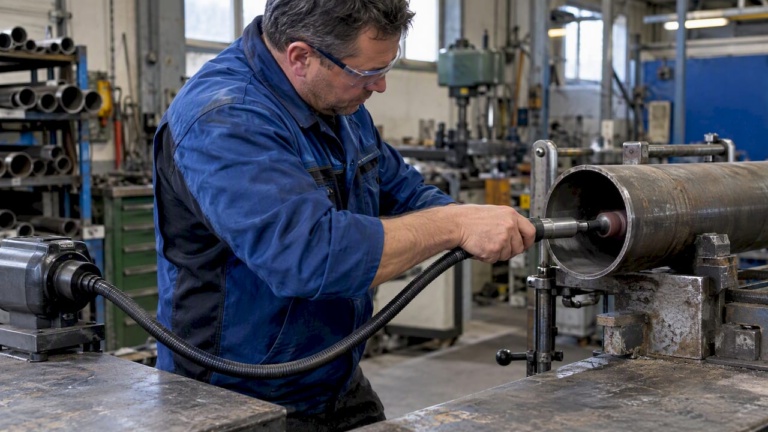
Next, document the operating environment in detail. Consider temperature extremes, exposure to coolants or cleaning fluids, humidity levels, and potential vibration sources. Aerospace applications like thrust reverser actuation or flap synchronization systems face extreme temperature swings and must maintain precision under demanding conditions. Industrial deburring and grinding equipment operate in dusty, wet environments where contamination control matters.
Quantify your speed and torque requirements precisely. Understand how mechanical loads affect shaft design to avoid selecting an undersized component. Write down the maximum continuous torque, peak torque, and typical operating RPM. Include any acceleration or deceleration demands that create transient loads.
Address geometric constraints specific to your installation. Measure the available space, including the entry and exit points where the shaft connects to your machinery. Confined environments require careful attention to shaft diameter, core material stiffness, and sheath type to ensure smooth operation without binding.
Create a simple checklist of critical parameters:
- Maximum continuous and peak torque values
- Operating speed range in RPM
- Temperature operating window (minimum to maximum)
- Available installation space and routing path complexity
- Required coupling interface types
- Environmental exposure (coolants, moisture, abrasives)
- Deflection tolerance for synchronized or precision-critical applications
Document any special performance requirements. Valve override systems need responsive feel and minimal hysteresis. Synchronization shafts demand tight concentricity. Confined installations may require non-standard core materials or protective sheaths for durability.
Capturing these details upfront prevents expensive redesigns and ensures your flexible shaft performs reliably from startup through end-of-life.
Pro tip: Create a one-page application summary sheet with load cases, speeds, and space constraints before contacting an engineer—this accelerates the selection process and leads to better-matched solutions.
Step 2: Determine Critical Shaft Specifications
Determining critical shaft specifications transforms your application requirements into precise engineering parameters. This step bridges the gap between what your machinery needs and what the flexible shaft must deliver to perform reliably.
Begin by calculating torque transmission capacity. Document both continuous torque and peak torque values, then add a safety margin for transient loads during acceleration or deceleration. Your shaft must handle these loads without exceeding material stress limits or exhibiting excessive deflection that compromises precision.

Next, evaluate critical speed and dynamic stability. The natural frequency at which shafts resonate determines the maximum safe operating speed before vibration and instability occur. This depends on shaft dimensions, material properties like Young’s modulus, and the loads applied during operation. Operating too close to critical speed risks catastrophic failure or excessive vibration that degrades precision.
Analyze bending moments and lateral forces that occur when the shaft routes through confined spaces or navigates tight angles. Aerospace valve override systems and synchronized actuation shafts experience significant bending stresses beyond simple torque transmission. Calculate deflection under these combined loads to ensure your machinery maintains the accuracy it demands.
Consider axial loads and buckling risk. Some applications impose end forces along the shaft axis. Long, slender shafts in confined installations are vulnerable to buckling if axial loads exceed critical thresholds. Understanding how to evaluate torque, bending moments, and critical speeds ensures stable and reliable operation across your entire speed range.
Create a specification summary that includes:
- Continuous and peak torque (in Newton-meters)
- Maximum operating RPM and critical speed limits
- Bending moment magnitudes from routing geometry
- Required deflection tolerance at the output
- Axial load magnitude and direction
- Material selection based on environmental exposure
These specifications guide your selection toward components that provide the performance margin your machinery requires. Custom configurations may be necessary if standard off-the-shelf shafts cannot satisfy all parameters simultaneously.
Critical speed calculations and stability analysis prevent costly failures and ensure your flexible shaft operates safely throughout its service life.
Pro tip: Use step-by-step shaft design guidance to validate your critical speed calculations against your actual routing and load profile before finalizing component selection.
Step 3: Evaluate Material and Design Options
Evaluating material and design options determines whether your flexible shaft will survive its operating environment and deliver the precision your machinery demands. This step requires balancing performance requirements against cost, manufacturability, and long-term durability.
Start by assessing environmental exposure and material compatibility. Will your shaft operate in dry industrial settings, aerospace temperature extremes, or wet deburring environments saturated with coolants? Material selection depends on durability, strength, wear resistance, and corrosion protection. High-strength steel alloys offer excellent fatigue resistance and load capacity, while composite materials provide lighter weight and specific environmental advantages.
Consider the core material options available for your application. Standard steel cores deliver reliable torque transmission in most industrial scenarios. Stainless steel resists corrosion in harsh chemical environments. Aluminum cores reduce weight but sacrifice some strength, making them suitable only for lower-torque applications. Your choice directly impacts deflection, critical speed, and long-term performance.

Here’s a quick comparison of core material options for flexible shafts and their typical use cases:
| Core Material | Key Advantage | Common Application |
|---|---|---|
| Standard Steel | High torque transmission | Industrial machinery |
| Stainless Steel | Corrosion resistance | Chemical or wet environments |
| Aluminum | Weight reduction | Low-torque, mobile equipment |
| Composite | Vibration dampening, light | Aerospace or custom systems |
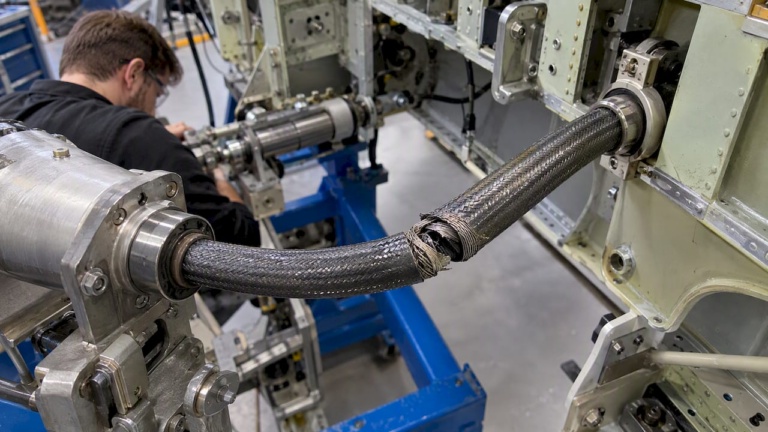
Evaluate protective sheath materials that shield the core from contamination and mechanical damage. Nylon sheaths resist abrasion in grinding and polishing applications. Steel braided protection handles extreme temperatures in aerospace thrust reverser systems. Galvanized or stainless steel options prevent rust in humid or chemical-heavy environments.
Assess manufacturing trade-offs between standard components and custom configurations. Understanding material selection for precision mechanical components helps you balance tensile strength, impact resistance, and fatigue performance against costs and delivery timelines. Standard shafts offer quick availability at lower cost. Custom designs optimize performance for specific constraints but require longer lead times.
Compare your options systematically:
- Steel alloys for maximum strength and fatigue life
- Stainless steel for corrosive environments
- Composite cores for lightweight, specialized applications
- Nylon sheaths for abrasion resistance
- Steel braiding for high-temperature aerospace use
- Custom core diameters and sheath combinations for confined spaces
Document which material combinations satisfy your specifications while remaining cost-effective. Complex aerospace applications often justify custom engineering. Industrial grinding or polishing equipment typically uses proven standard configurations.
The right material choice eliminates field failures, extends service intervals, and protects your machinery investment over years of reliable operation.
Pro tip: Reference custom flexible shaft configuration guidance when your specifications exceed standard off-the-shelf options—engineers can help optimize material and design combinations for your exact constraints.
Step 4: Verify Compatibility with Couplings and Drives
Verifying coupling and drive compatibility ensures your flexible shaft integrates smoothly with the rest of your machinery without introducing lost motion, vibration, or premature wear. Mismatched components undermine precision and create reliability problems that compound over time.
Begin by documenting your existing coupling specifications. Measure hub bore diameters, keyway dimensions, and coupling types currently installed on your motor and driven equipment. Flexible shafts require compatible couplings at both ends to transmit torque reliably. Mismatched bore sizes force improvised adapters that create runout, backlash, and alignment issues.
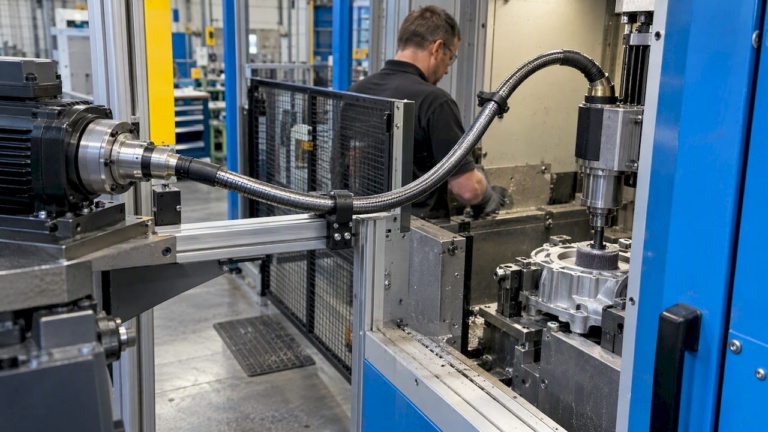
Evaluate coupling backlash and torsional stiffness. Zero-backlash couplings maintain positional accuracy critical for synchronized actuation systems like flap and slat mechanisms in aerospace. Standard flexible couplings tolerate minor play but accumulate lost motion that degrades precision in confined applications. Understanding how shaft couplings maintain positional accuracy helps you select components that minimize lost motion and wear across your drive system.
Assess misalignment compensation. Flexible couplings accommodate radial runout, angular misalignment, and axial movement between motor and driven shafts. However, excessive misalignment concentrates stress and shortens coupling life. Measure the gap between your motor flange and driven equipment. Shafts longer than necessary increase deflection and bending stress unnecessarily.
Verify hub connection security. Set screw couplings require precise bore sizes and reliable keyway contact. Tapered bore couplings deliver superior holding power in high-vibration environments. Consider your application’s security requirements and environmental exposure when selecting between these options.
Compare coupling options against your requirements:
- Zero-backlash designs for precision synchronization applications
- Flexible elastomer couplings for vibration isolation
- Disc or bellows couplings for high-speed or high-torque transmission
- Material compatibility with your shaft core and operating environment
- Hub bore sizes matching your motor and driven equipment
- Secured fastening methods resistant to vibration loosening
Review practical shaft drive solution examples to understand how couplings interface with flexible shafts across different machinery types. Mismatched coupling selection is a common oversight that delays projects and creates field retrofits.
Proper coupling compatibility eliminates lost motion, reduces vibration, and ensures your precision machinery performs as designed throughout its operating life.
Pro tip: Confirm coupling bore sizes, keyway widths, and hub styles before finalizing your shaft order—even small discrepancies force costly redesigns or require improvised adapters that compromise performance.
Step 5: Test Selection for Performance and Reliability
Testing your flexible shaft selection validates that it will perform reliably under real operating conditions. This step transforms theoretical calculations into confidence that your machinery will function as intended.
Start by establishing baseline performance metrics from your specifications. Document the torque values, RPM ranges, and load cycles your shaft will experience. Then identify which parameters matter most for your application. Aerospace thrust reverser systems prioritize response time and mechanical reliability. Grinding and polishing equipment emphasize torque transmission without deformation under continuous load.
Conduct torsional stiffness testing on your selected shaft. Measure how much deflection occurs at different torque levels. Long, slender shafts deflect more than short, thick ones. Excessive deflection creates synchronization lag in dual-shaft systems or reduces precision in positioning applications. Testing reveals whether standard components meet your deflection tolerance or if custom cores are necessary.
Perform dynamic stability analysis under operational loads. This testing verifies that your shaft operates safely below its critical speed and maintains stable rotation without excessive vibration. Flexible rotor shafts require assessment of dynamic stability and fatigue resistance to ensure safe and dependable operation throughout the intended service life.
Evaluate connection security and fatigue performance. Run accelerated cycle testing to confirm hub connections remain secure and shaft material resists fatigue failure. Confined aerospace environments and high-speed industrial applications demand this validation. Standard test rigs can map torsional stiffness effects across shaft length and diameter variations to optimize selection for your specific requirements.
Use a systematic testing approach:
Below is a summary of performance tests and the specific aspect of shaft reliability each addresses:
| Test Type | Primary Focus | Reliability Aspect |
|---|---|---|
| Static Torque Test | Load capacity verification | Prevents overload failures |
| Deflection Measurement | Flexibility and precision | Ensures accuracy in use |
| Vibration Analysis | Stability at high speed | Avoids critical resonance |
| Fatigue Cycling | Material endurance | Predicts service lifespan |
| Hub Connection Test | Mechanical joint security | Prevents loosening in service |
- Static torque testing at maximum continuous load
- Deflection measurement across your operating speed range
- Vibration analysis near critical speed
- Fatigue cycling to assess long-term durability
- Hub connection integrity verification
- Coupled system testing with your actual couplings and driven equipment
Document all test results. Unexpected behavior reveals design conflicts early when changes remain feasible. Field retrofits consume time and money that testing would have prevented.
Thorough performance testing eliminates surprises during commissioning and ensures your machinery operates reliably through its entire service life.
Pro tip: Run abbreviated validation tests with representative load conditions before full production installation—even one hour of coupled system testing identifies interface issues and synchronization problems that specifications alone miss.
Choose the Perfect Flexible Shaft for Your Precision Machinery Today
Selecting the right flexible shaft requires careful attention to torque capacity, critical speed, material choices, and coupling compatibility to avoid costly redesigns and ensure consistent performance. If you face challenges with deflection, environmental exposure, or synchronization precision, you are not alone. Understanding these technical details is just the start — implementing them correctly can make all the difference for your machinery’s reliability and accuracy.
At BIAX Flexwellen, we specialize in delivering tailored flexible shaft solutions that meet the demanding needs of industries such as grinding, polishing, and aerospace. From standard components to fully custom configurations designed around your torque and RPM requirements, we provide engineering guidance that bridges theory with real-world application. Learn more about how we support engineers by exploring our Unkategorisiert Archive – BIAX Flexwellen. Ready to optimize your drive system and eliminate uncertainty? Contact our experts now for personalized advice and get your project moving forward without delay. Visit us at BIAX Flexwellen contact page today.
Frequently Asked Questions
What are the critical considerations when assessing application requirements for flexible shafts?
To select the right flexible shaft, assess primary loads, operating environment, speed and torque requirements, geometric constraints, and any special performance needs. Create a checklist with these parameters to simplify communication with engineers and streamline the selection process.
How do I determine the specifications needed for flexible shafts?
Begin by calculating necessary torque transmission capacity, critical speed, dynamic stability, and bending moments. Document these findings and consider if standard components meet your requirements or if you’ll need custom configurations for your application.
What factors influence the material selection for flexible shafts?
Factors include environmental exposure, core material options, and protective sheath materials. Evaluate the strengths and weaknesses of materials like steel, stainless steel, and composites to ensure they fit your application’s performance and durability needs.
How can I verify coupling compatibility with my flexible shaft?
Document existing coupling specifications, including hub bore diameters and coupling types. Ensure that your flexible shaft’s design aligns with these requirements to avoid issues with torque transmission and maintain precision in your machinery.
What testing should I perform to ensure the reliability of my flexible shaft selection?
Conduct tests for torsional stiffness, dynamic stability, and connection security under operational loads. Document all results to identify potential issues early and ensure that your flexible shaft will operate reliably throughout its service life.
How can I create a straightforward application summary for flexible shafts?
Compile a one-page document that includes load cases, maximum continuous and peak torque, RPM ranges, and space constraints. This summary facilitates faster communication with engineers and helps in accelerating the shaft selection process.
Recommended
- Flexible Shafts for Tight Spaces: Boosting Precision
- Flexible Shafts in Automation: Precision in Tight Spaces – BIAX Flexwellen
- Custom Flexible Shaft Configuration Guide for Engineers
- Step by Step Shaft Design for Precision Applications
Related Topics
Send your spec inquiry
Custom flexible shafts for your application — we quote within 1 working day.