7 key advantages of flexible shaft machining for engineers
17 April 2026
TL;DR:
- Flexible shaft machining improves access to complex geometries, reducing rework and secondary setups.
- It enables compact machine designs by allowing remote motor placement and flexible routing.
- The technology increases efficiency, reduces downtime, and extends tool life in finishing operations.
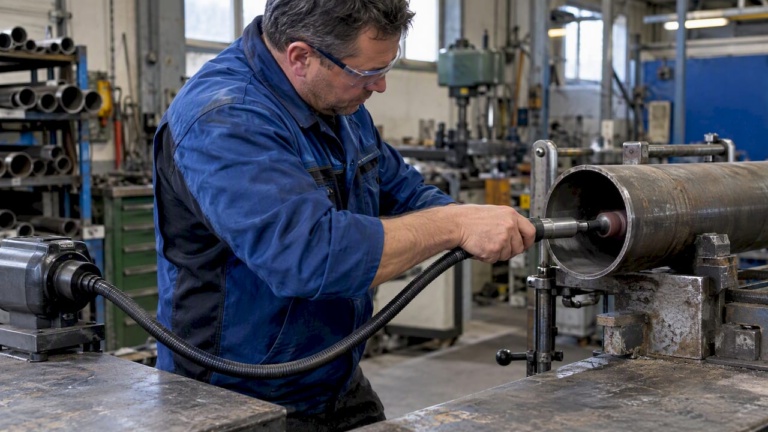
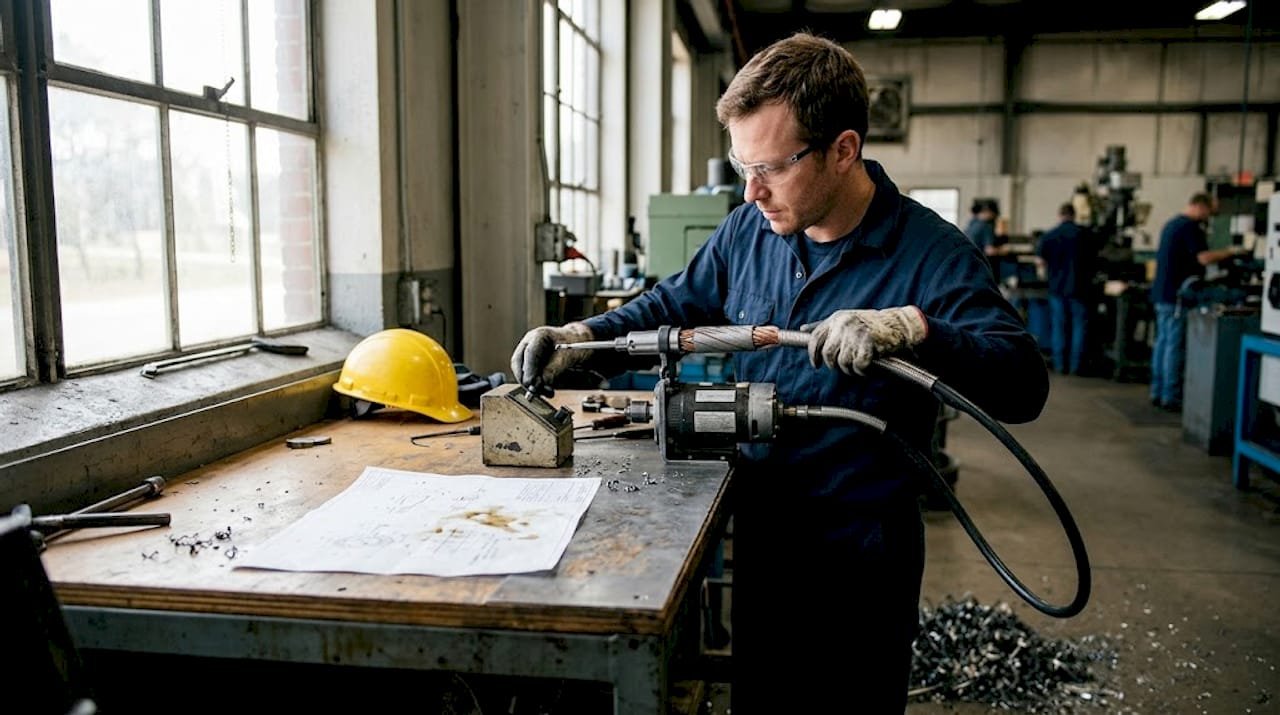
Finishing operations like deburring, polishing, and grinding rarely happen in ideal conditions. Components have deep cavities, undercuts, and contoured surfaces that rigid drive systems simply cannot reach without costly repositioning or secondary setups. For design engineers and process engineers, this creates real bottlenecks on the production floor. Flexible shaft machining addresses these challenges directly, transmitting torque and rotational force through bends and tight spaces where conventional tooling fails. The following sections outline seven core advantages, supported by technical evidence and practical examples, to help engineers make informed decisions about drive system selection.
Table of Contents
- Accessible machining for complex geometries
- Enhanced design flexibility and compact drive solutions
- Boosted efficiency and reduced downtime
- Improved precision, reliability, and longevity
- Cost savings and enhanced process flexibility
- Why most engineers underrate flexible shaft machining
- Ready to unlock flexible shaft advantages in your process?
- Frequently asked questions
Key Takeaways
| Point | Details |
|---|---|
| Easy access in tight spaces | Flexible shafts allow precision finishing in hard-to-reach or intricate areas without design compromises. |
| Compact and flexible design | They enable smaller footprints by separating the motor from the tool, driving more efficient machine layouts. |
| Higher uptime, less maintenance | Rapid tool changes and minimal misalignment issues mean less downtime for production lines. |
| Improved process economics | With lower setup, maintenance, and part costs, flexible shafts offer strong returns for manufacturers. |
Accessible machining for complex geometries
Many finishing processes demand tool access in locations that rigid drives cannot physically reach. Mold runners, internal cavities, undercuts, and contoured surfaces all present access challenges that force engineers into workarounds. Flexible shafts provide reliable drive transmission in areas conventional tools cannot reach, eliminating the need for complex repositioning between operations.
This capability has direct consequences for production quality and throughput. When a tool can reach the workpiece directly, rework rates drop and surface finish consistency improves. Engineers working on mold finishing, turbine blade deburring, or precision casting cleanup see measurable reductions in secondary handling time.
Key access advantages include:
- Direct tool reach into cavities, bores, and undercut geometries
- Reduced secondary setups by eliminating repositioning steps
- Support for both manual and automated finishing tool configurations
- Consistent contact angle maintained through flexible shaft geometry
For automated finishing cells, improving access for finishing often means the difference between a single-station solution and a multi-station workaround. Flexible shafts also support boosting precision in tight spaces where rigid spindles introduce vibration or alignment errors.
Pro Tip: Always specify your application’s minimum bend radius before selecting a shaft. Exceeding the rated bend radius accelerates wear on the inner core and protective sheath, shortening service life significantly.
In practice, teams that integrate flexible shaft tooling into their finishing cells consistently report fewer component rework cycles and faster per-part cycle times.
Enhanced design flexibility and compact drive solutions
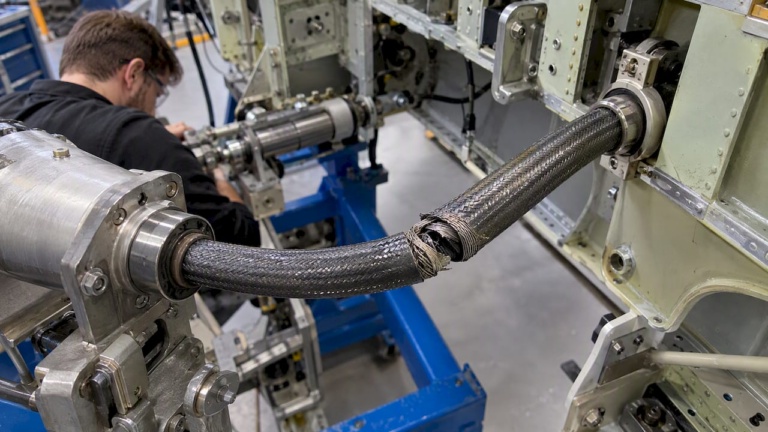
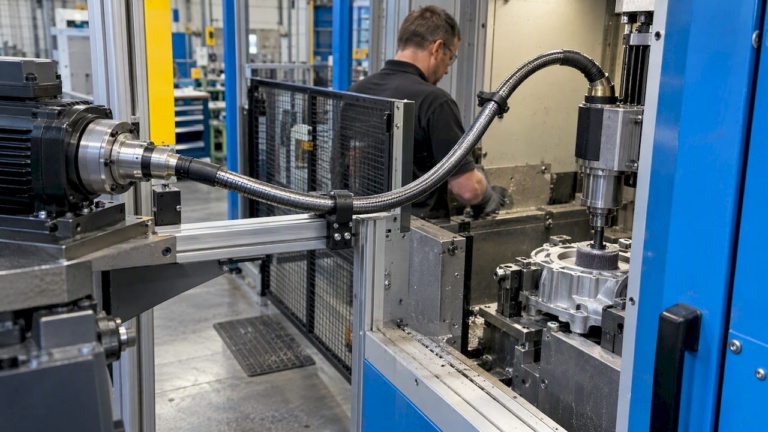
One of the most underutilized advantages of flexible shaft technology is the freedom it gives machine designers. Because the drive motor does not need to be co-located with the tool, engineers can position motors in accessible, well-ventilated locations while routing the shaft to the point of application. Flexible shaft drive solutions unlock compact machine footprints and custom layouts that rigid drive trains simply cannot match.

This decoupling of motor and tool has practical consequences for machine size, operator ergonomics, and maintenance access. Bulky motors no longer need to be mounted directly at the tool head, reducing the envelope of the working end and improving operator visibility and control.
| Feature | Flexible shaft drive | Rigid drive system |
|---|---|---|
| Machine footprint | Compact, configurable | Fixed, larger |
| Motor placement | Remote, flexible routing | Co-located with tool |
| Design complexity | Moderate | High for tight spaces |
| Maintenance access | Good, modular | Often restricted |
| Layout adaptability | High | Low |
For engineering compact drive solutions, the ability to relocate the motor is a significant design lever. It also contributes to machine design efficiency by reducing the structural load at the tool end.
Pro Tip: Specify quick-change shaft couplings at both the motor and tool interfaces. This reduces changeover time during maintenance and allows fast adaptation when switching between different finishing tools or shaft configurations.
Boosted efficiency and reduced downtime
Operational efficiency on a production line depends on minimizing unplanned stoppages and reducing setup time between jobs. Flexible shaft machining leads to faster tool changing and measurably less machinery downtime compared to rigid alternatives.
The primary efficiency gains come from three areas:
- Setup time savings: Flexible shafts route around obstacles without requiring machine reconfiguration, cutting setup time per job.
- Tool change intervals: Modular coupling designs allow tool swaps in under two minutes, compared to longer intervals for rigid spindle systems.
- Unplanned maintenance frequency: Reduced shaft misalignment stress means fewer unexpected failures and longer intervals between scheduled maintenance.
| Metric | Flexible shaft system | Rigid drive system |
|---|---|---|
| Average setup time per job | 4 to 6 minutes | 12 to 18 minutes |
| Tool change time | Under 2 minutes | 5 to 10 minutes |
| Unplanned stoppages per year | Low | Moderate to high |
| Estimated downtime saved per year | 80 to 120 hours | Baseline |
For production lines running high part mix or frequent changeovers, these savings compound quickly. The core flexible shaft benefits extend to maintenance tools used in scheduled servicing, where fast access and tool flexibility reduce technician time on each task.
Misalignment is a primary cause of premature wear in rigid drive systems. Flexible shafts absorb angular and lateral offsets naturally, protecting both the shaft and the connected tooling from fatigue-driven failure.
Improved precision, reliability, and longevity
Precision in finishing operations is not just about dimensional accuracy. It also means consistent surface finish quality, repeatable tool contact force, and predictable tool life across high-volume production runs. Custom-designed flexible shafts deliver enhanced accuracy and longer service intervals for finishing processes.
Modern flexible shafts are manufactured from high-tensile alloy wire, wound in alternating layers to balance torsional stiffness and flexibility. This construction resists fatigue under cyclic loading and maintains consistent torque transmission even at sustained operating speeds.
“Custom flexible shafts have boosted our tool life by 40% in high-cycling operations.” This kind of result reflects what engineers consistently report when switching from rigid spindles to properly specified flexible shaft systems in aggressive deburring and polishing applications.
Reliability and longevity improvements include:
- Fatigue-resistant core construction using multi-layer high-tensile wire
- Reduced tool vibration due to torsional compliance in the shaft
- Improved surface finish quality from consistent tool contact
- Extended service intervals compared to rigid drive components in high-cycle applications
- Lower tool replacement frequency in abrasive finishing tasks
For applications requiring custom shaft precision benefits, specifying the correct core diameter, sheath material, and coupling interface is critical. Properly configured shafts in demanding environments have demonstrated 40% longer shaft life compared to standard rigid alternatives.
Cost savings and enhanced process flexibility
The economic case for flexible shaft machining goes beyond the initial purchase price. Rigid drive systems often require expensive custom fixtures, multi-axis machine investments, or complex tooling setups to reach difficult part features. Flexible shaft machining lowers total cost of ownership over rigid alternatives by reducing these ancillary costs.
Key cost drivers that flexible shaft technology helps reduce:
- Custom fixture costs: Flexible shafts reach part features directly, reducing the need for part-specific holding fixtures.
- Multi-axis machine dependency: Many finishing tasks that currently require 5-axis machines can be handled with flexible shaft tooling on simpler platforms.
- Maintenance parts and labor: Fewer misalignment-related failures mean lower spare parts consumption and reduced technician hours.
- Changeover time between part families: Fast shaft and tool swaps support high-mix, low-volume production without penalty.
- Scrap and rework costs: Better access and consistent tool contact reduce surface defects and dimensional non-conformance.
Process flexibility is equally important. As production schedules shift toward smaller lot sizes and greater part variety, the ability to quickly reconfigure a finishing station without major retooling is a competitive advantage. Flexible shaft applications span a wide range of industries and part types, making them a versatile investment across product lines.
Pro Tip: When evaluating total cost, include long-term maintenance and part provisioning costs in your analysis. The purchase price of a flexible shaft system is typically a small fraction of the lifecycle cost advantage it delivers.
Why most engineers underrate flexible shaft machining
Flexible shaft technology is often dismissed as legacy tooling. The assumption is that newer, more complex drive systems have superseded it. This is incorrect. Advances in high-tensile alloy wire, precision coupling interfaces, and protective sheath materials have transformed flexible shafts into high-performance components suited for modern automated finishing cells.
The real issue is that rigid drive approaches dominate initial machine designs by default. Engineers reach for familiar solutions, and flexible shaft integration requires a deliberate evaluation step that often does not happen early enough in the design process. By the time access or footprint problems become apparent, the machine architecture is already fixed.
Teams that deploy flexible shafts in finishing operations consistently outperform on quality metrics and uptime. This is not coincidental. It reflects a fundamental fit between the technology’s properties and the demands of finishing work: variable geometry, tight spaces, and high cycle counts.
With automation trends pushing toward smaller, more adaptable finishing cells, flexible shaft technology is more relevant now than it was a decade ago. Engineers who are designing better solutions for compact automated systems should evaluate flexible shafts at the concept stage, not as a retrofit after rigid systems have already proven inadequate.
The misconception that flexible shafts are a compromise solution persists largely because engineers who have not used them assume flexibility means imprecision. In practice, a correctly specified flexible shaft delivers tighter process control than a misaligned rigid spindle ever will.
Ready to unlock flexible shaft advantages in your process?
BIAX Flexwellen engineers work directly with design and process engineers to specify flexible shaft drive solutions for deburring, polishing, grinding, and other demanding finishing applications. Whether you need standard components or fully customized configurations, the team provides engineering guidance on torque requirements, RPM ratings, coupling interfaces, and shaft geometry.

Explore industrial applications across a range of manufacturing sectors, review customized shaft solutions tailored to precision and reliability requirements, or contact the team directly to discuss your specific process constraints. BIAX Flexwellen’s flexible drive solutions are engineered for demanding environments where performance and reliability are non-negotiable.
Frequently asked questions
What types of finishing processes benefit most from flexible shaft machining?
Flexible shafts are ideal for deburring and finishing tasks in areas with limited access. Processes like polishing, grinding, and brushing on complex or contoured components also benefit significantly from flexible shaft drive solutions.
Are flexible shafts reliable for high-torque or high-speed applications?
Modern flexible shafts use high-tensile alloys and precision engineering to handle both high-torque and high-speed finishing tasks. Custom shafts deliver enhanced accuracy and longer service life in demanding applications.
How do flexible shafts reduce downtime in manufacturing?
Flexible shafts enable rapid tool changes and easier access to the work area, minimizing machine stoppages and setup delays. Faster tool changing and less downtime are consistent results reported across manufacturing installations.
Can flexible shaft systems be customized for unique machine layouts?
Yes, flexible shafts can be specified in custom lengths, core diameters, and coupling configurations to fit unique equipment layouts. Flexible shaft drive solutions unlock custom layouts for compact and specialized production lines.
Recommended
- Key benefits of flexible shaft technology for manufacturing
- How flexible shafts improve machine design efficiency
- How flexible shafts improve access for precision finishing
- Custom flexible shaft design explained: engineer better solutions
Related Topics
Send your spec inquiry
Custom flexible shafts for your application — we quote within 1 working day.