Flexible Shafts Maintain 85-95% Efficiency in Tight Spaces
2 March 2026Many engineers mistakenly believe flexible shafts compromise precision and efficiency when working in confined spaces. In reality, flexible shafts maintain 85-95% rotational efficiency even in spatially constrained finishing processes, outperforming rigid alternatives that often fail or introduce alignment errors. This guide examines the mechanical principles, performance data, and practical integration strategies that empower design engineers to overcome accessibility challenges in industrial machining environments. Understanding these fundamentals enables informed specification of benefits of flexible shafts in tight spaces for deburring, grinding, and polishing applications.
Table of Contents
- Introduction To Flexible Shafts And Accessibility Challenges
- Mechanical Principles Behind Flexible Shaft Functionality
- Performance Advantages Compared To Rigid Shaft Systems
- Common Misconceptions And Engineering Challenges
- Selection Criteria And Application Best Practices
- Practical Implementation And Maintenance Strategies
- Conclusion: Enhancing Accessibility With Flexible Shaft Technologies
- Explore BIAX Flexible Shaft Solutions For Tight Spaces
Key Takeaways
| Point | Details |
|---|---|
| Efficiency Through Bends | Flexible shafts transmit 85-95% torque efficiency even with bends up to 30 degrees, disproving precision loss myths. |
| Reduced Mechanical Stress | Wire coil construction absorbs vibration and shock, minimizing wear compared to rigid shafts in confined layouts. |
| Extended Service Life | Proper selection and maintenance extend flexible shaft operation to multiple decades in demanding finishing processes. |
| Design Flexibility | Three-dimensional routing eliminates spatial constraints, enabling machine configurations impossible with rigid drive systems. |
| Application Versatility | Ideal for deburring, grinding, polishing, and cleaning tasks in compact industrial environments. |
Introduction to Flexible Shafts and Accessibility Challenges
Flexible shafts consist of multi-wire coil constructions that transmit rotary motion through curves and bends while maintaining torsional stiffness. This design enables torque transfer in applications where rigid shafts physically cannot reach or would require complex gear assemblies.
Design engineers face persistent spatial constraints in finishing and machining operations. Compact machinery layouts restrict access to workpieces. Obstructions like support structures, coolant lines, or adjacent equipment block direct drive paths. Complex geometries in castings or assemblies demand tool access from unconventional angles.
Rigid shafts impose severe limitations in these scenarios:
- Inability to navigate bends without bulky universal joints or bevel gear sets
- Spatial inflexibility demanding larger machine footprints and higher costs
- Increased mechanical stress from misalignment, accelerating bearing and coupling wear
- Limited positioning options that compromise process ergonomics and cycle times
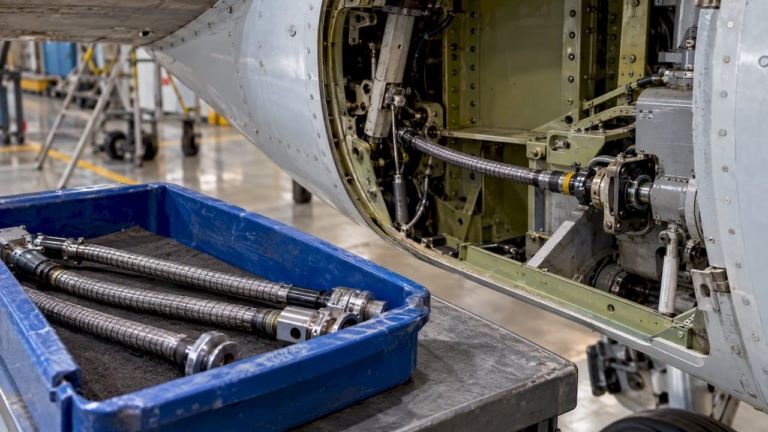
Flexible shafts for tight spaces address these challenges directly. They route power through confined areas, eliminate alignment issues, and expand machine design possibilities. Engineers gain freedom to optimize layouts for operator access, process efficiency, and equipment reliability. Flexible shaft drive solutions transform accessibility problems into competitive advantages.
Mechanical Principles Behind Flexible Shaft Functionality
The engineering foundation of flexible shafts rests on multi-layer wire coil construction. Layers wound in alternating directions create a structure that bends easily yet resists torsional deflection under load. This combination delivers necessary flexibility while preserving rotational stiffness.
Wire coil and multilayer designs allow bends up to 30 degrees while maintaining torque transmission capacity. The helical geometry distributes stress across multiple wire contact points, preventing concentration that would cause premature failure. Layer interaction provides inherent damping that absorbs vibration and shock loads.
Bending affects angular transmission predictably. Within design limits, torsional deflection remains minimal because wire layers slide relative to each other rather than deforming elastically. This mechanism preserves angular accuracy better than flexible couplings or universal joints operating at similar angles.
Vibration damping occurs through friction between wire layers and core interfaces. This structural damping reduces mechanical stress transmitted to bearings and mounting points. Equipment experiences less fatigue loading, extending component life and reducing maintenance frequency.

Pro Tip: Always verify minimum bend radius specifications during installation planning. Exceeding these limits concentrates stress in specific wire sections, dramatically reducing service life and causing premature failure. Maintaining proper radius ensures decades of reliable operation in shaft design principles that respect mechanical principles of flexible shafts.
Performance Advantages Compared to Rigid Shaft Systems
Quantitative performance data reveals why flexible shafts outperform rigid alternatives in confined finishing environments. The following comparison illustrates key metrics engineers should evaluate:
| Performance Metric | Flexible Shafts | Rigid Shafts |
|---|---|---|
| Torque Efficiency in Bends | 85-95% | 60-75% (with couplings) |
| Spatial Flexibility | 3D routing, 30° bends | Linear paths only |
| Vibration Damping | High (structural) | Low (requires isolators) |
| Installation Complexity | Simple, direct routing | Complex alignment required |
| Maintenance Frequency | Annual lubrication | Quarterly bearing checks |
Flexible shafts achieve efficiency rates between 85-95% even through curved paths, significantly outperforming rigid systems compromised by spatial constraints and coupling losses. This efficiency advantage directly translates to lower energy consumption and reduced motor sizing requirements.

Durability benefits stem from vibration and shock absorption capabilities. Wire coil construction dissipates impact loads that would damage rigid shaft bearings or couplings. This protection becomes critical in finishing processes where grinding and deburring operations generate significant dynamic forces.
Accessibility improvements from three-dimensional bending flexibility enable:
- Tool positioning impossible with rigid drives
- Reduced machine footprints by eliminating gearbox assemblies
- Simplified maintenance access through compact routing
- Enhanced operator ergonomics via optimal control placement
These advantages of flexible drives in tight spaces justify specification even in applications where rigid shafts could theoretically function. Performance gains and reduced total cost of ownership provide compelling economic arguments.
Common Misconceptions and Engineering Challenges
Several persistent myths discourage engineers from specifying flexible shafts despite clear performance advantages. Addressing these misconceptions with technical evidence enables informed design decisions.
Misconception: Flexible shafts reduce precision. Modern flexible shafts maintain consistent torque and precision despite bends because wire coil construction minimizes torsional deflection. Efficiency data confirms 85-95% torque transmission even through 30-degree curves. Precision loss occurs primarily from improper installation or exceeding bend radius limits, not inherent design limitations.
Misconception: Flexible shafts require frequent maintenance. Properly specified flexible shafts operate for decades with only annual lubrication. Wire coil construction contains no bearings or wear points requiring regular replacement. Maintenance demands prove lower than rigid systems using couplings and bearing assemblies that need quarterly inspection and periodic replacement.
Engineers must address legitimate technical challenges:
- Managing torsional deformation through proper shaft sizing and speed selection
- Selecting materials matching environmental conditions (temperature, contamination, corrosion)
- Ensuring coupling compatibility with both drive motors and tool interfaces
- Balancing flexibility requirements against torque capacity limitations
Pro Tip: Schedule routine visual inspections every six months to detect early wear indicators like casing damage or abnormal heating. Catching issues early prevents catastrophic failures and unplanned downtime. Most problems trace to installation errors or operating outside specified parameters, both preventable through adherence to manufacturer guidelines. Consulting resources on selecting flexible shafts for precision helps avoid specification mistakes.
Selection Criteria and Application Best Practices
Effective flexible shaft specification requires systematic evaluation of application parameters and compatibility factors. Following a structured selection process prevents costly mistakes and ensures optimal performance.
-
Determine torque requirements. Calculate maximum torque including startup transients and worst-case loading conditions. Add 20% safety margin for unexpected loads or process variations.
-
Verify speed compatibility. Confirm operating RPM falls within shaft design limits. Higher speeds demand stiffer construction and more precise balancing to prevent vibration.
-
Assess bend radius needs. Measure actual installation path including all curves and obstacles. Ensure selected shaft minimum bend radius accommodates routing without strain.
-
Select appropriate materials. Match casing and core materials to environmental conditions including temperature extremes, chemical exposure, and contamination levels.
-
Confirm coupling interfaces. Verify both motor and tool end connections match available shaft terminations or plan adapter requirements early.
Selecting flexible shafts based on torque, speed, material, and environment ensures optimized performance in finishing processes. Overlooking any parameter risks premature failure or inadequate capability.
Compatibility extends beyond technical specifications to practical integration concerns. Consider mounting bracket requirements, routing clearances, and maintenance accessibility during design layout. Plan lubrication access points and inspection provisions before finalizing machine assembly.
Pro Tip: Engage flexible shaft manufacturers during initial design phases rather than final procurement. Early collaboration enables custom configurations optimized for specific applications, potentially reducing costs while improving performance. Manufacturer engineering support helps navigate complex selections and avoid specification errors. Resources like the custom flexible shaft configuration guide and guidance on selecting flexible shafts streamline this process.
Practical Implementation and Maintenance Strategies
Successful flexible shaft integration demands attention to installation details and ongoing maintenance discipline. These practices maximize reliability and service life.
Installation best practices include maintaining minimum bend radius throughout routing paths. Even localized tight bends concentrate stress and reduce lifespan. Use radius guides or templates during installation to verify compliance. Ensure proper alignment between drive motor and driven tool to prevent side loading that accelerates wear.
Lubrication requirements vary by shaft construction and application severity. Most industrial finishing applications need annual relubrication using manufacturer-recommended greases. High-temperature or high-speed operations may require semi-annual service. Always verify lubricant compatibility with existing residues before adding new grease.
Routine maintenance checklists should address:
- Visual inspection of casing for cracks, abrasion, or deformation indicating misuse
- Verification of coupling security and absence of excessive play
- Temperature monitoring during operation to detect bearing or internal friction problems
- Listening for abnormal noise suggesting wire damage or inadequate lubrication
- Documentation of operating hours to schedule preventive maintenance accurately
Proper lubrication, respect for bend radius, and scheduled maintenance extend flexible shaft life to multiple decades even in demanding finishing environments. Neglecting these fundamentals causes premature failures that erode confidence in the technology.
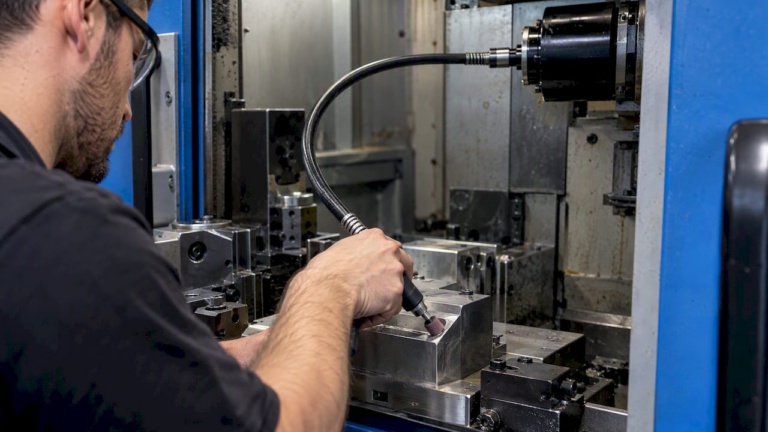
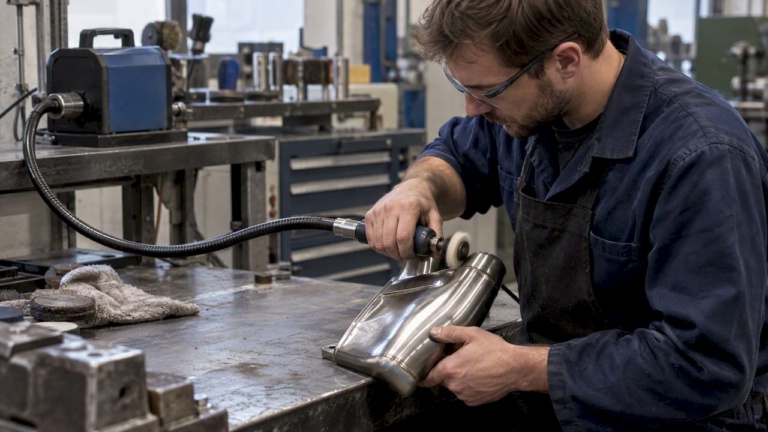
Industrial finishing tasks benefiting from flexible shaft integration include deburring complex castings, grinding internal passages, polishing curved surfaces, and cleaning intricate geometries. Each application exploits three-dimensional routing flexibility to access features rigid tools cannot reach efficiently. Practical shaft drive examples demonstrate real-world implementations across diverse manufacturing sectors.
Conclusion: Enhancing Accessibility with Flexible Shaft Technologies
Flexible shafts deliver proven mechanical advantages including 85-95% torque efficiency through bends, superior vibration damping, and decades of reliable service in demanding finishing processes. These performance characteristics enable machine designs impossible with rigid drive systems.
Accessibility gains from three-dimensional routing flexibility solve spatial constraints that compromise productivity and quality. Engineers gain design freedom to optimize layouts for efficiency, ergonomics, and maintainability. Properly specified flexible shafts transform tight-space challenges into competitive advantages.
Design engineers facing finishing process accessibility challenges should explore BIAX flexible shaft solutions tailored to their specific requirements. Consulting with application engineers ensures optimal specification and integration success.
Explore BIAX Flexible Shaft Solutions for Tight Spaces
BIAX Flexwellen specializes in flexible shaft systems engineered for confined industrial finishing environments. Our products combine proven mechanical designs with application-specific customization to meet exact torque, speed, and spatial requirements.
We support design engineers with comprehensive technical guidance from initial concept through production integration. Our team helps specify optimal configurations, address installation challenges, and ensure long-term reliability. Whether you need standard components or custom solutions, BIAX engineering expertise ensures successful outcomes.
Discover how flexible shaft drive solutions unlock compact efficiency in your finishing processes. Review custom flexible shaft configurations or contact BIAX engineers directly to discuss your accessibility challenges and explore tailored solutions.
FAQ
How do flexible shafts maintain precision in tight bends?
Multi-wire coil structure balances flexibility with torsional stiffness, minimizing angular deflection under load. Modern flexible shafts maintain high rotational accuracy and torque consistency even through curved paths with up to 30 degrees deviation. Material selection and layer design further reduce torsional deformation.
What maintenance is required to maximize flexible shaft lifespan?
Regular lubrication with manufacturer-recommended greases prevents internal wear between wire layers. Avoid exceeding minimum bend radius limits during installation and operation. With proper lubrication and usage within design specs, flexible shafts operate reliably for decades in demanding finishing environments.
How to select the right flexible shaft for a complex finishing process?
Assess torque and speed requirements thoroughly, including transient loads during startup or process variations. Choose materials matching environmental conditions like temperature extremes or chemical exposure. Selecting flexible shafts based on torque, speed, material, and environment ensures optimized performance. Verify coupling and layout compatibility before finalizing purchase decisions.
Can flexible shafts replace rigid drives in high-torque applications?
Flexible shafts handle substantial torque levels when properly sized for the application. Wire coil construction distributes stress across multiple contact points, enabling higher capacity than often assumed. Consult torque-speed curves from manufacturers to confirm suitability. Many high-torque finishing operations successfully use flexible shafts where spatial constraints prohibit rigid alternatives.
What causes premature flexible shaft failure?
Most failures result from installation errors like exceeding minimum bend radius or improper alignment causing side loading. Inadequate lubrication accelerates internal wear between wire layers. Operating beyond rated torque or speed specifications damages core construction. Following manufacturer guidelines and conducting routine inspections prevents nearly all premature failures in industrial finishing applications.
Recommended
- Flexible Shafts for Tight Spaces: Boosting Precision
- Flexible Shafts in Automation: Precision in Tight Spaces – BIAX Flexwellen
- Flexible Shaft Drive Solutions: Unlocking Compact Efficiency
- 7 Practical Examples of Shaft Drive Solutions for Engineers
Related Topics
Send your spec inquiry
Custom flexible shafts for your application — we quote within 1 working day.