Why Flexible Drive Solutions Matter for Engineers
20 May 2026TL;DR:
- Flexible drive solutions are precisely engineered components that transmit torque reliably through complex geometries, absorb dynamic loads, and enable modular machine architectures. They are vital in confined aerospace and industrial spaces where structural constraints prevent direct shaft alignment, improving reliability and reducing maintenance costs. Proper selection and installation are crucial, as flexible drives are designed for specific parameters and do not compensate for misalignment caused by poor alignment during assembly.
Flexible drive solutions are frequently mischaracterized as forgiving connectors that simply tolerate installation imprecision. That assumption leads to design errors, premature component failure, and unplanned downtime. Why flexible drive solutions matter goes far deeper than misalignment compensation. In confined machine assemblies, aerospace actuation systems, and high-cycle industrial equipment, flexible drives are precision-engineered components that transmit torque reliably through complex geometries, absorb dynamic loads, and enable modular machine architectures. Understanding their mechanical role is not optional for engineers working in constrained or performance-critical environments.
Table of Contents
- Key takeaways
- Why flexible drive solutions matter: mechanical foundations
- Aerospace and industrial spatial constraints
- Operational reliability and maintenance optimization
- Modularity and engineering adaptability
- Selection criteria and common implementation errors
- My perspective on flexible drive technology
- How Biax-flexwellen supports your flexible drive requirements
- FAQ
Key takeaways
| Point | Details |
|---|---|
| Flexibility is precision-engineered | Flexible drives handle defined dynamic movements, not poor design or imprecise alignment. |
| Spatial constraints demand flexible shafts | Confined machine layouts and aerospace actuation systems depend on flexible drives to route torque efficiently. |
| Reliability gains are measurable | Integrating flexible drives with predictive maintenance sensors reduces unplanned downtime by over 50%. |
| Modularity cuts engineering costs | Modular flexible drive systems can reduce engineering effort by up to 40% and support fast delivery timelines. |
| Selection requires matching application parameters | Torque capacity, misalignment tolerance, and environmental conditions must align with the coupling specification. |
Why flexible drive solutions matter: mechanical foundations
Flexible drive solutions encompass a range of components designed to transmit rotational torque between two or more points while accommodating relative movement between those points. The core mechanical function is not softness. It is controlled compliance within defined parameters.
The primary categories in industrial and aerospace use include:
- Jaw couplings: Two hubs with interlocking jaws and an elastomeric spider insert. The insert provides torsional flexibility and vibration damping without backlash under load.
- Grid couplings: A sinusoidal metal grid spans two flanged hubs. Grid couplings reduce vibration by up to 30% in high-cycle applications, extending motor and gearbox service life significantly.
- Elastomeric couplings: Polymer elements absorb shock and dynamic loading. Stiffness characteristics vary with material selection, allowing engineers to tune damping behavior for a specific duty cycle.
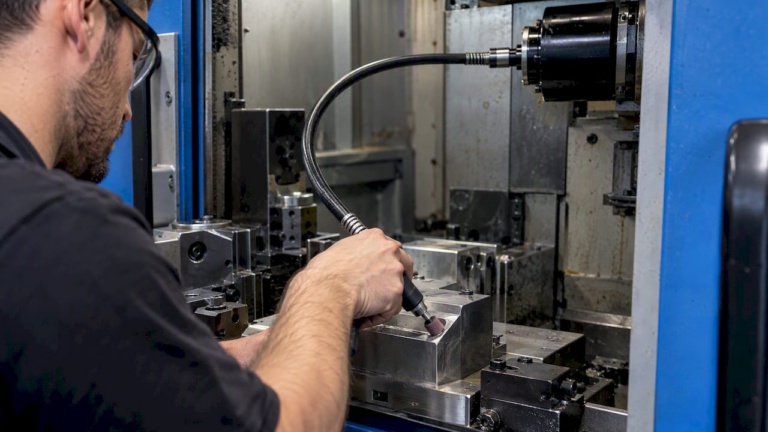
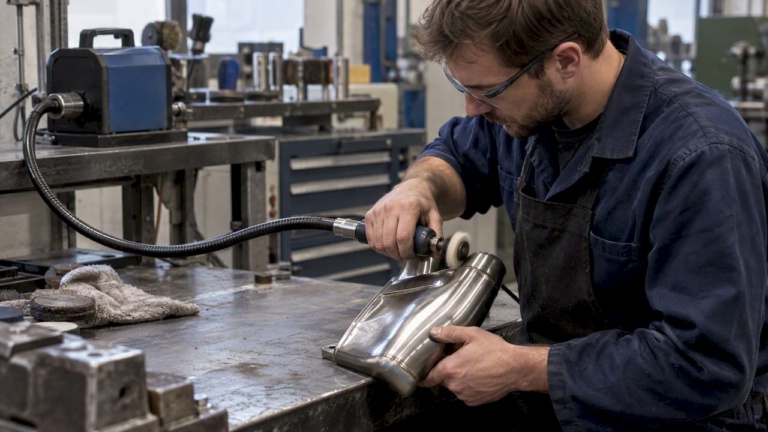
- Flexible shafts: Helically wound wire cores inside a protective sheath transmit torque around bends, through tight spaces, and at angles that rigid shafts cannot reach. These are a core product area for Biax-flexwellen and are particularly relevant to machining and finishing applications.
All flexible drive systems accommodate three fundamental misalignment types: angular offset between shaft centerlines, parallel offset where shaft axes are displaced laterally, and axial displacement along the shaft axis. Flexible couplings often handle all three simultaneously, reducing bearing loads and extending equipment life across the drivetrain.
Pro Tip: Never treat misalignment tolerance as a design buffer. Flexible couplings are specified with finite misalignment capacity. Operating a coupling at or near 100% of its permissible misalignment can reduce service life by up to 75%, according to coupling engineering data.
The engineering principle is straightforward: flexibility is a defined mechanical parameter, not a margin for error.
Aerospace and industrial spatial constraints
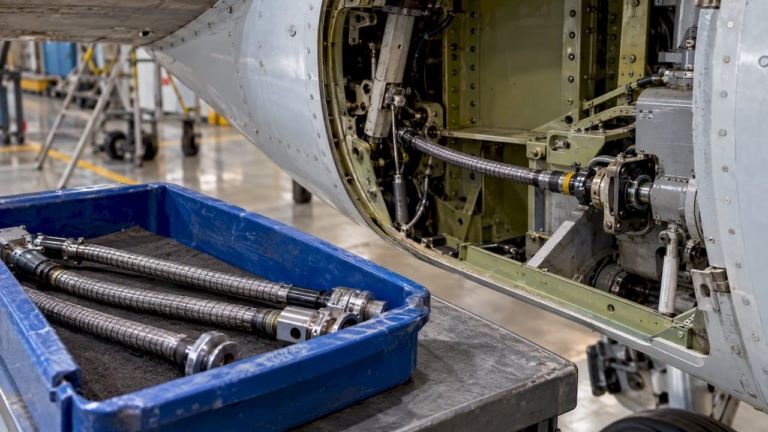
The importance of flexible drive solutions becomes most apparent when the machine geometry itself prevents direct shaft alignment. Thrust reverser actuation systems, flap and slat drive mechanisms, valve override shafts, and synchronization drives in aerospace platforms all operate in environments where structural frames, fuel lines, hydraulic routing, and thermal shielding compete for the same space. A rigid shaft simply cannot be routed through that geometry without significant structural compromise.
Flexible shafts address this directly. Consider the following use sequence in a thrust reverser actuation system:
- The drive motor is located at a structurally convenient position on the nacelle frame.
- A flexible shaft routes torque from the motor output to the actuator input, bending around structural members and thermal barriers.
- At the actuator, the shaft engages a standardized coupling interface that Biax-flexwellen can configure to match specific torque and RPM requirements.
- The flexible shaft absorbs vibration from engine operation, decoupling the actuator mechanism from cyclic mechanical noise.
- The protective sheath prevents contamination and mechanical damage in the harsh nacelle environment.
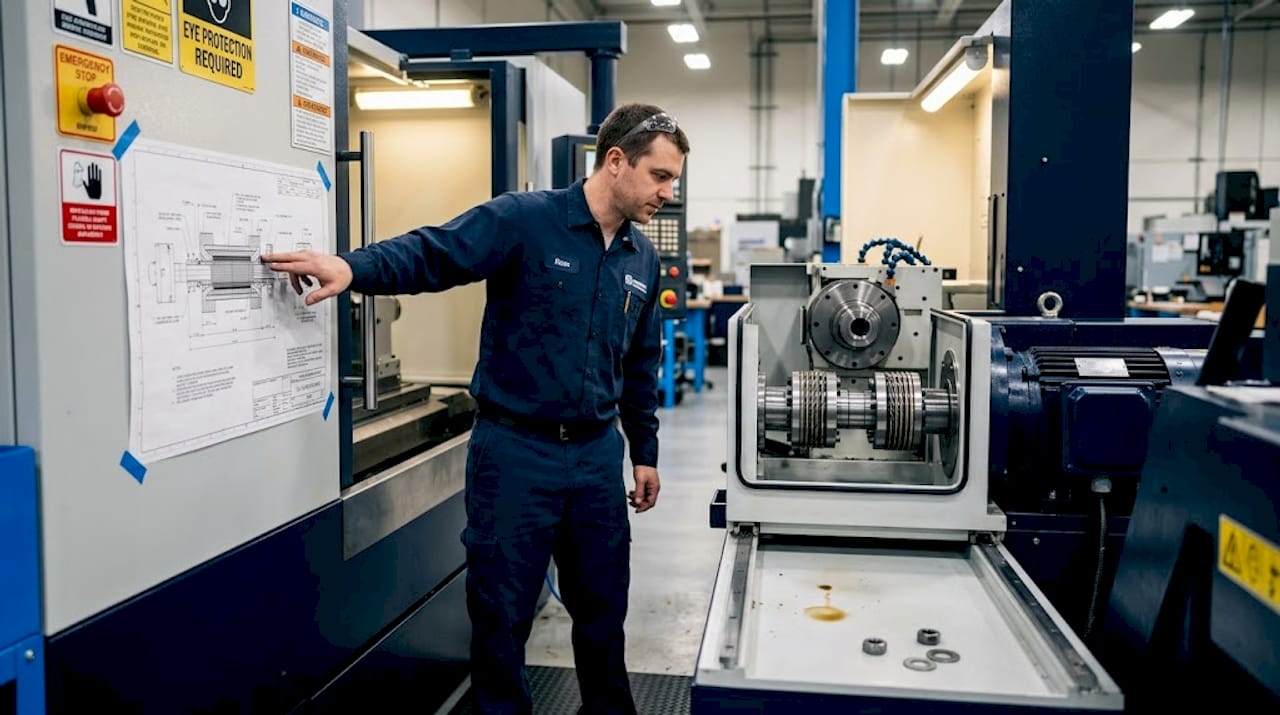
Industrial applications follow the same logic. CNC machining centers, robotic finishing cells, and precision grinding equipment often require torque transmission to spindles or toolheads positioned at angles or in locations that rigid drivetrain components cannot serve. Flexible drive designs permit powertrains to conform to complex machine layouts without expensive retooling or non-recurring engineering costs. This packaging advantage directly accelerates time-to-market on new machine configurations.
The result is cleaner mechanical architecture. Engineers do not need to redesign the machine frame around the drivetrain. The drivetrain adapts to the machine.
Operational reliability and maintenance optimization
The measurable operational benefits of flexible drive solutions extend beyond geometry. Vibration absorption, misalignment tolerance, and mechanical decoupling all contribute to longer component life across the entire drivetrain, not just at the coupling point.
Key operational benefits include:
- Vibration isolation: Flexible elements attenuate torsional shock and cyclic loading before they reach connected bearings, gearboxes, and encoder systems. This reduces fatigue-related failure across precision components.
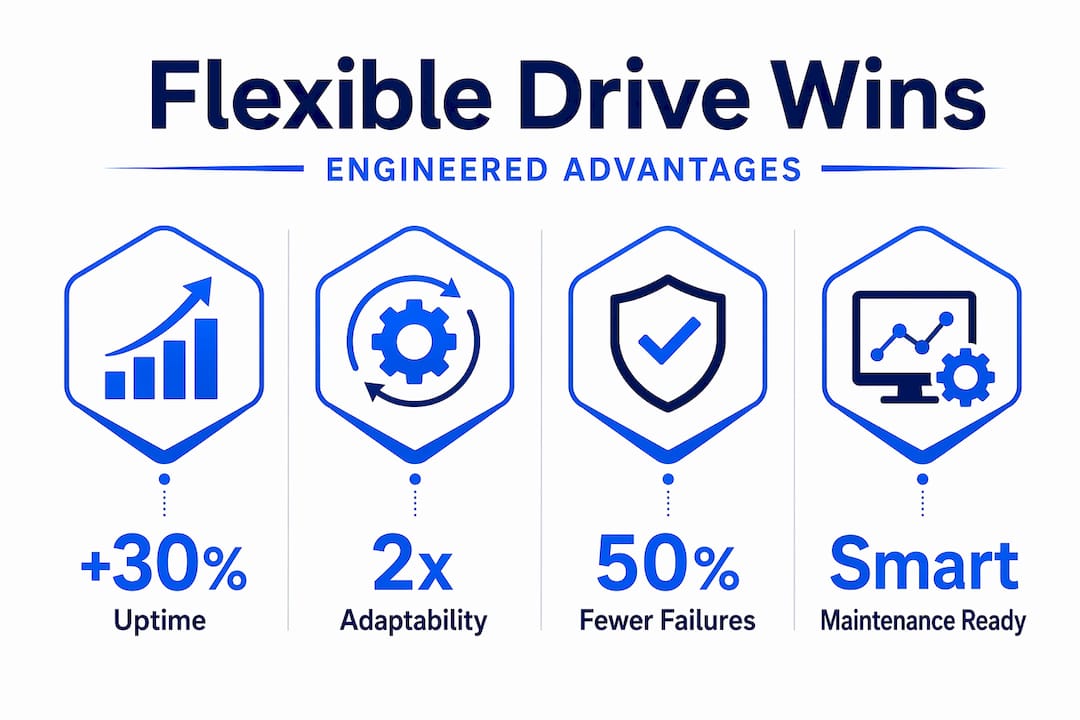
- Downtime reduction through predictive maintenance integration: Integrating flexible drive components with predictive maintenance sensors reduces unplanned downtime by over 50% and extends component service life by up to 40%. The flexible element itself can serve as an early indicator of drivetrain stress when monitored correctly.
- Maintenance cost reduction: Digital servo gear motors with predictive maintenance sensors reduce maintenance costs by 10 to 40%, based on documented case study data.
- Extended service intervals: Controlled misalignment absorption reduces bearing load cycles, extending lubrication intervals and bearing replacement schedules on connected equipment.
The practical integration of predictive maintenance (PdM) sensors with flexible drive assemblies requires careful attention. Hybrid PdM strategies combining high-fidelity sensors on critical drives with condition-based monitoring on auxiliaries optimize resource use and prevent data overload. Improper sensor calibration is the most common failure mode in these systems. Calibration must follow OEM specifications precisely or the system generates false alarms that erode operator confidence and defeat the predictive maintenance objective.
Pro Tip: Do not rely on flexible drive vibration data alone to diagnose drivetrain problems. Use it as a first-level indicator, then cross-reference with bearing temperature trends and motor current draw to isolate the actual failure mode.
The operational case for flexible drive solutions is data-supported and consistent across industrial sectors.
Modularity and engineering adaptability
The impact of adaptable drive solutions on machine design workflows is significant and often undervalued in early-stage engineering. Modular drive systems reduce engineering effort by up to 40% compared to custom-designed rigid drivetrain assemblies, and standard configurations can be delivered within two to three working days.
The following comparison shows how flexible drive configurations compare to rigid shaft assemblies in modular machine design contexts:
| Design parameter | Rigid shaft assembly | Flexible drive system |
|---|---|---|
| Layout adaptability | Low. Fixed geometry required. | High. Routes around structural constraints. |
| Engineering lead time | High. Custom design per layout. | Low. Standard configurations available. |
| NRE cost impact | High tooling and design costs. | Reduced. Standard couplings and shaft specs apply. |
| Reconfiguration effort | Significant. Structural changes often needed. | Minimal. Mounting points and shaft length adjust. |
| Vibration isolation | None inherent. | Inherent in coupling design. |
Flexible mounting points and reversible shaft orientations allow vehicle and machine platforms to adapt powertrain architecture to structural requirements rather than forcing the structure to conform to the drivetrain. This is particularly relevant in specialist vehicle design and in aerospace platforms with short product development cycles.
For machine builders working on efficient industrial design, the ability to specify a standard flexible shaft configuration and adapt it to a new machine layout without structural redesign directly reduces program cost and schedule risk. That is a concrete engineering advantage.
Selection criteria and common implementation errors
Choosing the correct flexible drive solution requires matching several mechanical parameters to the application. Getting this wrong is where most field failures originate.
Critical selection factors include:
- Torque capacity: The coupling or flexible shaft must handle peak torque, not just continuous rated torque. Transient overloads during startup or emergency stops can exceed continuous torque by a factor of three or more.
- Misalignment tolerance specification: Each coupling type has defined angular, parallel, and axial misalignment limits. Select based on actual measured or calculated misalignment in the installed condition, not theoretical centerline accuracy.
- Environmental compatibility: Temperature range, exposure to coolant, cutting fluid, hydraulic fluid, or contamination must align with material specifications for the elastomeric element or shaft sheath.
- Operating speed: Flexible shafts and couplings have maximum RPM ratings. Exceeding these causes dynamic instability and rapid wear.
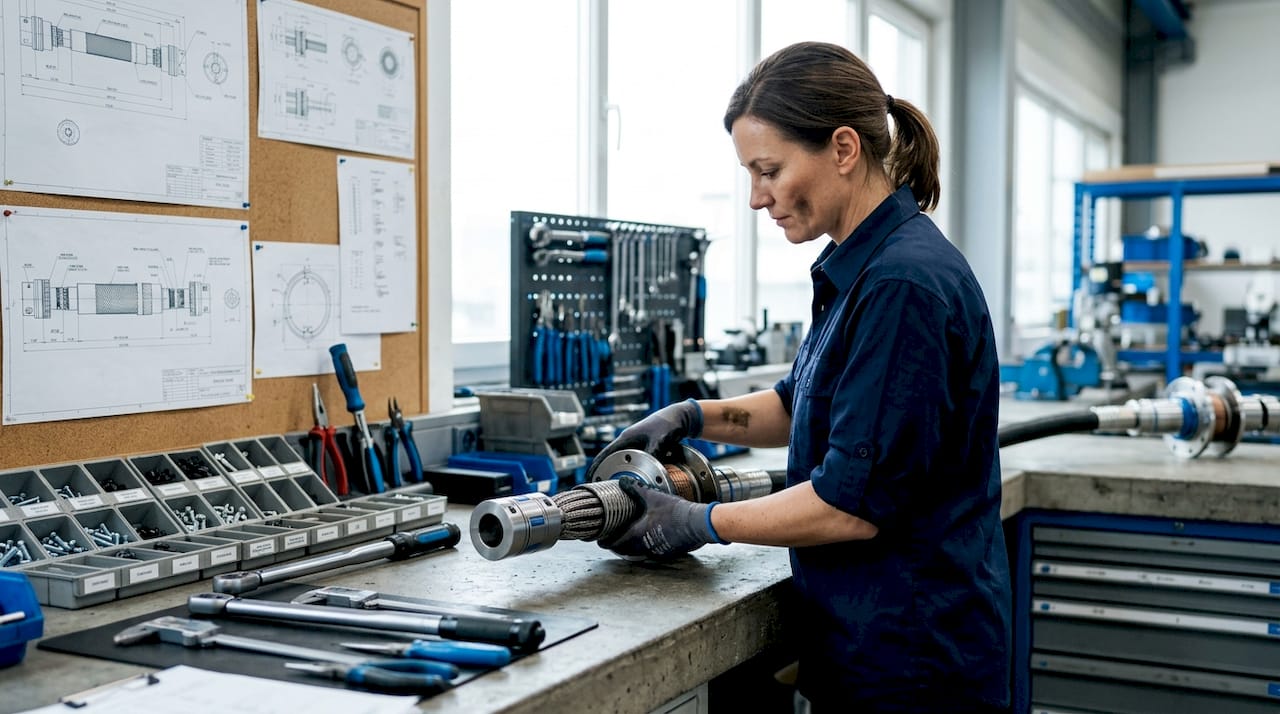
- Wear element inspection schedule: Unlike rigid couplings, flexible couplings require periodic inspection and replacement of wear elements. Build this into the machine maintenance schedule from the design phase.
The most common implementation error is using a flexible coupling to compensate for shaft misalignment that should have been corrected during installation. Flexible couplings are precision components designed to handle expected dynamic movements, not compensate for poor initial design. Using a flexible coupling this way concentrates load on the flexible element and accelerates failure. Proper shaft alignment must be completed before the coupling is torqued. Flexibility handles residual dynamic movement, not installation error.
My perspective on flexible drive technology
I have seen the same design mistake repeated across dozens of engineering projects. Engineers specify a flexible coupling or flexible shaft, note that it “tolerates misalignment,” and treat that tolerance as design clearance. It is not. That framing leads directly to premature wear, coupling failure, and eventually a root cause analysis that points back to an installation condition that should have been corrected on day one.
What I find more interesting is the direction flexible drive technology is taking in combination with digital monitoring. The integration of condition monitoring into drive systems is genuinely changing how maintenance is planned and how drivetrain health is assessed across a machine’s service life. The shift from reactive replacement to data-driven intervention is not a trend. It is becoming a standard engineering requirement for high-value production assets.
The modularity argument is also becoming more compelling as product cycles shorten. Flexible drive modularity in manufacturing allows powertrain architecture to adapt to platform requirements rather than forcing design compromises. I expect this to drive more standardization in coupling and flexible shaft interfaces over the next several years, reducing the engineering cost of platform changes significantly. The engineers who understand this now will design better systems, faster.
— Uli
How Biax-flexwellen supports your flexible drive requirements
Biax-flexwellen designs and manufactures flexible shafts and drive solutions for industrial and aerospace manufacturers working in confined or complex mechanical environments. Standard configurations cover a broad range of torque, RPM, and coupling interface requirements. Custom configurations are available for applications with specific sheath materials, core designs, or terminal connection geometry.
For engineers evaluating flexible shaft applications for manufacturing, Biax-flexwellen provides engineering consultation to match shaft specifications to application parameters including torque range, operating angle, rotational speed, and environmental exposure. If you are comparing drive architectures, the rigid vs. flexible shaft selection guide covers the key decision criteria in detail. Contact the Biax-flexwellen engineering team directly to discuss your application requirements and receive a technical recommendation.
FAQ
What makes flexible drive solutions different from rigid shaft assemblies?
Flexible drive solutions transmit torque through geometrically complex paths and absorb dynamic loads, including vibration and misalignment, that rigid assemblies cannot accommodate without structural modification. They are specified components with defined mechanical limits, not general-purpose connectors.
Can flexible couplings replace proper shaft alignment?
No. Flexible couplings compensate for expected dynamic movement, not for installation misalignment. Operating at maximum permissible misalignment continuously can reduce coupling service life by up to 75%.
How do flexible drives support predictive maintenance programs?
Flexible drive components integrated with condition monitoring sensors provide early indicators of drivetrain stress. This data, combined with bearing temperature and motor current monitoring, supports a hybrid predictive maintenance strategy that reduces unplanned downtime by over 50%.
Where are flexible shafts used in aerospace applications?
Flexible shafts are used in thrust reverser actuation, flap and slat drive systems, valve override mechanisms, and synchronization shafts, anywhere torque must be transmitted in a confined space around structural or thermal barriers.
What is the primary benefit of modular flexible drive systems?
Modular flexible drive systems reduce engineering effort by up to 40% and allow machine layouts to be reconfigured without costly structural redesigns, supporting faster product development cycles in industrial and aerospace manufacturing.
Recommended
- Why flexible drives deliver reliable performance for engineers
- Flexible drive solutions for efficient industrial design
- Flexible shaft guide: Engineering compact drive solutions
Related Topics
Send your spec inquiry
Custom flexible shafts for your application — we quote within 1 working day.