The Role of Engineering Guidance in Manufacturing
22 July 2026
Engineering guidance in manufacturing is the structured process of aligning design intent with production realities across every phase of a product’s life cycle. It covers design review, process optimization, quality assurance, variance management, and real-time production support. Without this alignment, programs face preventable cost overruns, schedule delays, and performance shortfalls. The DoD Early Manufacturing and Quality Engineering Guide identifies proactive engineering involvement before the Preliminary Design Review as the single most effective way to reduce downstream risk.
Core responsibilities of engineering guidance span:
- Translating design specifications into manufacturable, economically feasible production plans
- Identifying producibility risks before they become tooling or assembly problems
- Coordinating design engineers, quality teams, and shop floor operators around a shared technical baseline
- Managing engineering changes and variance controls with full traceability
- Applying recognized frameworks and occupational standards to maintain compliance
What does engineering guidance actually do on the production floor?
Production support engineers maintain line throughput by reviewing specifications, managing variances, investigating equipment failures, and acting as the technical liaison between design and production. Their work is continuous and reactive as well as planned. A design that looks clean on paper often encounters real-world geometry constraints, material behavior, or tooling access issues the moment it reaches the shop floor.
Key responsibilities include:
- Reviewing and interpreting technical data packages and engineering drawings
- Processing engineering change orders and coordinating internal and customer approvals
- Providing on-site problem resolution when production conditions deviate from design intent
- Maintaining the Technical Data Package to support configuration management and regulatory audits
- Monitoring equipment integrity and flagging failure modes before they affect throughput
- Bridging communication between design engineers and shop floor operators to prevent misinterpretation
Timely variance control is particularly critical in regulated environments. When real-world conditions diverge from design intent, delays in approval cycles compound quickly, affecting both schedule and cost.
How engineering guidance drives innovation and R&D in manufacturing
Early engineering involvement is the most direct way to prevent costly redesigns. When manufacturing engineers participate during concept development rather than after design freeze, they can flag producibility constraints before they are locked into the geometry. The DoD Early Manufacturing and Quality Engineering Guide is explicit: programs that exclude manufacturing and quality input until Milestone B risk redesign, schedule delays, and increased cost during the transition from development to production.
Engineering guidance supports R&D by:
- Conducting feasibility assessments during concept trade studies to eliminate non-producible design paths early
- Supporting prototyping and experimentation with process knowledge that laboratory teams often lack
- Enabling Manufacturing Readiness Assessments alongside Technology Readiness Assessments to track production maturity concurrently
- Facilitating adoption of new manufacturing technologies, including automation and digital thread approaches, with structured transition planning
- Reducing the gap between design completion and production start by resolving interface and tolerance issues during preliminary design
Early RFQ-stage collaboration between engineering and production teams identifies material and geometry risks before any tooling is committed, which is particularly valuable for complex assemblies with deep-drawn or near-net-shape components.
What frameworks and standards govern engineering guidance?
The Society of Manufacturing Engineers (SME) four pillars framework organizes manufacturing engineering knowledge into four domains: materials and manufacturing processes, product and tooling and assembly engineering, manufacturing systems and operations, and manufacturing competitiveness. These pillars provide a consistent reference for assessing technical competency and structuring engineering guidance programs across industries.
Standards that directly shape engineering guidance practice include:
- AS9100 and ISO 9001: quality management system requirements governing design control, process validation, and corrective action in aerospace and general manufacturing
- Manufacturing Readiness Levels (MRLs): a ten-level scale used alongside Technology Readiness Levels (TRLs) to assess production maturity at each development milestone
- Occupational competency standards: recognized frameworks that define the technical knowledge and judgment required to provide defensible engineering guidance compliant with organizational and regulatory procedures
Formal, traceable engineering governance is not optional in regulated manufacturing. Decision trails linking technical changes to safety and certification requirements are auditable artifacts, not administrative overhead. Programs that treat governance as a compliance checkbox rather than a technical discipline tend to discover the cost of that choice during certification reviews.
Aerospace manufacturing: where engineering guidance faces its hardest constraints
Aerospace assemblies present the most demanding conditions for engineering guidance. Thrust reverser systems, flap and slat actuation mechanisms, and valve override assemblies all involve tight installation envelopes, safety-critical load paths, and maintenance access requirements that must be resolved simultaneously. The DoD Early Manufacturing and Quality Engineering Guide specifically identifies these assembly types as cases where front-end engineering involvement is not optional.
Practical challenges in aerospace manufacturing guidance include:
- Managing design-for-manufacturability in confined spaces where standard tooling cannot reach fastener locations
- Coordinating subsystem integration across structural, hydraulic, and electrical interfaces with overlapping tolerance stacks
- Maintaining regulatory compliance for safety-critical components under AS9100 and FAA certification requirements
- Resolving tooling access and maintenance clearance conflicts before production tooling is fabricated
- Documenting all engineering decisions with traceable rationale for airworthiness authority review
| Challenge | Engineering Guidance Response |
|---|---|
| Confined installation geometry | Design-for-manufacturability review at concept phase |
| Tolerance stack in multi-subsystem interfaces | Early interface control document development |
| Tooling access for fasteners in tight bays | Tooling feasibility assessment before design freeze |
| Regulatory traceability requirements | Formal change control with linked certification rationale |
| Maintenance clearance conflicts | Collaborative review with MRO engineering during preliminary design |
Pro Tip: Assign manufacturing and quality engineers to the Integrated Product Team before the system Preliminary Design Review. Programs that wait until Milestone B to involve production expertise consistently face avoidable redesign cycles.
How Biax-flexwellen applies engineering guidance to flexible shaft design
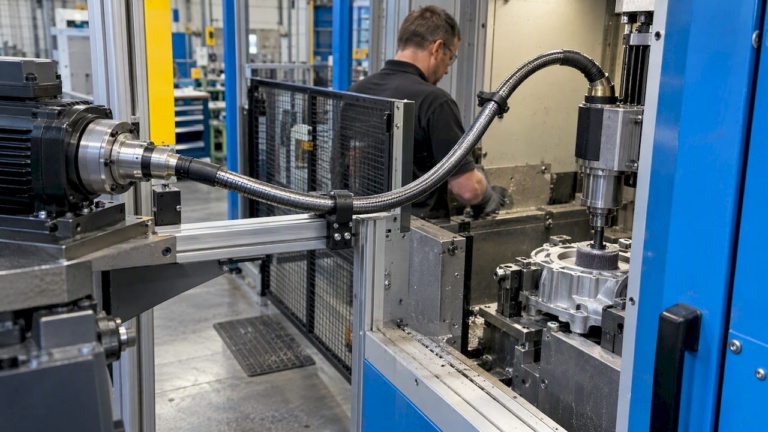
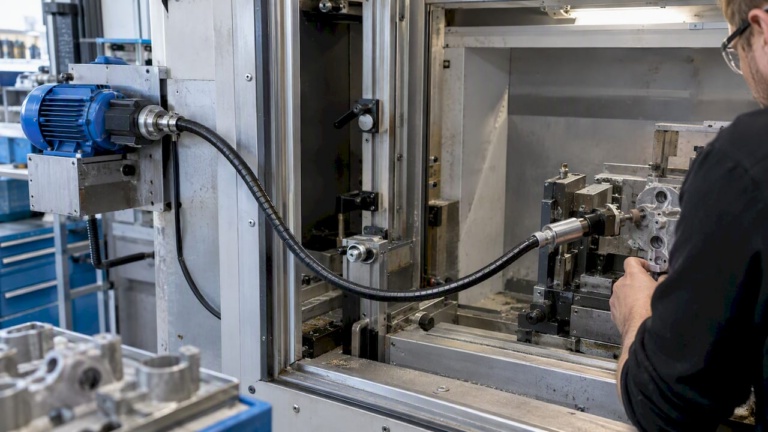
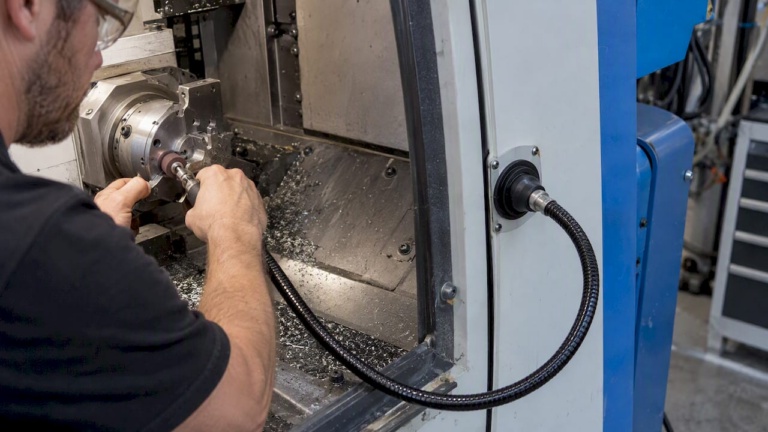
Flexible shaft and drive solutions present a specific class of engineering guidance challenge: transmitting torque reliably through confined, non-linear paths where rigid shafts cannot be routed. Biax-flexwellen addresses this through application-specific engineering support covering torque and RPM requirements, coupling interface selection, protective sheath configuration, and core geometry.
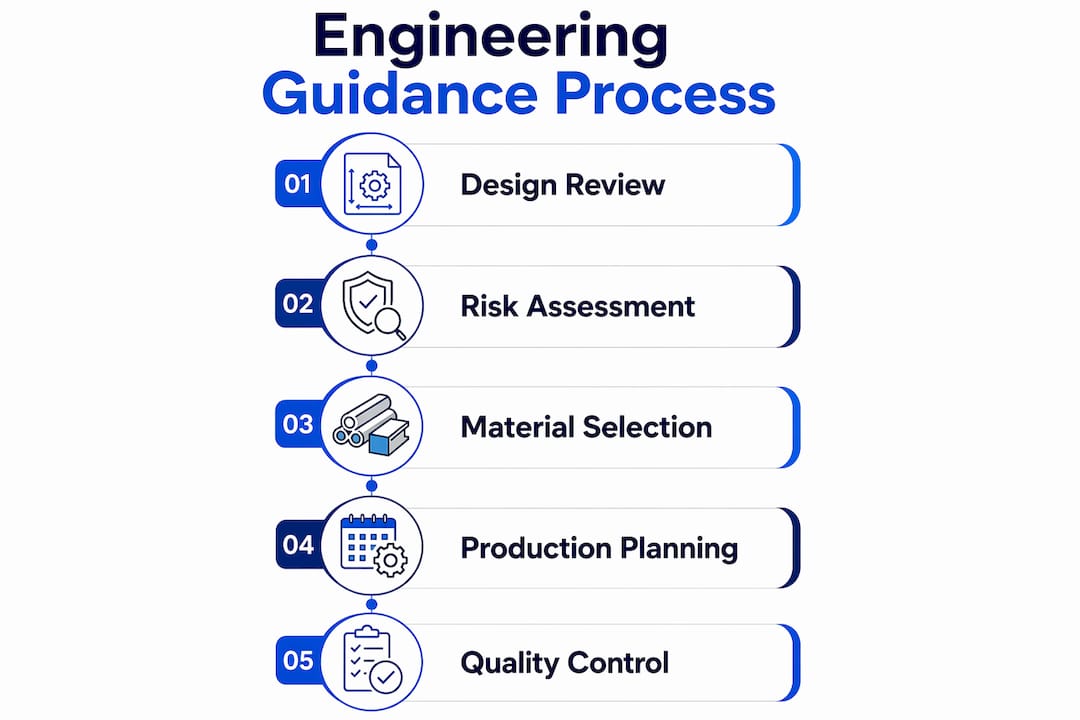
The engineering guidance process for flexible shaft applications follows a structured sequence:
- Defining the torque transmission requirement and rotational speed range for the target process (deburring, grinding, polishing, or valve actuation)
- Assessing the installation path geometry, including bend radius constraints and axial length
- Selecting core construction and sheath material based on operating environment and duty cycle
- Specifying coupling interfaces at both the drive and tool ends to match existing machine connections
- Validating the configuration against the actual load conditions before production commitment
Engineering guidance for flexible shaft systems requires the same rigor applied to any safety-critical drive component. Torque capacity, bend radius limits, and coupling interface compatibility must be verified against real operating conditions, not catalog defaults. A configuration that works at the bench may fail under continuous production loads if the duty cycle or installation geometry was not fully characterized during the design phase.
For aerospace valve override and synchronization shaft applications, where installation access is restricted and the shaft must operate reliably over thousands of cycles, this guidance process directly determines whether the solution is serviceable in the field. Biax-flexwellen supports machine builders and industrial manufacturers through this process with standard components and custom shaft configurations matched to specific application constraints.
Key competencies required for effective manufacturing guidance
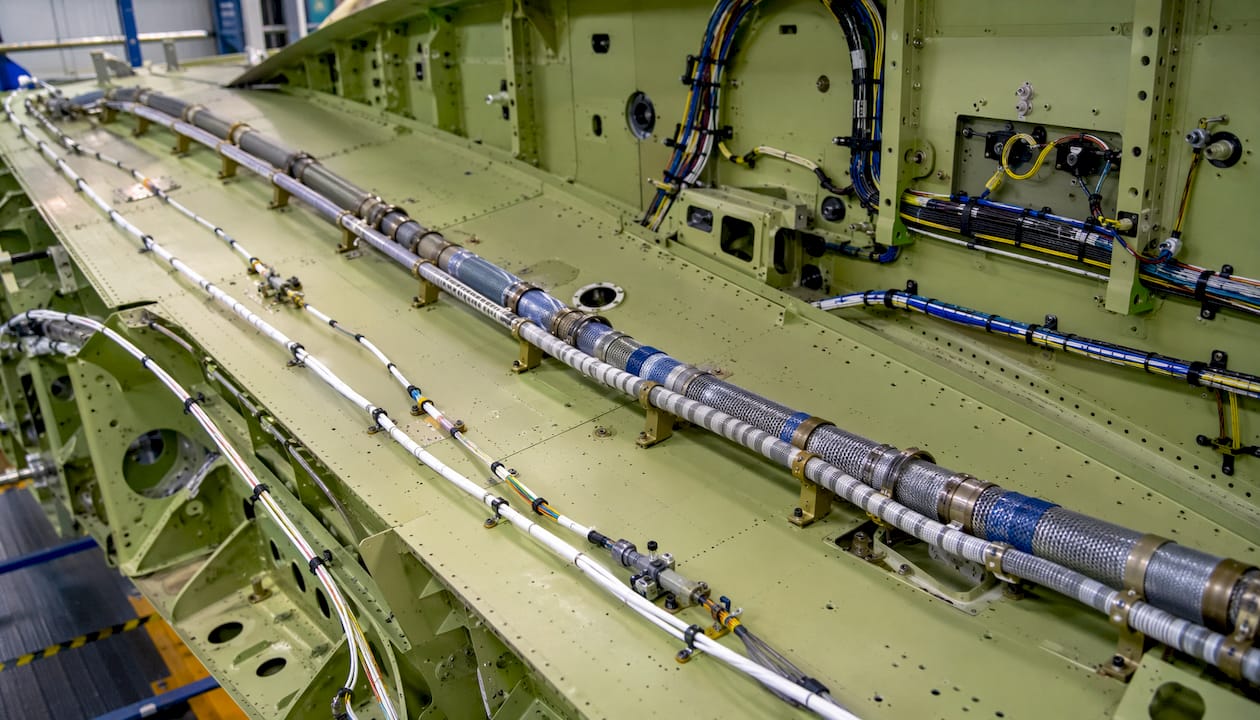
Manufacturing engineers draw on a defined set of technical and analytical competencies to provide credible guidance. These are not generalist skills. Effective manufacturing guidance requires depth in specific domains that directly affect producibility and process reliability.
Core competency areas include:
- Process engineering: understanding of machining, forming, joining, and finishing processes and their interaction with material properties
- Metrology and quality systems: ability to define inspection criteria, interpret measurement data, and apply statistical process control
- Geometric dimensioning and tolerancing (GD&T): fluency in tolerance specification and stack analysis across multi-part assemblies
- Lean manufacturing principles: identification and elimination of non-value-added steps in production workflows
- Digital manufacturing tools: working knowledge of CAD, CAM, and computer-aided process planning systems
- Regulatory and standards literacy: familiarity with AS9100, ISO 9001, MRL criteria, and sector-specific certification requirements
Technical competency alone is insufficient without the communication skills to translate engineering constraints into decisions that production supervisors and procurement teams can act on.
Methods and tools used in engineering guidance for manufacturing
Manufacturing engineering practice applies a defined set of analytical and digital methods to support production decisions. The choice of method depends on the development phase and the nature of the risk being managed.
Commonly applied methods and tools:
- Design for Manufacturability (DFM) analysis: systematic review of part geometry, tolerances, and material choices against production process capabilities
- Failure Mode and Effects Analysis (FMEA): structured identification of potential failure modes in processes and assemblies before production begins
- Manufacturing Readiness Level (MRL) assessments: formal evaluation of production maturity at each program milestone
- Computer-Aided Process Planning (CAPP): digital generation of process sequences linked to CAD geometry and machine capabilities
- Statistical Process Control (SPC): real-time monitoring of process parameters to detect drift before defects occur
- Digital twin modeling: virtual replication of production processes to test process changes without disrupting live operations
- Value stream mapping: visualization of material and information flow to identify bottlenecks and waste in production sequences
Examples of engineering guidance producing measurable production outcomes
Engineering guidance produces its clearest results when it intervenes at a decision point that would otherwise generate rework or delay.
Thrust reverser actuation system, aerospace OEM: Manufacturing engineers identified a tooling access conflict in the cascade reverser bay during the design review phase. The conflict involved a fastener pattern that could not be reached with standard torque tools given the surrounding structure. By flagging this before production tooling was fabricated, the team revised the fastener specification and access panel geometry, avoiding a tooling redesign that would have affected the production schedule.
Deep-drawn metal component, contract manufacturing: Early RFQ-stage engineering review identified a wall thickness gradient in the drawn geometry that exceeded the forming capability of the available press tooling. The geometry was adjusted during quotation, before any tooling investment, eliminating a failure mode that would have produced scrap on the first production run.
Flexible shaft integration, finishing process: An engineering review of a deburring application in a confined machine cavity identified that the specified bend radius exceeded the shaft’s continuous-duty limit. Adjusting the installation path and selecting a higher-capacity core construction resolved the issue before the shaft was installed in production tooling.
Future trends shaping engineering guidance in manufacturing
Several technology developments are changing how engineering guidance is structured and delivered in manufacturing environments.
Digital thread integration connects design data, process plans, inspection records, and production feedback into a single traceable data environment. Manufacturing engineers working within a digital thread can access real-time production data alongside design intent, reducing the lag between a process deviation and an engineering response.
Model-based definition (MBD) replaces drawing-based technical data packages with annotated 3D models carrying all manufacturing and inspection requirements. This reduces interpretation errors and accelerates the review cycle for engineering changes.
Additive manufacturing is expanding the range of producible geometries, but it also requires engineering guidance to define new process qualification criteria, material property databases, and inspection methods that do not exist in traditional machining standards.
Artificial intelligence in process monitoring enables continuous analysis of sensor data from production equipment, flagging anomalies that would previously have required manual inspection. Engineering guidance teams are increasingly responsible for defining the process parameters and acceptance criteria that these systems monitor.
Industry 4.0 and IIoT integration connects production equipment, quality systems, and supply chain data in ways that require manufacturing engineers to understand data architecture as well as mechanical processes. The SME Advanced Four Pillars framework has added a dedicated knowledge block for digital enterprise topics, reflecting how central these capabilities have become to manufacturing engineering practice.
Key Takeaways
Engineering guidance is most effective when integrated at the earliest stages of system concept definition, before design decisions constrain producibility options.
| Point | Details |
|---|---|
| Early involvement reduces risk | Proactive engineering input before the Preliminary Design Review prevents costly redesigns and schedule delays. |
| Frameworks provide structure | The SME four pillars and MRL criteria give engineering guidance teams a consistent basis for assessing technical and production maturity. |
| Aerospace demands front-end rigor | Thrust reversers, flap actuators, and valve systems require manufacturing engineering input during concept phase to resolve tooling and access constraints. |
| Flexible shaft guidance requires application specificity | Torque, bend radius, duty cycle, and coupling interface must all be verified against real operating conditions before production commitment. |
| Digital tools are changing the discipline | Digital thread, MBD, and AI-driven process monitoring are expanding the scope of engineering guidance beyond traditional process planning. |
For technical inquiries related to flexible shaft configurations, torque transmission requirements, or drive solution engineering for confined installation environments, the Biax-flexwellen engineering team is available via the contact page.