Engineering standards for flexible shafts: a practical guide
8 April 2026TL;DR:
- DIN 740 establishes standards for flexible shaft classification, ensuring consistent specifications across manufacturers.
- Key design parameters include shaft diameter, torque, speed, bend radius, and material, all interacting for performance.
- Combining standards with empirical manufacturer data and application testing prevents costly installation failures.
Flexible shaft selection looks straightforward until a drive system underperforms in the field. Off-the-shelf torque ratings rarely account for bend radius, rotational speed, or the cumulative stress of continuous industrial cycles. Many engineers treat catalog numbers as absolute limits, but real optimization requires interpreting standards like DIN 740 alongside empirical manufacturer data. This guide walks through the core standards, the parameters that matter most, and how to apply both to flexible shaft selection in demanding manufacturing environments. The goal is reliable performance, not just compliance.
Table of Contents
- Understanding DIN 740 and the basics of flexible shaft engineering
- Key parameters and material choices defined by standards
- How to calculate and select flexible shafts using manufacturer and standard data
- Practical examples: Application-driven standard interpretation
- Why relying on standards alone can lead to costly mistakes
- Take the next step: Solutions for engineering with flexible shafts
- Frequently asked questions
Key Takeaways
| Point | Details |
|---|---|
| DIN 740 sets the foundation | This standard supplies a clear framework for terminology, parameters, and expectations in flexible shaft engineering. |
| Material and parameter selection matters | Choosing the right core materials and dimensions directly impacts shaft performance and reliability in industrial applications. |
| Combine standards with real data | Optimal design comes from blending standardized calculations with empirical manufacturer benchmarks. |
| Application context drives decisions | Always interpret standards in light of the actual use-case and operational conditions for best results. |
Understanding DIN 740 and the basics of flexible shaft engineering
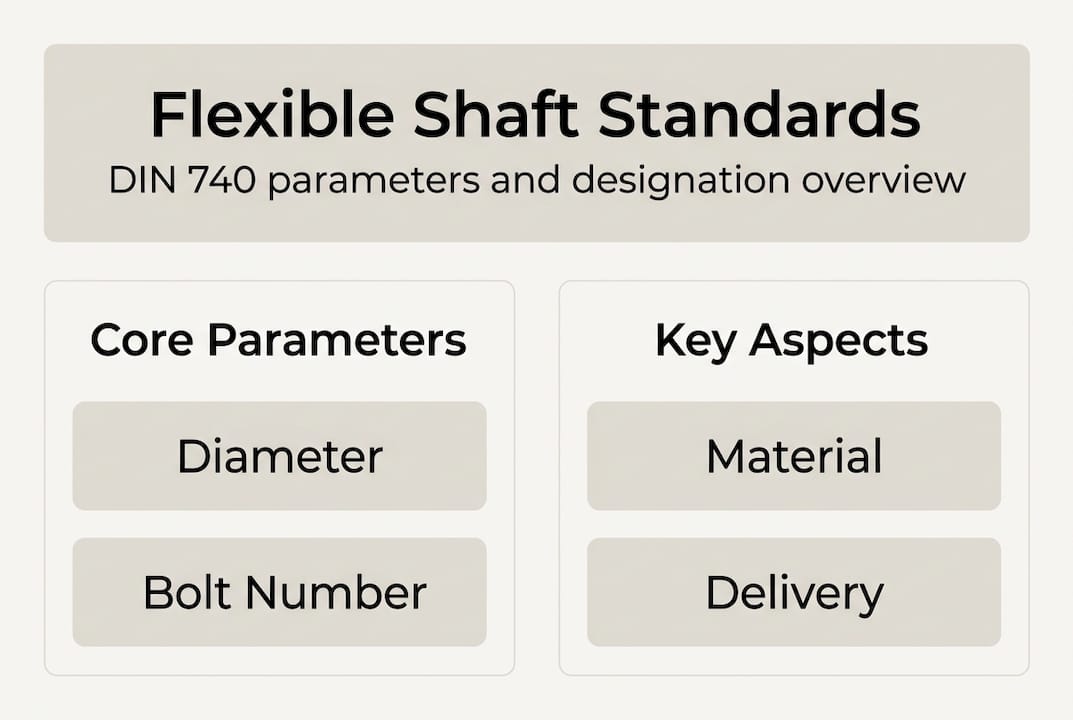
DIN 740 is the primary German standard governing flexible shaft couplings and flexible shafts used in industrial machinery. It defines technical delivery conditions, classification methods, and identification requirements. DIN 740 Part 1 specifies technical delivery conditions for flexible shaft couplings, covering everything from dimensional tolerances to designation conventions. This creates a shared technical language between engineers, procurement teams, and manufacturers across different organizations.
The standard’s classification system assigns uniform designations for shaft widths, outer diameters, and coupling bolt numbers. When a design engineer in Stuttgart and a machine builder in Chicago reference the same DIN 740 designation, they are working from identical parameters. That consistency reduces specification errors and shortens procurement cycles significantly.
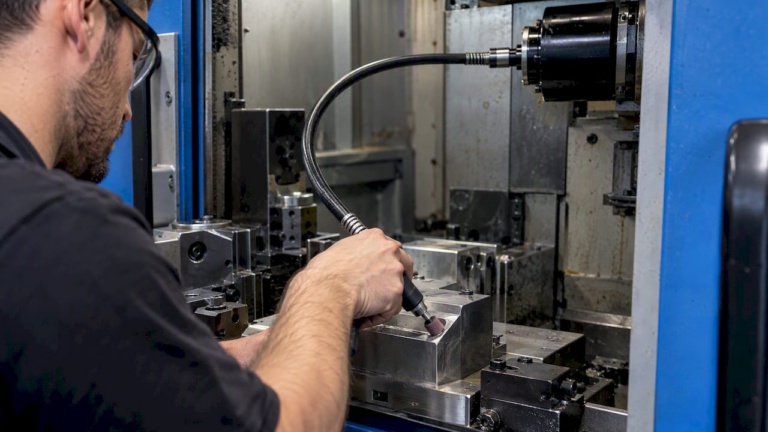
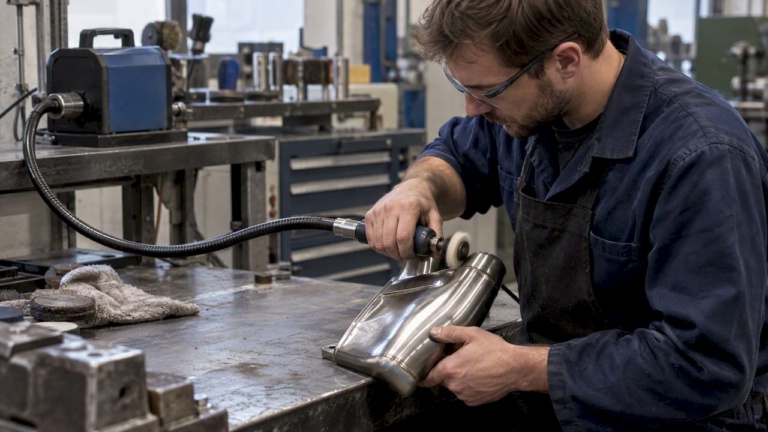
Why does this matter in demanding applications? Industrial processes like deburring, grinding, and polishing impose variable torque loads, vibration, and thermal stress. A shaft that meets a nominal rating under static conditions may fail prematurely when subjected to cyclic loading in a real production environment. Standards provide the baseline. They do not, however, capture every operational variable.
Empirical manufacturer data fills that gap. BIAX Flexwellen, for example, publishes application-specific performance data that reflects real installation geometries, not just laboratory conditions. Engineers working on industrial applications such as robotic finishing cells or multi-axis machining systems benefit from combining both sources.
Key elements covered by DIN 740:
- Technical delivery conditions for flexible shaft couplings
- Classification and identification of shaft types
- Uniform designation of dimensions and coupling geometry
- Performance expectations under defined load conditions
- Basis for interoperability between components from different manufacturers
| DIN 740 element | Engineering relevance |
|---|---|
| Delivery conditions | Ensures dimensional and material consistency |
| Classification system | Simplifies cross-supplier specification |
| Identification codes | Reduces ordering and installation errors |
| Load definitions | Provides baseline for torque and speed ratings |
Pro Tip: Read DIN 740 as a design floor, not a design ceiling. The standard defines minimum acceptable conditions. Your shaft configuration guide should always layer application-specific requirements on top of those minimums.
Key parameters and material choices defined by standards
With the basic framework of standards in hand, we can now focus on the parameters and design decisions that drive practical success. Five parameters define flexible shaft performance in any industrial application: shaft diameter, rated torque, operational speed, minimum bend radius, and material class. Each one interacts with the others. Optimizing one without considering the rest leads to premature failure or unnecessary cost.
Design methodology per DIN 740 utilizes uniform symbols and quantities across all shaft specifications. This standardization makes it possible to compare shafts from different manufacturers on a common basis. Engineers can read a spec sheet from any compliant supplier and immediately understand what each value represents.
Material selection is where many designs either succeed or fail. High-carbon steel wire cores wound in alternating helical layers form the backbone of most power-transmission flexible shafts. The layered construction distributes torsional stress evenly across the cross-section. This is why a properly specified layered core outperforms a solid rod in applications involving continuous rotation and variable bend angles. For longer shaft life in high-cycle environments, material grade and layer count are critical decisions.
Step-by-step process for matching parameters to your application:
- Define the required torque output at the tool interface, including peak loads.
- Establish the maximum operational speed in RPM for your drive source.
- Measure the minimum bend radius imposed by the installation geometry.
- Select a shaft diameter that satisfies torque and speed requirements within that bend radius.
- Choose material class based on duty cycle, environment, and required service life.
- Verify the selection against DIN 740 classification codes and manufacturer empirical data.
| Parameter | Standard reference | Performance impact |
|---|---|---|
| Shaft diameter | DIN 740 designation | Determines torque capacity and flexibility |
| Rated torque | DIN 740 load tables | Sets operational limit under defined conditions |
| Operational speed | DIN 740 speed classes | Affects heat generation and fatigue life |
| Minimum bend radius | DIN 740 geometry specs | Controls stress concentration and wear rate |
| Material class | DIN 740 material codes | Governs strength, corrosion resistance, and life |
For engineers working on custom shaft design, these parameters form the starting point of every configuration. The standard gives you the vocabulary. The application gives you the constraints. Good engineering connects both. Consulting resources on engineering compact drive solutions can help translate those constraints into viable configurations.

How to calculate and select flexible shafts using manufacturer and standard data
Once parameters are clear, applying data to your selection is the next critical task. The calculation process is not complex, but it requires discipline. Engineers who skip steps or rely solely on nominal ratings often end up with shafts that either fail early or are significantly over-specified.
Manufacturer datasheets provide benchmarks; prioritize path length, torque, and speed over generic catalog ratings when making your final selection. A shaft rated for 10 Nm at 3,000 RPM in a straight configuration may only sustain 6 Nm at the same speed when installed at a 200 mm bend radius. That difference is not always visible in a standard rating table. It is visible in the manufacturer’s application data.
Selection process checklist:
- Confirm the drive path geometry, including all bends and their radii
- Calculate actual torque demand at the tool, including startup and peak loads
- Identify the maximum continuous speed and any intermittent speed spikes
- Cross-reference these values against both DIN 740 tables and manufacturer performance curves
- Check protective sheath compatibility with the installation environment
- Verify coupling interface dimensions against machine interface specifications
- Confirm that the selected shaft meets service life expectations for your maintenance schedule
When you select flexible shafts for precision machinery, the interaction between bend radius and torque capacity is the most commonly underestimated factor. A shaft running at 80% of its rated torque in a tight bend may experience fatigue failure well before its theoretical service life. Build in a realistic derating factor based on actual installation geometry.
Pro Tip: Avoid over-specifying to create a safety margin. Selecting a shaft that is significantly larger than required increases cost, reduces flexibility in the drive path, and can introduce unwanted stiffness that affects tool control. Match the shaft to the application, not to a worst-case scenario that will never occur. This principle applies equally to flexible shafts in automation where space constraints are tight and weight matters.
Practical examples: Application-driven standard interpretation
To truly understand standard application, let’s see how these principles come alive in real-world scenarios. Three application types illustrate how the same standards produce different design outcomes depending on installation context.
Compact drive in an automation cell: A robotic deburring system requires a flexible shaft to transmit 8 Nm at 4,500 RPM through a 150 mm bend radius. Standard tables indicate a medium-diameter shaft is marginal at this combination. Manufacturer data for a layered-core shaft at this bend radius confirms it operates within limits. The selection is validated by both sources.
Power tool for tight-space finishing: A handheld grinding tool operates at variable speeds between 2,000 and 6,000 RPM with a minimum bend radius of 80 mm. The short path length and high speed demand a small-diameter, high-grade wire core shaft with a flexible protective sheath. DIN 740 classification narrows the field. Manufacturer empirical data confirms the final choice.
High-torque robotics application: A custom layered core for a high-torque robotic arm improves reliability by distributing torsional stress across multiple wire layers. Standard specifications define the core geometry. Field-tested benchmarks confirm the service life improvement.
Manufacturer benchmarks align with standards on layered construction for industrial machinery, aerospace, and tooling. Consistent application of both sources reduces miscommunication and specification error across the supply chain.
| Application | Torque requirement | Speed (RPM) | Bend radius | Standard basis |
|---|---|---|---|---|
| Robotic deburring | 8 Nm | 4,500 | 150 mm | DIN 740 + manufacturer data |
| Handheld grinding | 3 Nm | 6,000 | 80 mm | DIN 740 classification |
| High-torque robotics | 15 Nm | 2,000 | 200 mm | Custom layered core spec |
How standards adapt to real-world scenarios:
- They define the minimum acceptable configuration for each parameter combination
- They provide a common reference for supplier and customer communication
- They enable derating calculations when installation geometry deviates from ideal
- They support quality control by setting measurable acceptance criteria
- They reduce design iteration time by narrowing the viable solution space
For engineers working through precision shaft design for demanding applications, these examples show that standard interpretation is always context-driven. The numbers in the table are starting points, not final answers.
Why relying on standards alone can lead to costly mistakes
Standards are necessary. They are not sufficient. This distinction matters in engineering practice, and ignoring it produces avoidable failures.
A checklist approach to flexible shaft selection misses the variables that standards cannot quantify: installation environment, maintenance frequency, operator handling patterns, and thermal cycling. A shaft installed in a humid foundry environment behaves differently from one in a climate-controlled assembly cell, even if both meet the same DIN 740 specification. The standard does not account for that. The engineer must.
The best-performing projects we see combine rigorous standard compliance with field-tested empirical benchmarks and direct engagement with the manufacturer’s engineering team. That combination catches the edge cases that checklists miss. It also produces designs that hold up over thousands of operating hours, not just the first few hundred.
For applications involving designing for tight spaces, the gap between standard compliance and real-world performance is especially pronounced. Tight geometries amplify every parameter interaction. A shaft that is technically within spec may still underperform if the installation introduces stress concentrations that the standard’s test conditions did not replicate.
Pro Tip: Treat standards as the floor of acceptable performance. Real optimization requires going further, using manufacturer data, application testing, and engineering judgment together.
Take the next step: Solutions for engineering with flexible shafts
Ready to put these engineering insights into action? BIAX Flexwellen supports machine builders and industrial manufacturers with both standard components and fully engineered custom configurations. Whether you need guidance on torque and RPM requirements, coupling interfaces, or shaft geometry for a specific installation, the resources below provide direct access to technical expertise.

Explore the full range of industrial flexible shaft applications to see how standard and custom solutions perform across deburring, grinding, polishing, and finishing processes. For projects requiring a tailored approach, the custom shaft solutions page outlines configuration options and engineering support. Engineers starting a new design can also reference the precision shaft design guide for a structured approach to specification and selection. Contact the BIAX Flexwellen engineering team directly to discuss your application requirements.
Frequently asked questions
What is the main purpose of engineering standards for flexible shafts?
DIN 740 Part 1 specifies technical delivery conditions and terminology for flexible shafts, ensuring consistent performance, safety, and clear communication between design and manufacturing teams.
How do I select materials for a flexible shaft based on standards?
Use high-carbon wire cores and multi-layer construction when high torque and reliability are required. Manufacturer benchmarks align on high-carbon wire cores per standards for demanding industrial applications.
What key parameters should I check when designing a flexible shaft?
Always reference diameter, rated torque, maximum speed, and minimum bend radius. DIN 740 standardizes symbols and values for these parameters to support consistent specification across suppliers.
Is manufacturer data as important as standards in shaft selection?
Yes. Manufacturer datasheets provide performance benchmarks aligned with DIN 740 that account for real-world installation geometry, which standard tables alone cannot fully capture.
Recommended
- Flexible shaft guide: Engineering compact drive solutions
- Custom Flexible Shaft Configuration Guide for Engineers
- Custom flexible shaft design explained: engineer better solutions
- Flexible shaft applications for industrial manufacturing
Related Topics
Send your spec inquiry
Custom flexible shafts for your application — we quote within 1 working day.